Effie Lazaridou, CEO, New Agriculture New Generation
There are women who keep our villages alive. They cultivate the land, produce food, create businesses, raise families and support local communities. Women who often work quietly, without their contribution receiving the recognition it deserves.
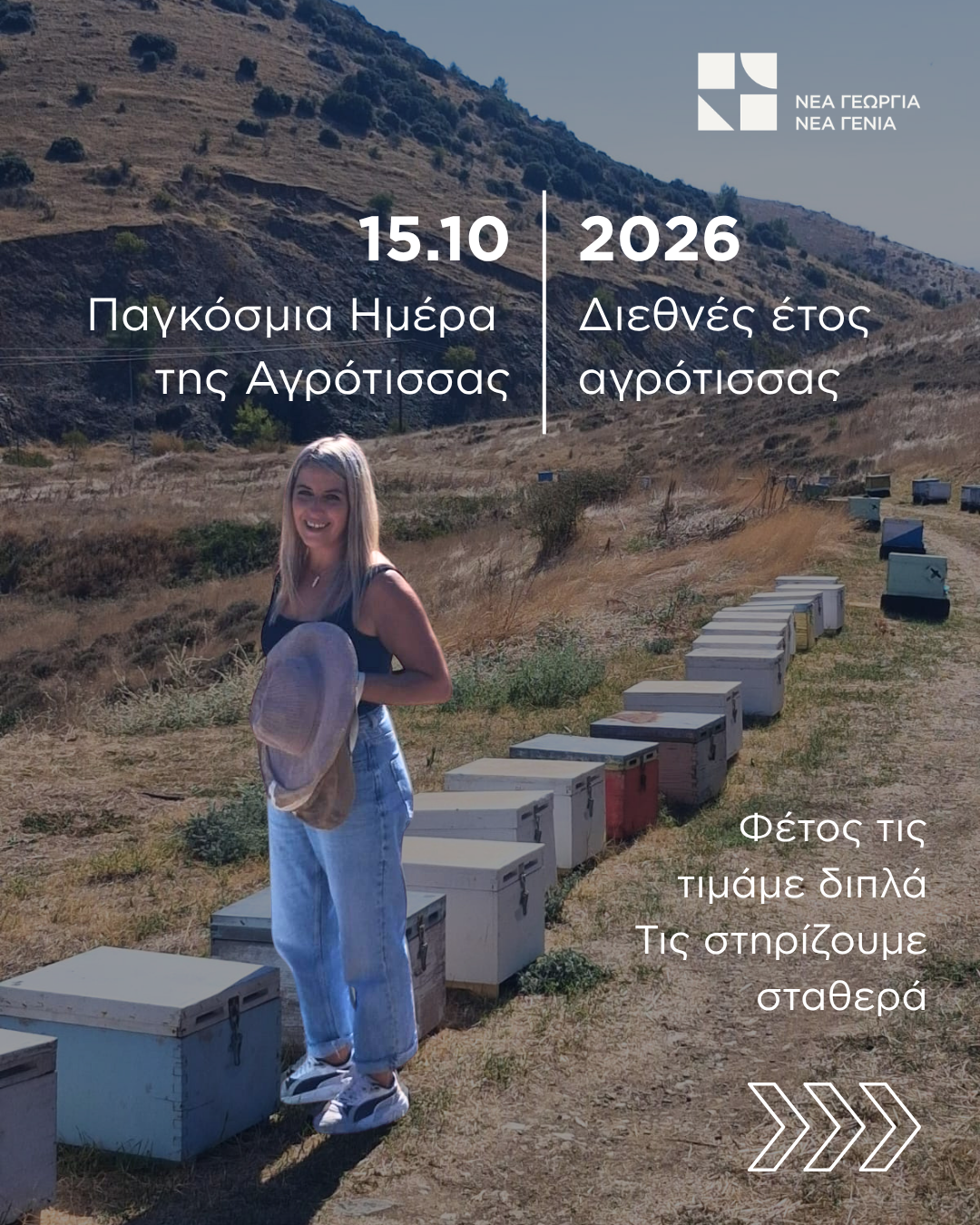
This year’s International Day of Rural Women, on 15 October, holds particular significance, as 2026 has been declared by the UN the International Year of the Woman Farmer. It is an opportunity not only to honour rural women, but above all to consider what we need to change so that they can realise their full potential.
Rural women are a valuable link in agricultural production, a force for entrepreneurship and innovation and, above all, the essential ingredient of social cohesion. Empowering women is a meaningful investment in the future of Greece’s rural regions.
Yet, significant inequalities persist even today.
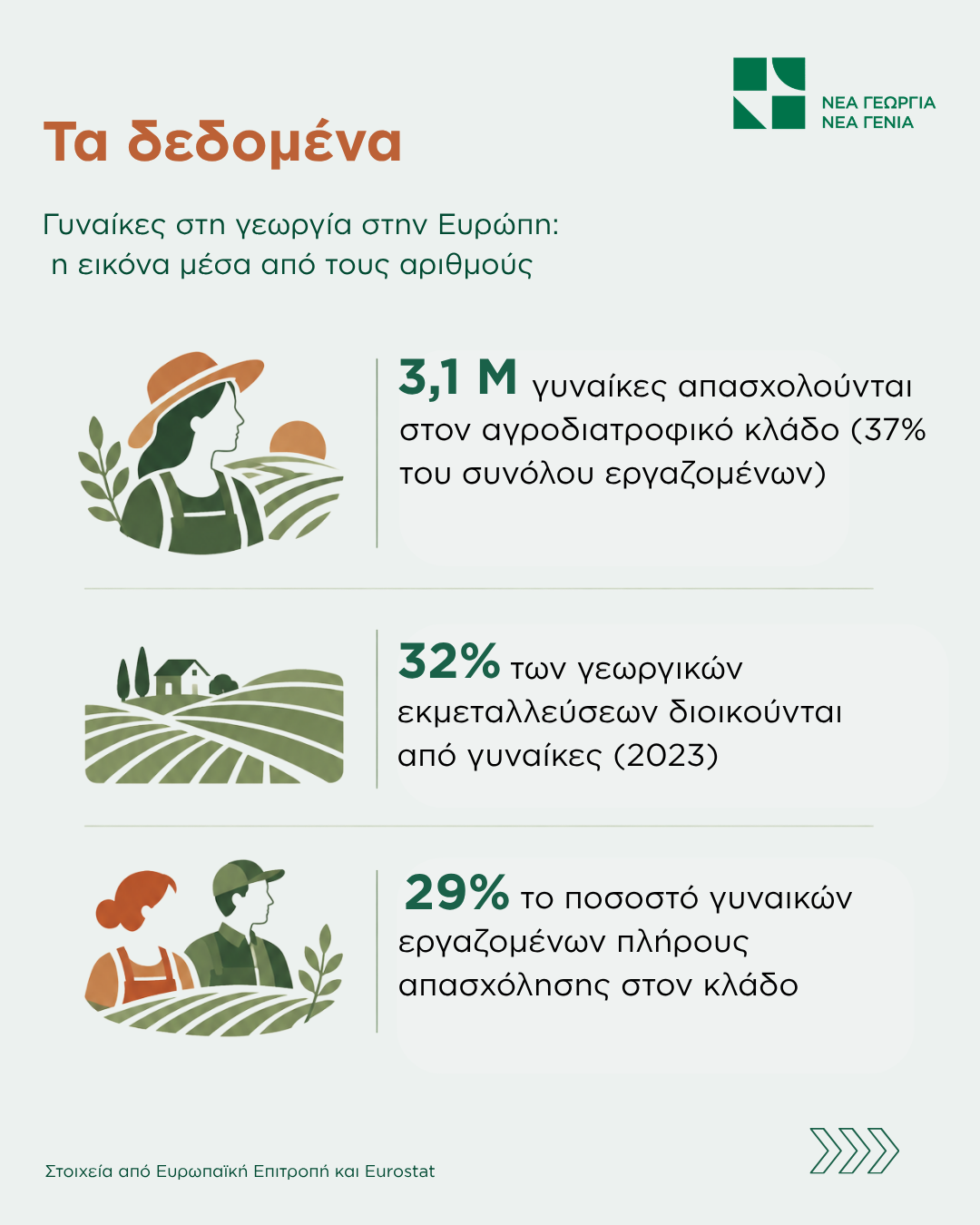
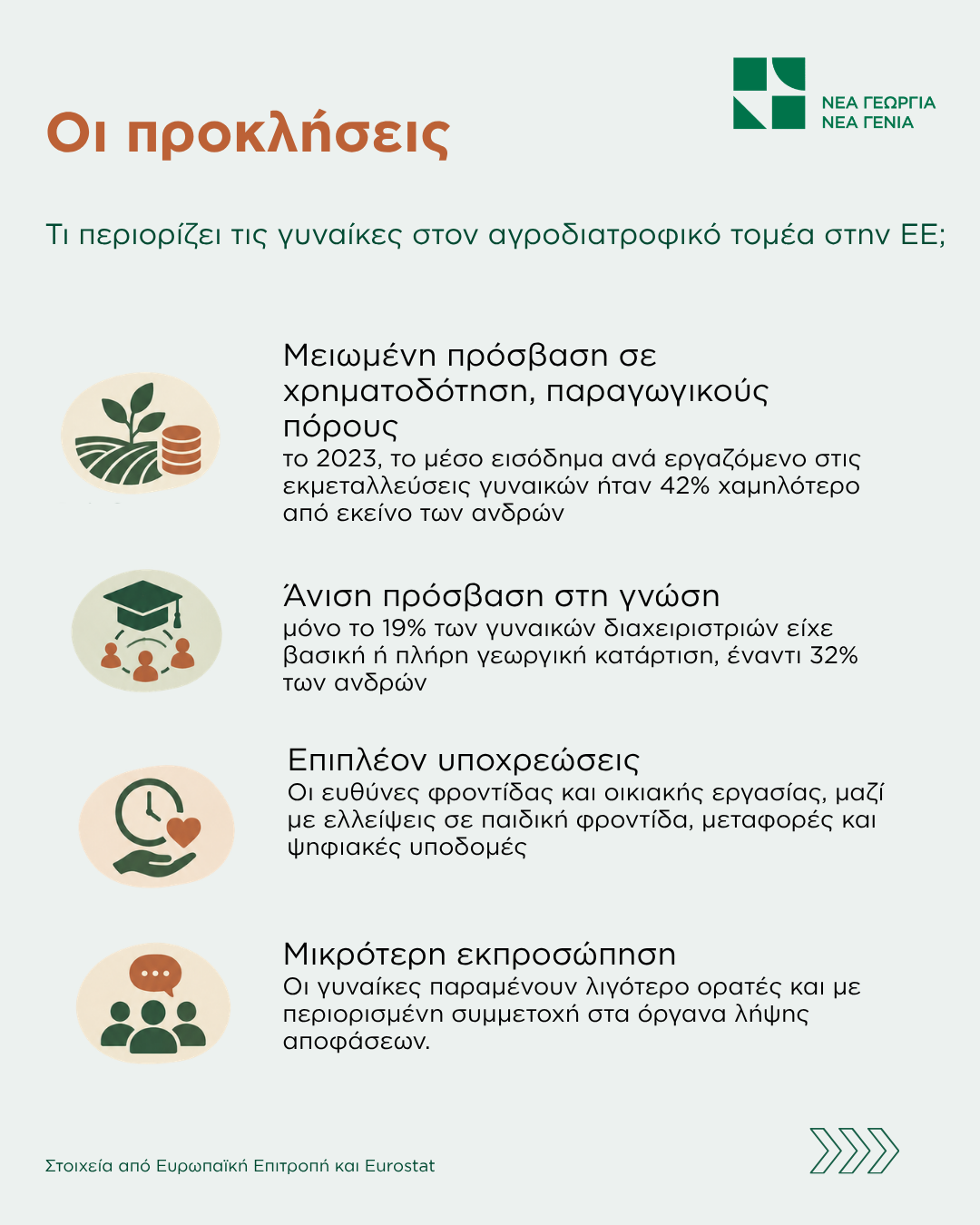
In the European Union, approximately 31% of agricultural holdings are managed by women. These holdings are, on average, significantly smaller than those managed by men, while only 19% of women farm managers have received basic or full agricultural training. In Greece, the corresponding figures for training are considerably lower.
Behind the numbers lies a daily reality filled with challenges: limited access to finance, knowledge and professional opportunities, increased family responsibilities, gaps in essential services and, of course, the consequences of the climate crisis, which appear to affect them more severely.
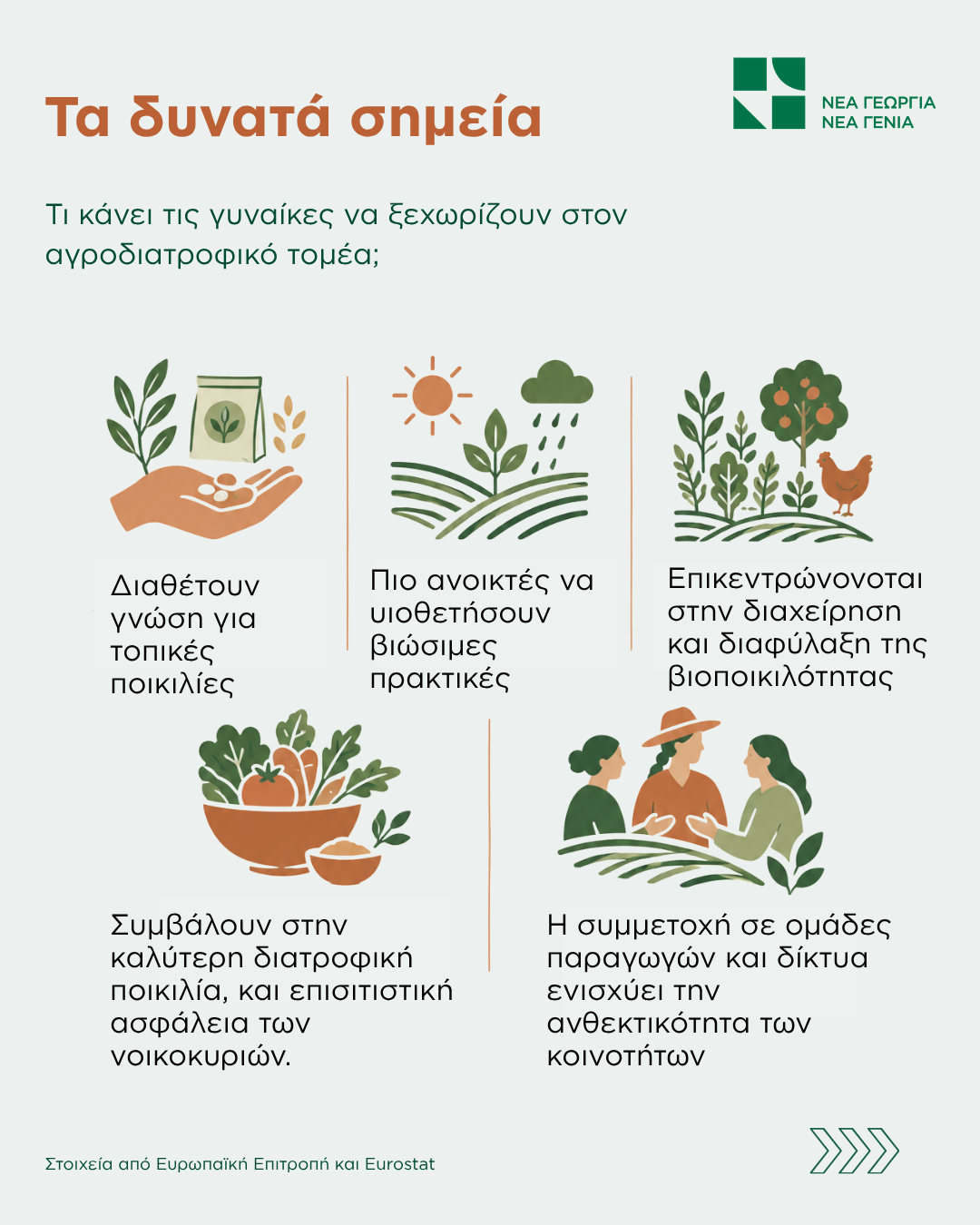
Nevertheless, our everyday experience in the field shows that women lack neither ambition nor ability. What they often lack are opportunities, belief in themselves and the tools to turn their dreams into action and their potential into a driver of community development.
At New Agriculture New Generation, we work towards this very goal. We provide access to knowledge, cultivate entrepreneurial and leadership skills, strengthen partnerships and support women who want to advance professionally in their home communities.
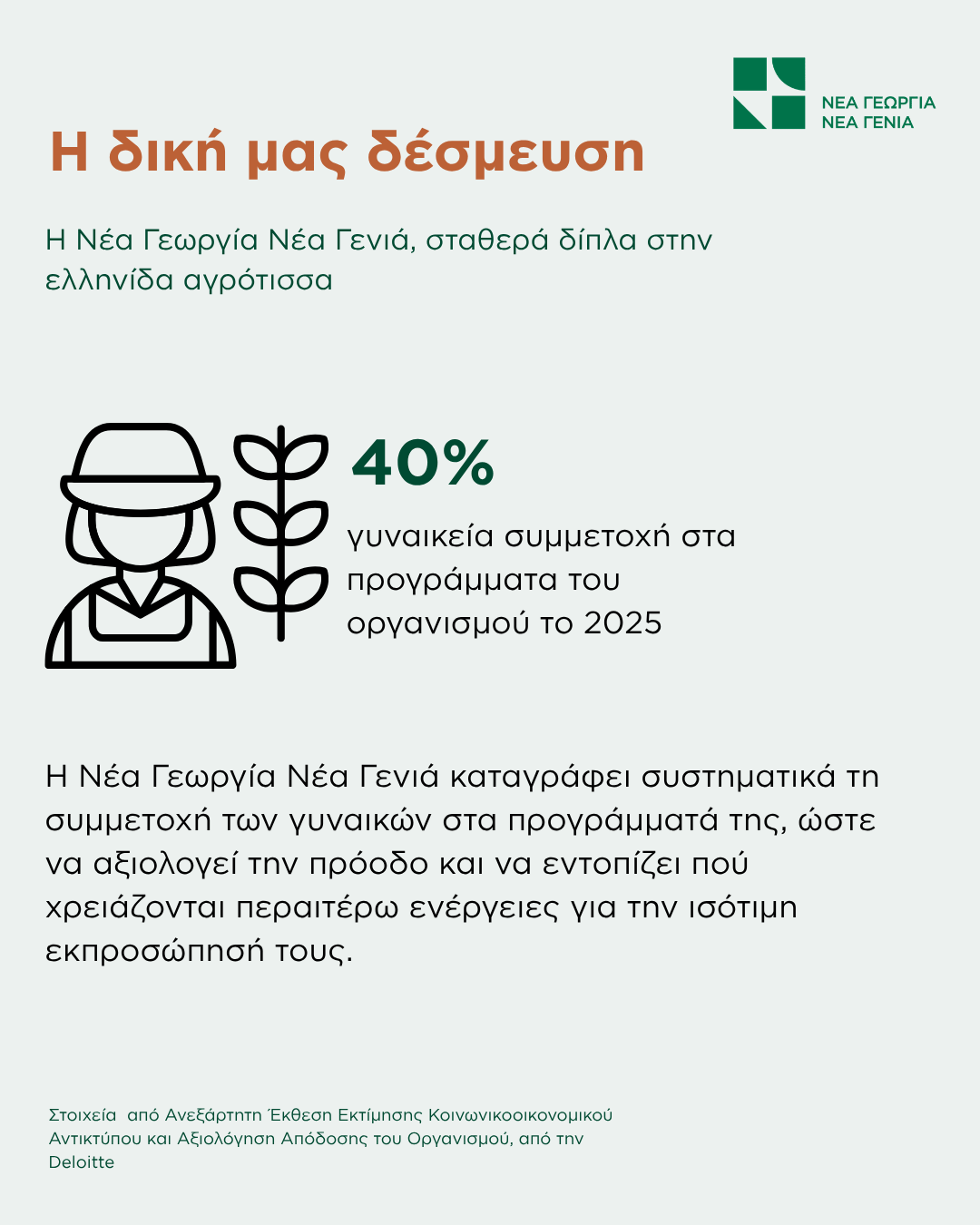
Women accounted for 40% of participants in our programmes during the period 2018–2025. In fact, their participation in Entrepreneurship and Leadership programmes often exceeds 50%. In traditionally male-dominated sectors such as beekeeping, women excel in adopting modern practices, as demonstrated in our Queen Rearing programmes, acquiring specialised skills, creating additional sources of income and developing local networks of cooperation.
In another example, in Vamvakou, we helped establish the women’s cooperative “I Vamvakia”, highlighting how collective forms of entrepreneurship can create new prospects for a small mountain community. Similarly, through the training of mastic growers on Chios, we see young women producers taking an active role in passing on knowledge to other producers.
Many of these women have now increased their income, are creating successful – even award-winning – businesses in the agrifood sector, are taking on leadership roles within their families and communities, and are gaining self-confidence and self-respect.
As a woman leading an organisation whose mission is to revitalise Greece’s rural regions, I have a deep understanding of the needs, concerns and aspirations of rural women. And I firmly believe that women’s equal participation is a matter of justice and a necessity for development.
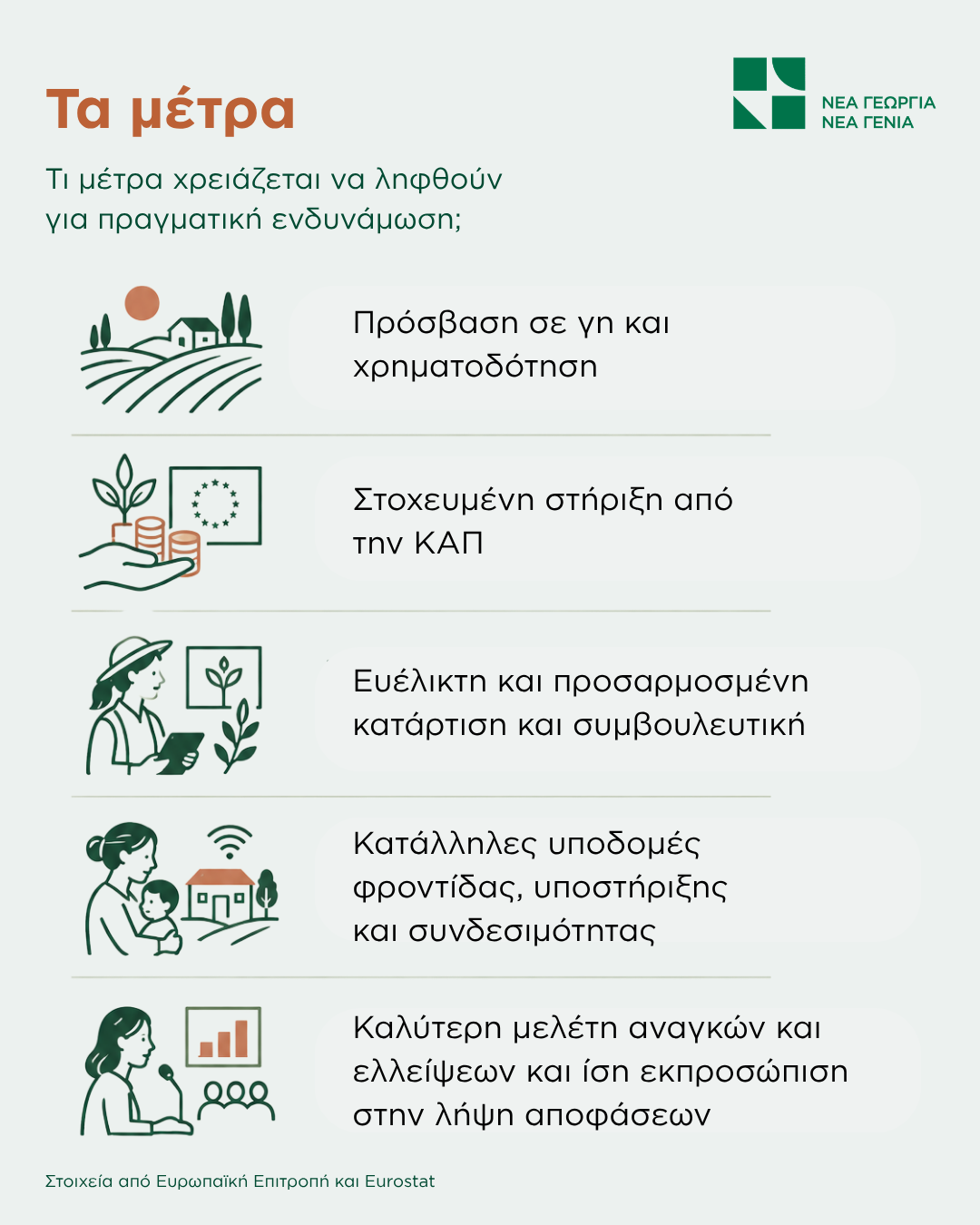
We therefore need more training opportunities, better access to resources, stronger professional networks and more women in positions of responsibility and decision-making.
The future of rural Greece must be shaped with women at the forefront.
We stand alongside Rural Women – amplifying their voices, opening up new opportunities and building a brighter future together with them, in which they can thrive personally, professionally and socially.