Νέα Γεωργία Νέα Γενιά

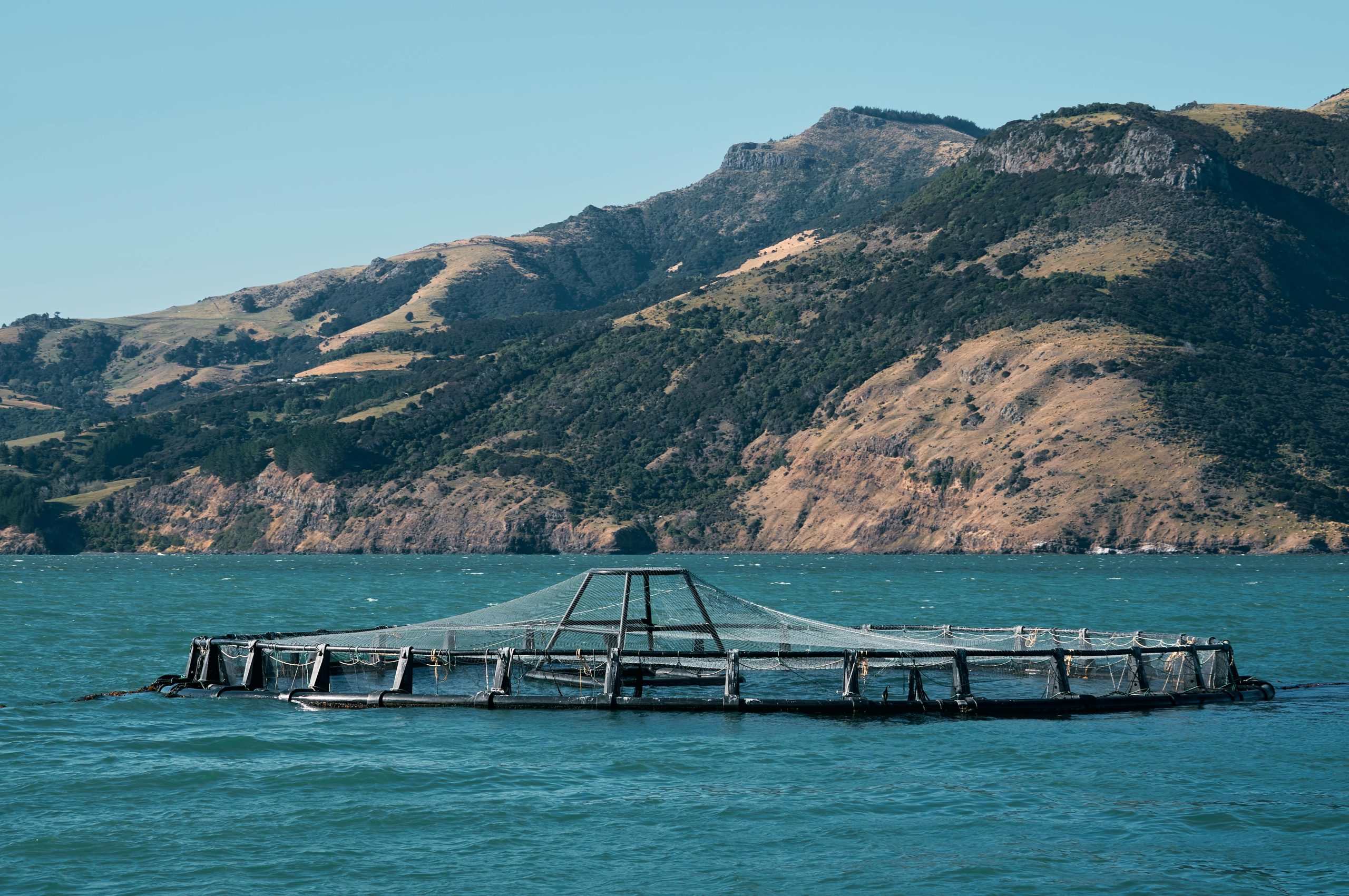
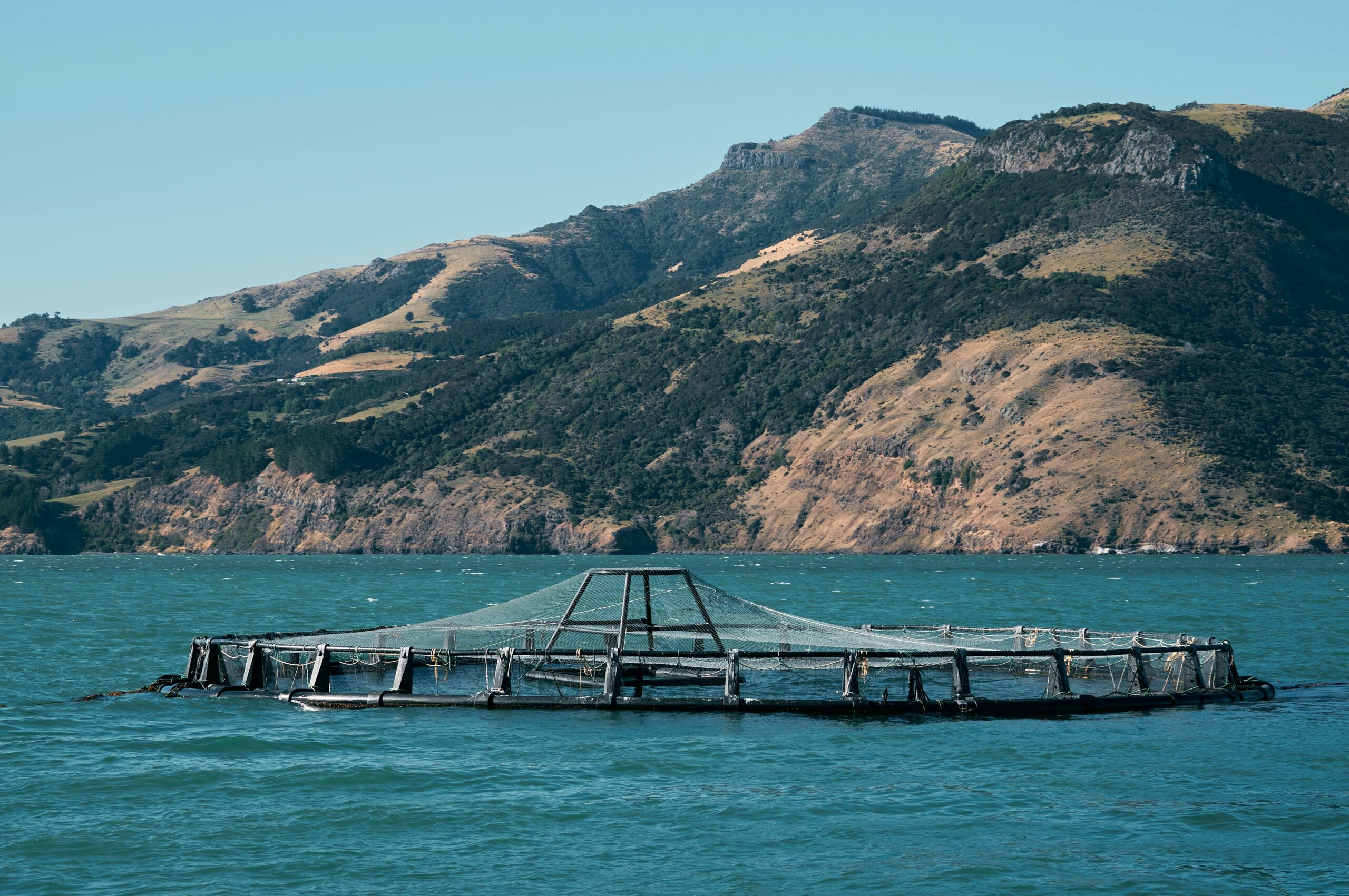
Promoting Small-Scale Aquaculture Sustainability in Southeast Mediterranean

The “Promoting Small-Scale Aquaculture Sustainability in Southeast Mediterranean” program was successfully completed with the goal of enhancing sustainability and business development for small-scale aquaculture in the wider Southeast Mediterranean region. Through a comprehensive educational framework, the program aimed to support and empower producers from five countries: Egypt, Algeria, Lebanon, Morocco, and Tunisia. The participants were selected through an international competition and had the opportunity to engage in a series of educational activities combining theory with practical application.

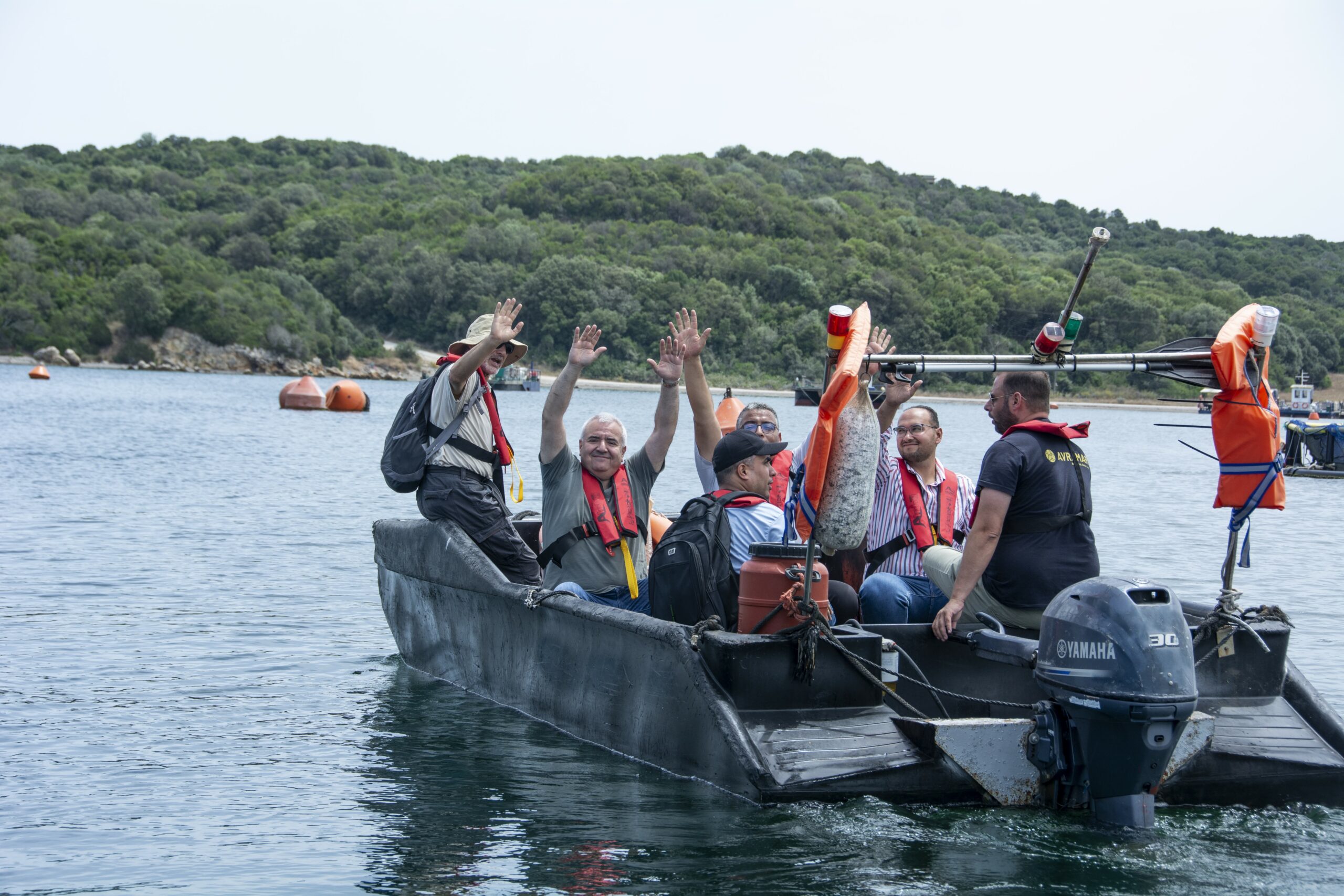
The training program included an intensive ten-day workshop held in Greece, where participants were trained on key topics such as innovation, business development, technological trends, and sustainability. By attending educational seminars and visiting model aquaculture units, participants gained new knowledge and skills to improve their businesses. The program also provided 100 hours of personalized consulting from industry experts to ensure the practical implementation of these skills and foster the sustainable development of their enterprises.
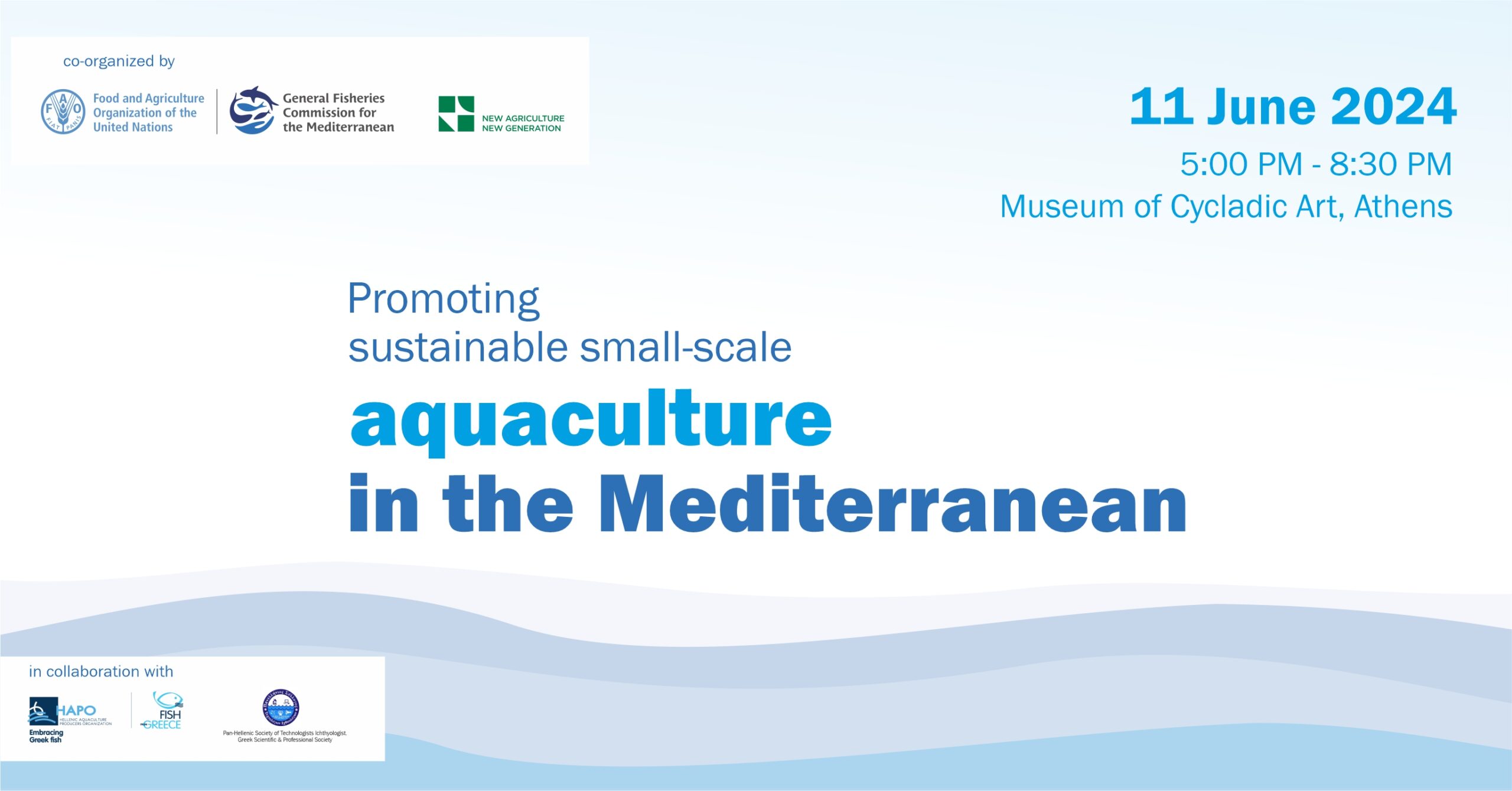
The inaugural event for the program was held at the Museum of Cycladic Art in Athens, attracting international attention from the aquaculture sector. The event was opened by prominent figures, including Maria Damanaki, former European Commissioner for Maritime Affairs and Fisheries, Houssam Hamza from the General Fisheries Commission for the Mediterranean (GFCM), and Effie Lazaridou, CEO, NANG.

The speakers emphasized the vital role of small-scale aquaculture in the Mediterranean diet, food security, and environmental footprint reduction. They also highlighted the need for support and modernization in the sector through new technologies and sustainability practices, enabling small businesses to remain competitive in an evolving market.
The program not only contributed to skills development but also strengthened collaborations between research institutions, professionals, and international organizations. Greece’s selection as the central hub for implementing this important initiative underscores the country’s leading role in aquaculture and the promotion of sustainable food production from aquatic ecosystems.

Detailed Benefits

Its goal was to strengthen the sustainable development of small-scale aquaculture producers in the southeastern Mediterranean — namely in Algeria, Egypt, Lebanon, Morocco and Tunisia.

More specifically:

  • The participants were selected through an open call based on sustainability criteria.

  • They received training in entrepreneurship, marketing and management.

  • They attended intensive workshops and seminars in Greece on:

    • strategy, innovation and sustainability,

    • technological trends, marketing and sales.

  • They participated in field visits to Greek aquaculture farms, hydroponic units and research laboratories, in order to become familiar with Greek expertise in the sector.

  • They will also receive tailor-made coaching in their home countries to apply what they have learned.

Programme Benefits

For the participants

  • Development of skills in entrepreneurship, management and marketing.

  • Exchange of experiences and best practices with other Mediterranean producers.

  • Exposure to Greek know-how in innovative and sustainable aquaculture.

  • Incentives for new investments, such as:

    • creation of recirculating aquaculture systems,

    • cultivation of new species (e.g. red seabream),

    • development of products such as spirulina and algae,

    • expansion into international markets.

  • Strengthening of collaborations and creation of a regional professional network.

For the sector and the region

  • Reinforcement of sustainable small-scale aquaculture as part of Mediterranean heritage.

  • Contribution to the GFCM 2030 Strategy and the FAO Blue Transformation vision.

  • Support for the United Nations Sustainable Development Goals (SDGs), particularly in relation to:

    • food security and the production of high-protein foods,

    • job creation,

    • income diversification and the empowerment of women.

Watch the programme’s summary video.
Article from FAO

Olive Cultivation and Olive Oil Production Seminar

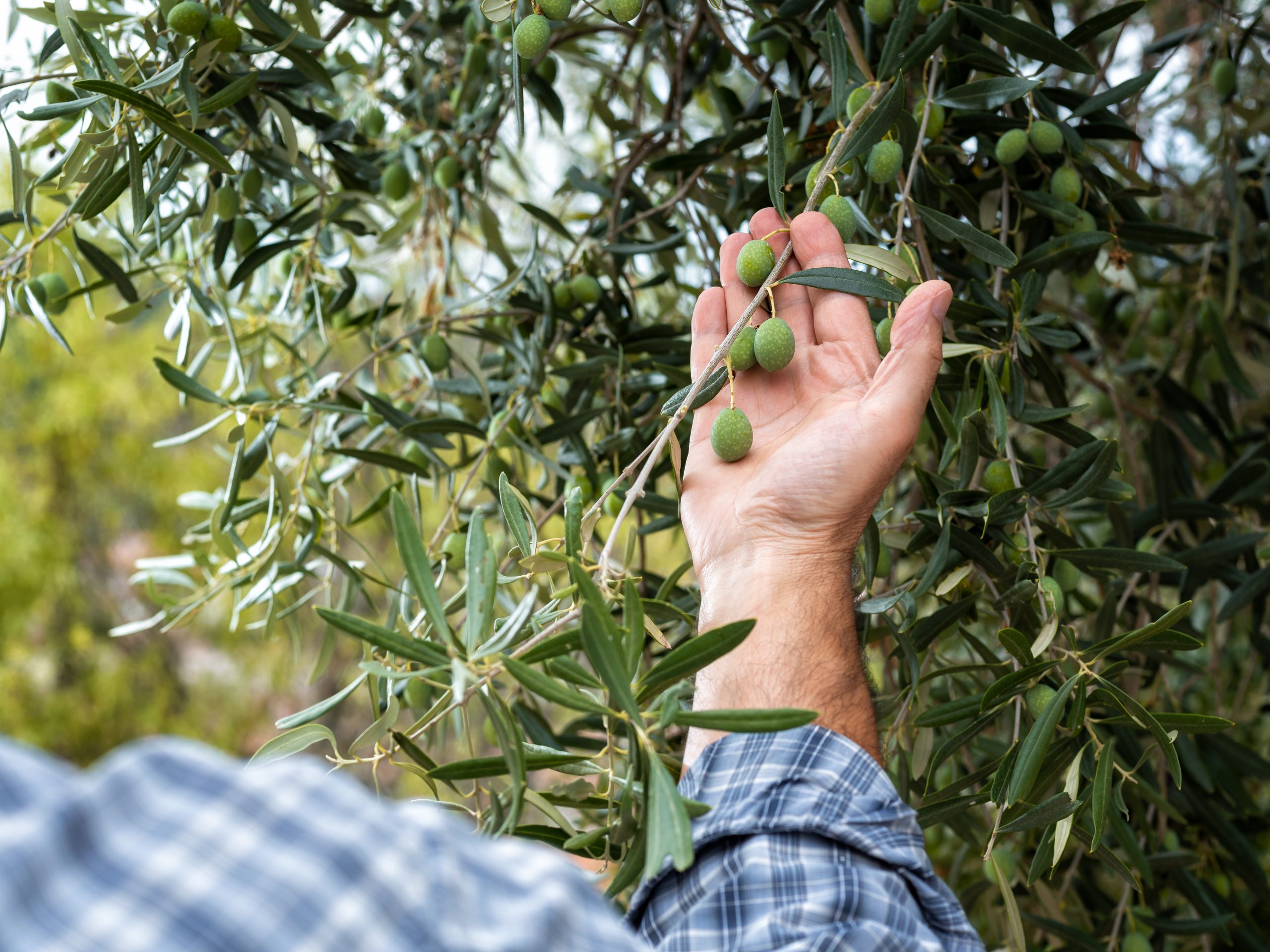
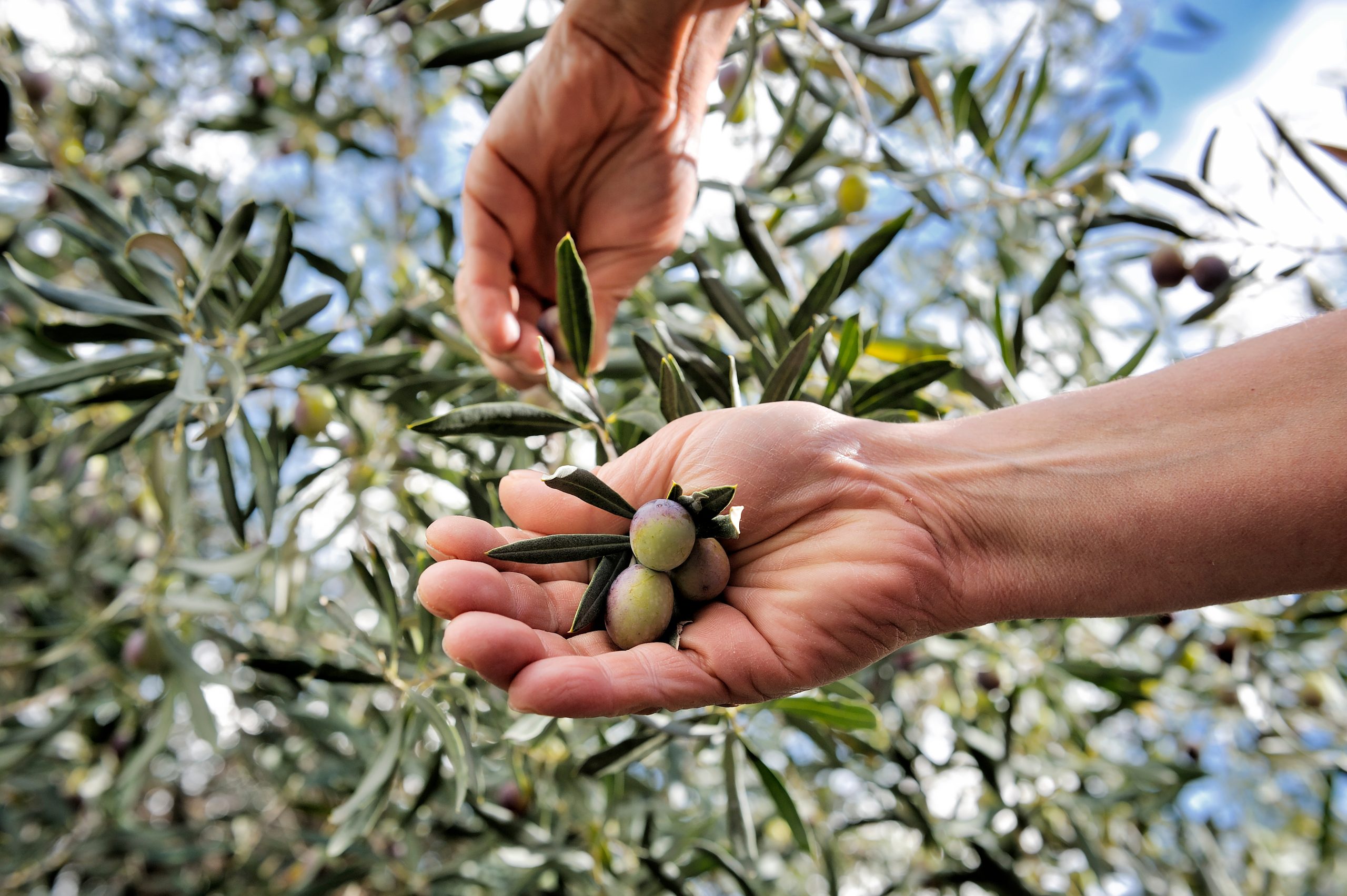
The aim of this specific open and modern seminar is to provide participants – in a short period of time – with introductory knowledge and important basic information on olive tree care.

The topics covered include olive tree pruning, plant physiology, appropriate cultivation techniques, plant protection methods, and the use of irrigation systems.

Simple, fast, on your own time

This webinar is asynchronous and can be followed at your own pace, allowing you to grow your knowledge whenever and however you want.

This course is addressed to:

• Olive growers, whether professionally or supplementarily involved.

• Professionals from the entire value chain of olives and olive oil, such as olive mill owners, processors, and traders.

• Students and young professionals: Individuals who wish to gain knowledge about olives.

Meet the Instructor, Dimitrios Psathas:

Dimitrios Psathas is a lecturer at Perrotis College of the American Farm School in Thessaloniki, specializing in Olive Cultivation and Olive Oil Processing Systems. As the founder of Klea Premium Goods, he plays a leading role in ensuring the quality of the company’s products. With extensive experience as an Agronomist Consultant, he has made significant contributions to olive grove management and the production of high-quality extra virgin olive oil. He is a certified olive oil taster and has been recognized in various competitions and research programs.

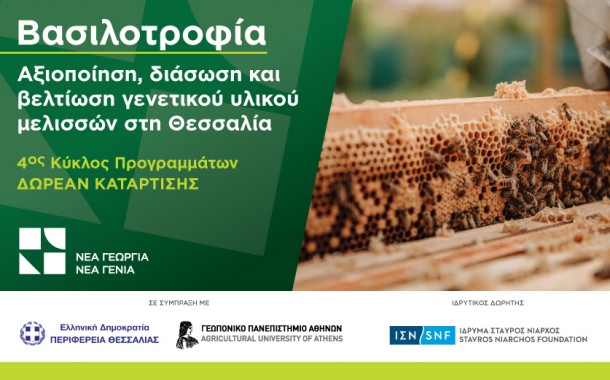
Queen rearing: Utilization, rescue, and genetic improvement of bees in Evia (phase B)

The organization “New Agriculture New Generation” announces the second phase of the free training and counseling program “Queen rearing: Utilization, rescue, and genetic improvement of bees in Evia”. The program is implemented in collaboration with the Agricultural University of Athens, which designed its educational component under the scientific guidance of the Laboratory of Sericulture and Apiculture, headed by Associate Professor Georgios Goras.

This particular action is co-financed by the organization “New Agriculture New Generation” through the founding donation of the Stavros Niarchos Foundation (SNF), the John S. Latsis Public Benefit Foundation, and the company APIVITA.

The program “Queen rearing: Utilization, rescue, and genetic improvement of bees in Evia” is a unique practical initiative in Europe and possibly globally. It is being implemented this year for the second time, having started in Thessaly, where the final number of beneficiaries is estimated to exceed 40% of the total beekeepers in the region. In this context, it has already received significant distinctions in Greece, such as the Bravo Sustainability Award 2022, category “Ecosystem Protection and Biodiversity”, and the GOLD Environmental Award, category “Sustainable Agriculture”.

The program “Queen rearing: Utilization, rescue, and genetic improvement of bees in Evia” consists of two parts:

  1. Finding and providing specialized training for up to 12 young individuals who have knowledge and experience in beekeeping practice. They will be trained in basil culture and royal jelly production, as well as general specialized knowledge in proper beekeeping practices. After receiving this necessary training, the six most capable individuals with the willingness and ability to support the next step of the program will be selected.
  2. Activating the six selected specialized vaccinators in the Regional Unit of Evia. Their activity will include coordinating with beekeepers in the area who wish to participate in the program and organizing demonstrations and implementation of royal cell vaccinations for the production of quality queens, using selected genetic material.

Program Objective

The aim of the program is to carry out a significant number of royal cell vaccinations by a group of specialized individuals who will have the ability to present, explain in detail the process, and address questions from participating beekeepers. This action has multiple objectives: familiarizing a large number of beekeepers with the process of producing quality queens, mass production in the entire Regional Unit of Evia of selected genetic material with the ultimate goal of increasing production, and creating a specialized activity – this vaccination provision – that may potentially become a professional outlet.

Target Audience

Beekeepers operating in the broader area of Evia.

Educational cycle action area 2023-2024

Regional Unit of Evia

Duration of Action

Until May 2024

Contact numbers for Northern Evia

Passa – Afendra Georgia: 6972835963

Simaki – Bellou Evangelia: 6971557108

Stamoulos Dimitris: 6985673739

Contact numbers for Central and Southern Evia

Argyris Christos: 6971770045

Loukeris Orestis: 6974094948

Ntales Vangelis: 6974948829

Papanikolaou Andronikos: 6971649596

For more information

Periklis Stamou, Beekeeper, Action Coordinator

Phone: 6972501043 Email: [email protected]

Filippa Griva, Agricultural University of Athens

Phone: 6982187876 Email: [email protected]

Kalliopi Karamboiki, Capacity Building Associate, New Agriculture New Generation

Phone: 2106917986, 6972096122 Email: [email protected]

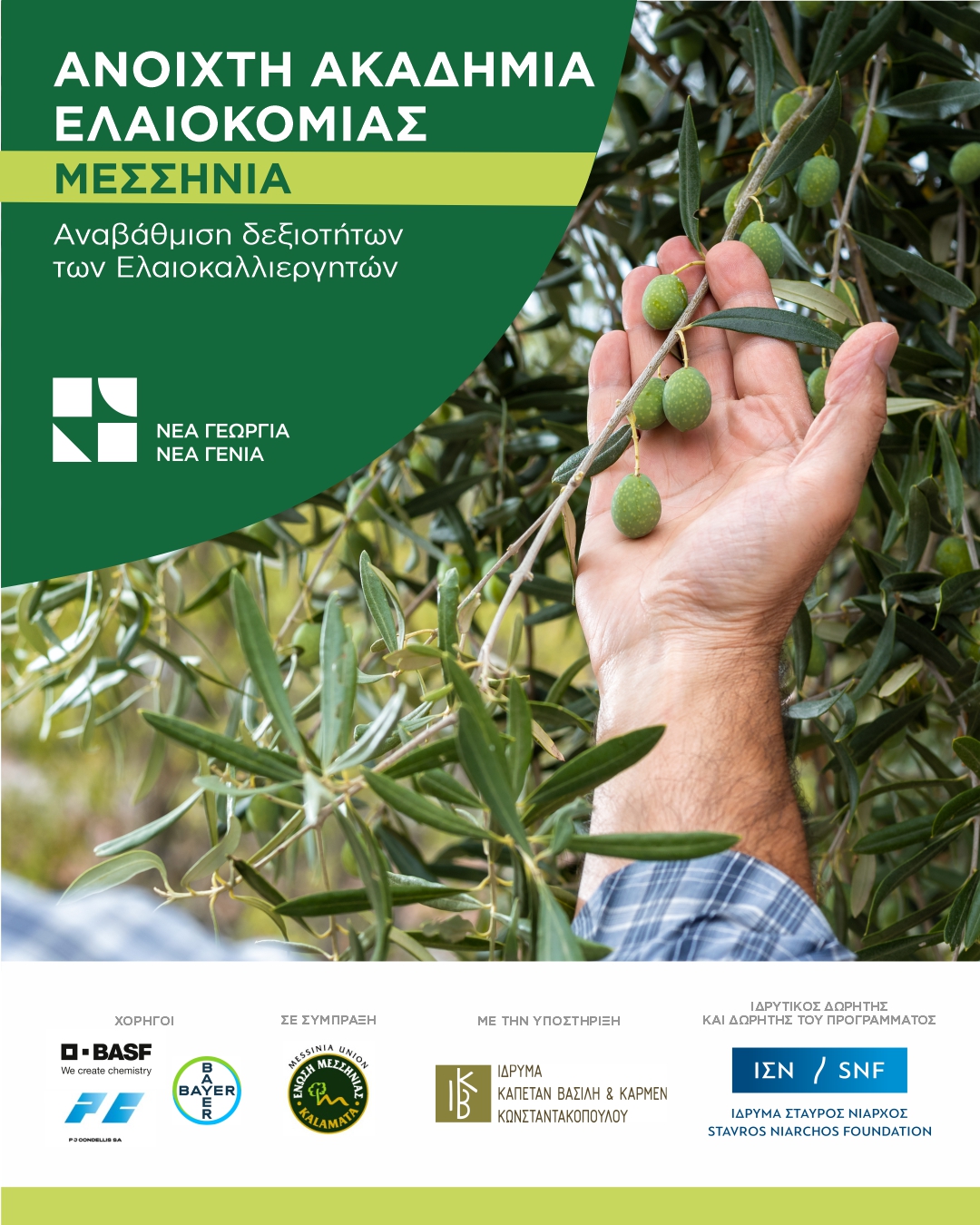
Open Olive Oil Academy – Messinia

Open Olive Academy – Messinia

Upskilling of Olive Growers

Summary

The “Open Olive Academy – Messinia” program aims to transfer knowledge and expertise to olive growers in the Regional Unit of Messinia. It is based on the creation of a comprehensive, coherent, and at the same time intensive training seminar cycle focused on the olive and olive oil sector, which also includes experiential training.

The program is co-funded by the organization “New Agriculture New Generation,” through the founding donation of the Stavros Niarchos Foundation (SNF), by the Captain Vassilis and Carmen Constantakopoulos Foundation, is supported by Bayer, BASF, and PJ Condelis SA, and is implemented in collaboration with the Union of Messinia.

Under the Auspices of the Peloponnese Region.

The seminars cover the entire chain of olive cultivation production.

Program Objective

The adoption of modern olive cultivation practices by the olive growers of Messinia in order to improve their production processes and strengthen their competitiveness and outward orientation.

Target Audience:

The program is addressed to olive growers, either full-time or part-time, who are active in the Regional Unit of Messinia. In addition, professionals from the entire olive and olive oil value chain—such as olive mill owners, processors, and traders—may also participate in the seminars.

Trainers:

The seminars will be delivered by specialized staff and scientific experts from the “New Agriculture New Generation” organization, as well as external partners, such as market professionals and consultants with recognized expertise in production, standardization, packaging, and marketing, along with academics and university professors.

Program Duration:

The program consists of 54 training hours and includes six (6) two-day sessions, delivered in person in Kalamata.

Training Program

The seminars are divided into two thematic modules, covering the following topics:

Training Cycle I, Duration: June 20 – July 5, 2025

· Preparation & establishment of olive grove
· Olive tree physiology
· Cultivation practices
· Plant protection & Climate Change

Training Cycle II, Duration: September 5 – October 11, 2025

· Economic Concepts
· Soil management – New trends and certification systems
· Olive oil quality and processing
· Olive oil tasting
· Visit-friendly olive groves & Olive tourism
· Informative Event

See the detailed schedule of the Educational Cycles.

Training Venue:

Facilities of the Agricultural Cooperative “Union of Messinia” (map with location)

Training Certificate

A Certificate of Attendance will be provided.

Participation Cost

There is no participation fee for the program.

More Information

Domna Zoureilidou, Capacity Building Manager, New Agriculture New Generation
Phone: +30 2310 471 292
Email: [email protected]

Queen rearing: Utilization, rescue, and genetic improvement of bees in Thessaly (phase B)

Brief Description

The organization “New Agriculture New Generation” and the Region of Thessaly, in collaboration with the Agricultural University of Athens, announce the start of the second phase of the program titled “Queen rearing: Utilization, rescue, and genetic improvement of bees in Thessaly”.

The educational program is designed and implemented by the Agricultural University of Athens, under the scientific guidance of the Laboratory of Sericulture and Beekeeping, headed by Associate Professor Georgios Gkoras. The program is co-financed by the Region of Thessaly and the organization “New Agriculture New Generation” through the founding donation of the Stavros Niarchos Foundation (SNF).

The program is divided into 2 phases. In the first phase, which has already been completed, 20 beneficiaries acquired knowledge on queen rearing, royal jelly production, and proper beekeeping practices. Upon completion of the basic training, the trainees will be engaged in the second phase of the program in each regional unit of Thessaly to organize collective queen rearing in bee colonies under their responsibility. This action will include organizing beekeepers in the area who wish to participate in the program, demonstrating and implementing queen cell grafting for the production of quality queens from selected genetic material. The resulting queen cells will be managed by the beekeepers themselves for their benefit, without any financial burden.

Program Objective

The aim of the program is to carry out queen cell grafting by a group of specialized individuals who will have the ability to present, explain in detail the process, and address queries that may arise from participating beekeepers. This action has multiple objectives: familiarizing a large number of beekeepers with the process of producing quality queens, mass production throughout the entire region of Thessaly of selected genetic material, ultimately aiming to increase production, and creating a specialized activity—queen rearing—that could potentially become a professional outlet.

Target Audience

Beekeepers operating in the wider area of Thessaly.

Educational Cycle Action Area 2021-2022

Region of Thessaly

Duration of Action

Until autumn 2022

Contact Numbers for Larissa Regional Unit

Konstantinos Zampakas: 6907274936

Vasilis Kalantzis: 6981474310

Elina Kampisiou: 6974012351

Georgios Matoulas: 6934756123

Ioannis Senko: 6936820666

Contact Numbers for Magnesia Regional Unit

Fotis Zangavieros: 6943802130

Dimitris Koletas: 6974202989

Nikolaos Kritsalis: 6997729573

Eleftheria Salamura: 6987506498

Periklis Stamou: 6972501043

Contact Numbers for Karditsa Regional Unit

Katerina Apostolopoulou: 6993736456

Alexandros Giannakopoulos: 6988198696

Alexandros Liatsos: 6976290719

Georgios Xiros: 6983603675

Contact Numbers for Trikala Regional Unit

Konstantinos Lambrogeorgos: 6979630121

Apostolos Topalidis: 6980293837

Ioannis Topalidis: 6974917578

For more information

Filippa Griva, Agricultural University of Athens

Tel: 6982187876 Email: [email protected]

For more information about the organization “New Agriculture New Generation”

Kalliopi Karamboiki, Capacity Building Associate

Tel: 2106917986 Email: [email protected]

Rebuilding Beekeeping Sector in Thessaly: Training on preparing for and responding to natural disasters

Program Title

Rebuilding Beekeeping Sector in Thessaly: Training on preparing for and responding to natural disasters

Brief Description

New Agriclture New Generation organization announces the commencement of a free training program on “Rebuilding Beekeeping Sector in Thessaly: Training on preparing for and responding to natural disasters” The program is aimed at all beekeepers in Thessaly and is implemented as part of the action “Restarting Beekeeping Sector in Thessaly.”

Specifically, there will be 10 educational meetings in 10 different municipalities of Thessaly, even in remote areas, with the aim of supporting over 300 beekeepers with knowledge and skills to better prepare them to face challenges, adapt to climate change, and take necessary measures for proper hive management. The action “Restarting Beekeeping Sector in Thessaly” also includes the new program “Rebuilding Beekeeping Sector in Thessaly: Queen Rearing: Replenishing Bee Colonies and Rescuing Local Genetic Material”. The program, scheduled to be implemented between March and September 2024, will provide support to 300 affected professional beekeepers in Thessaly, offering 20,000 royal cells. These actions will contribute not only to the restoration of damages caused by “Daniel” but also to the development of conditions for the future strengthening of the sector in Thessaly.

The above-mentioned training sessions will be implemented in collaboration with the Agricultural University of Athens and Associate Professor George Goras, beekeeper Alexandros Gousiaris, beekeeping trainer, and Dimitris Voloudakis and Kalliopi Karaboiki from New Agriculture New Generation organization.

They are co-funded by the Nea Gea Nea Genia organization through the founding donation of the Stavros Niarchos Foundation (SNF), the Region of Thessaly, the Charitable Foundation of Ioannis S. Latsis, and the company APIVITA.

Purpose of the Program 

New Agriculture New Generation organization aims to contribute to the reconstruction of the apiculture sector and support beekeepers in Thessaly after the floods caused by the “Daniel” phenomenon. As climate change and extreme weather conditions are expected to continue affecting our daily lives in the coming years, the new training program aims to improve beekeeping practices and overall bee health. The goal is to enhance bee resilience and reduce the impacts of climate change by transferring knowledge and practices from specialized scientists.

Target Audience

All beekeepers in Thessaly.

Topics

Climate change and its impacts Measures before, during, and after natural disasters Annual hive management plan

Areas of Action

Regional Unit of Larissa Regional Unit of Trikala Regional Unit of Magnesia Regional Unit of Karditsa Karditsa – April 19, 2024, Dimitra Center (Cotton Sorting Center Building)

Trainers

Alexandros Gousiaris, beekeeper, beekeeping trainer George Goras, Associate Professor, Laboratory of Apiculture and Sericulture, Agricultural University of Athens Dimitris Voloudakis, Agronomist, Director of Capacity Building Nea Gea Nea Genia, Scientific Associate of the Academy of Athens Kalliopi Karaboiki, Agronomist, Capacity Building Manager of Nea Gea Nea Genia organization

Duration of Action

Each training session lasts for 4 hours. Free with application for participation.

For More Information

Kalliopi Karaboiki, Capacity Building Manager

New Agriculture New Generation

Tel: 2106917986, 6972096122

Email: [email protected]


Rebuilding Beekeeping Sector in Thessaly: Queen Rearing: Replenishing Bee Colonies and Rescuing Local Genetic Material

Program Title

Rebuilding Beekeeping Sector in Thessaly: Queen Rearing: Replenishing Bee Colonies and Rescuing Local Genetic Material

Brief Description

The organization New Agriculture New Generation announces the initiation of the program “Rebuilding Beekeeping Sector in Thessaly: Queen Rearing: Replenishing Bee Colonies and Rescuing Local Genetic Material”. The program is aimed at all affected beekeepers in Thessaly and is implemented within the framework of the action “Rebuilding Beekeeping Sector in Thessaly”.

The program is designed and implemented in collaboration with the Agricultural University of Athens, under the scientific guidance of the Laboratory of Sericulture and Beekeeping, headed by Associate Professor Georgios Goras. It is co-funded by the organization New Agriculture New Generation through the founding donation of the Stavros Niarchos Foundation (SNF), the Region of Thessaly, the John S. Latsis Public Benefit Foundation, and the company APIVITA.

The program “Rebuilding Beekeeping Sector in Thessaly: Queen Rearing: Replenishing Bee Colonies and Rescuing Local Genetic Material” will be implemented from April to September 2024 and will provide support to 300 affected professional beekeepers in Thessaly, by supplying 27,000 queen cells.

The above actions will contribute not only to the restoration of the damages caused by “Daniel” but also to the development of conditions for the future strengthening of the sector in Thessaly.

Purpose of the Program

The organization New Agriculture New Generation aims to contribute to the reconstruction of the beekeeping sector and to support the beekeepers of Thessaly after the floods caused by the phenomenon “Daniel”.

The program aims to support up to 300 beekeepers affected by the catastrophic weather event Daniel with 27,000 queen cells originating from the endemic genetic material of the region. The production of queen cells will be carried out by 10 specialized queen breeders who will provide queen cells either from their own selected genetic material or from selected genetic material of the beekeeper, if available. The program offers the opportunity to produce suitable genetic material and quality queens with the ultimate goal of quickly replenishing the lost bee colonies.

The 10 specialized queen breeders were trained in the successful program “Queenrearing: Utilization, Rescue, and Improvement of Bee Genetic Material in Thessaly” and performed more than 800 inoculations between 2022 and 2023. This specific action has already received significant awards in Greece, such as the Bravo Sustainability Award 2022, category “Protection of Ecosystems and Biodiversity” and the GOLD Environmental Award, category “Sustainable Agriculture”.

Target Audience

All beekeepers in Thessaly.

Priority will be given to affected beekeepers, following evaluation of applications.

Areas of Action

Regional Units of Larissa, Karditsa, Magnesia, Trikala.

Application Submission & Duration of Action

Phase B of Participation Applications until April 30, 2024.

The provision of queen cells will take place from April to September 2024.

Contact Numbers for Larissa Regional Unit

Elina Kampisiou: 6974012351

Ioannis Senkos: 6936820666

Contact Numbers for Karditsa Regional Unit

Katerina Apostolopoulou: 6993736456

Alexandros Giannakopoulos: 6988198696

Alexandros Liatsos: 6976290719

Giorgos Xiros: 6983603675

Contact Numbers for Magnesia Regional Unit

Dimitris Kolettas: 6974202989

Periklis Stamou: 6972501043

Contact Numbers for Trikala Regional Unit

Konstantinos Lamprogeorgos: 6979630121

Ioannis Topalidis: 6974917578

For More Information

Kalliopi Karamboiki, Capacity Building Manager

New Agriclture New Generation

Tel: 2106917986, 6972096122

Email: [email protected]

Filippa Griva

Agricultural University of Athens

Tel: 6982187876

Email: [email protected]

Restarting the Rural Economy in Northern Evia

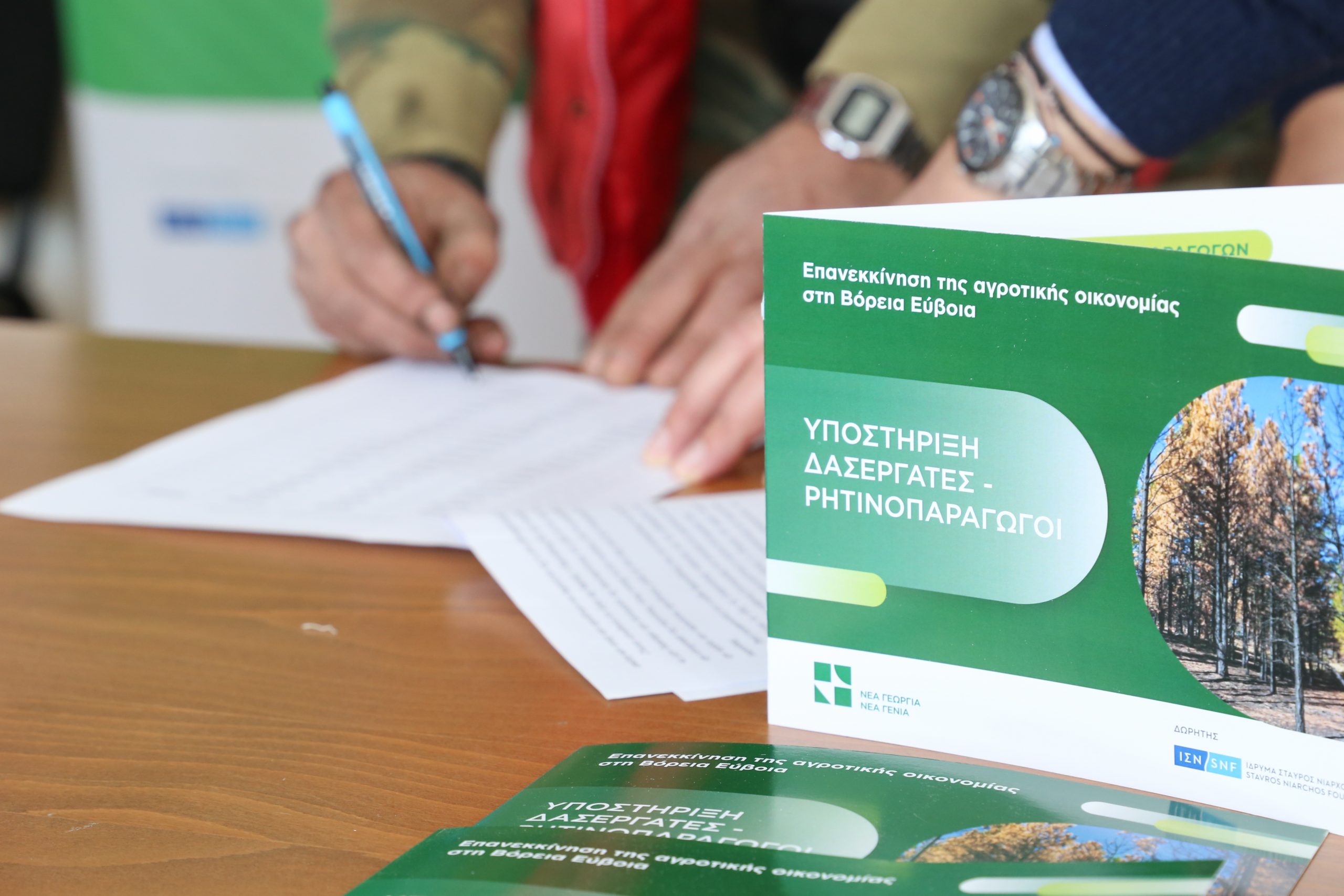
The non-profit organization “New Agriculture New Generation” has launched the implementation of the program “Restarting the Rural Economy in Northern Evia,” which is part of the Fire relief initiative for Νorthern Evia by the Stavros Niarchos Foundation (SNF).

The unprecedented wildfires in the summer of 2021 in Northern Evia left behind incalculable damages, destroying homes, facilities, agricultural and livestock farms, as well as the area’s forest wealth and wildlife.

The “Restarting the Rural Economy in Northern Evia” program, implemented by the non-profit organization “New Agriculture New Generation,” is part of the Fire relief initiative for Νorthern Evia by the Stavros Niarchos Foundation (SNF). It includes targeted actions to support four groups of residents in the area, with the ultimate goal of quickly and effectively regenerating the affected areas as much as possible.

Specifically, the program supported 300 beekeepers, 300 resin producers/forest workers, 40 livestock farmers, and the local communities in the areas of the Municipality of Limni-Mantoudi-Agia Anna and the Municipality of Istiaia-Aidipsos over a period of one year through the following actions:

  1. Beekeepers (November 2021 – March 2022) a) Training for the recovery of lost bee colonies. b) Creation of a pilot beekeeping park in the private Noel-Baker forest. c) Purchase of professional equipment.
  2. Resin Producers/Forest Workers (November – December 2021) a) Replacement of technical equipment and safety gear.
  3. Livestock Farmers (November – December 2021, March – August 2022) a) Training on animal welfare, reproduction, and nutrition.
  4. Local Communities (November – December 2021, March – April 2022) a) Support for home food production.

Support action for the rural development of Vamvakou

Regional Development initiative 

A new initiative for the support of the agrifood activity has started in the wider area of the the village of Vamvakou at Lakonia and Mount Parnon through “New Agriculture New Generation” in collaboration with the team of Vamvakou Revival, as part of the initiative to revive the village and enhance the wider area. The two organizations – supported by Stavros Niarchos Foundation (SNF) on a regular basis – are entering into a fruitful collaboration aiming at the generation of job opportunities through the activation of the agrifood sector, as well as at the return of inhabitants, professionals and potential entrepreneurs to the area, who are interested in working with land.

Vision and partners

The support action will run for a year and its vision is to enhance entrepreneurship and boost regional development, through activities supporting primary production and the link of its products with opportunities in the market. This annual program of scientific and business support will be realized in collaboration with the Agricultural University of Athens and a consulting company specializing in the growth of agrifood entrepreneurship, Sweet Ideas, with Tasos Lambrou in charge.

Activities

It includes targeted activities of consulting and sustainable development, focusing on the sectors of sheep-and-goat farming and aromatic and pharmaceutical plants – two sectors of particular interest and with opportunities for growth, as the area has the necessary production volume and the appropriate human resources. In fact, the first group of farmers and entrepreneurs interested in this initiative has been formed and, thus, possibilities and prospects of sustainable development will be explored through synergies in these two sectors. We hope that this hub will attract young people and will be just the beginning for a new era in the agrifood sector in the area.

Within this framework, the Agricultural University of Athens will undertake the task of drawing up studies on the two sectors, aiming at the optimization of the technical characteristics of the production units and of their financial sustainability. It will offer training, consulting and guidance services and include in-situ visits of the scientists of the University to the beneficiaries in the area. Moreover, the consulting team specializing in agribusiness will realize business plans for particular business activities and products, as well as feasibility and sustainability studies for potential processing and standardization infrastructure.

Agrologistics

The Greek Agri-Food Supply Chain

Increased competition, the need to differentiate Greek agricultural products, and the obligations to comply with hygiene standards and certifications require the immediate reorganization of the agricultural supply chain in our country. This reorganization can serve as a lever for the development of the primary sector.

Additionally, due to the added challenges globally posed by the pandemic, it is imperative to study and reshape the Agrologistics sector to make the supply chain sustainable, enhance farmers’ income, ensure food security, and reduce the environmental footprint.

Research on Agrologistics in Greece

The organization “New Agriculture New Generation” has undertaken the initiative to conduct a study on the agri-food supply chain (agrologistics) in collaboration with the National Center for Research and Technological Development (EKETA), the University of Piraeus Research Center (KEPP), the Institute of Port Training “Exantas,” and the Center for Advanced Infrastructure and Technology (CAIT) at Rutgers University, USA.

The recent study analyzes the current state of the agri-food supply chain in our country and highlights the needs and prospects of the sector.

You can read the related study here.

Agrologistics Conference

The organization “New Agriculture New Generation” is organizing an online conference titled: “Agrologistics: Challenges & Prospects in Greece” in collaboration with the National Center for Research and Technological Development (EKETA), the University of Piraeus Research Center (KEPP), the Institute of Port Training “Exantas,” and the Center for Advanced Infrastructure and Transportation (CAIT) at Rutgers University, USA.

This online conference will take place on June 7, 2021 (16:30 – 18:30) on the occasion of presenting the conclusions of a relevant study on the Greek agri-food supply chain conducted by the aforementioned bodies.

The conference will present the conclusions of the study and highlight new developments, best practices, and challenges in the sector, both in Greece and abroad. It will also serve as a platform to discuss the prospects of reorganization and development of the agri-food supply chain as well as the existing needs for training and education in the field.

The conference will feature the study contributors as well as high-ranking officials and experts from leading institutions and organizations in Greece and abroad, such as the Foreign Agricultural Service of the U.S. Department of Agriculture (FAS/USDA), the Stavros Niarchos Foundation, Rutgers University, the U.S. Embassy in Greece, and others.