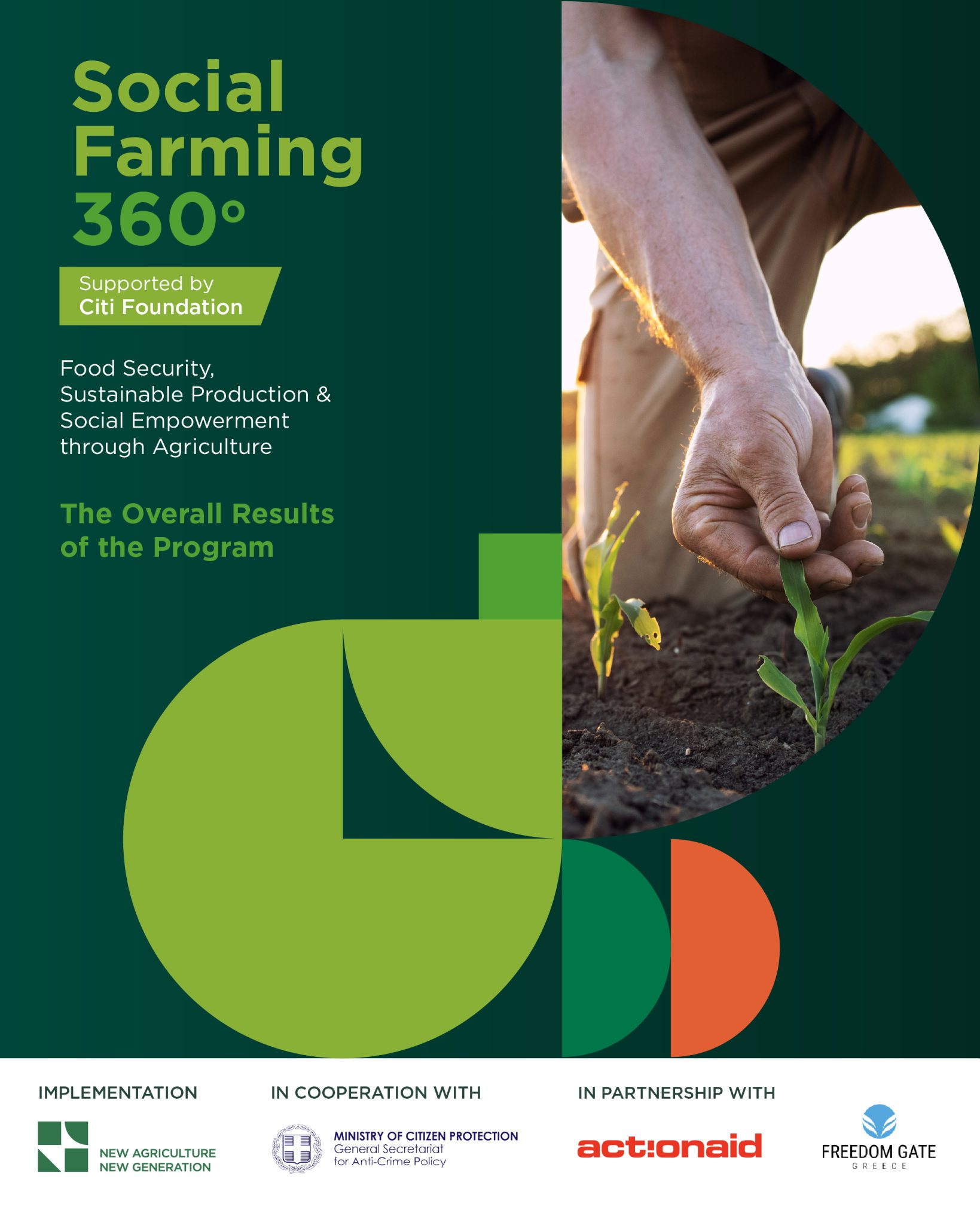
Social Farming 360° was an innovative and multifaceted social farming programme implemented in the agricultural correctional facilities of Greece between 2024 and 2025, functioning as a vehicle for the reintegration of incarcerated individuals while strengthening food production and food security.
In more detail
The Social Farming 360° programme was implemented by New Agriculture New Generation, with the full support of the Citi Foundation, in close collaboration with the General Secretariat for Anti-Crime Policy of the Ministry of Citizen Protection, and with the participation of ActionAid and Pyli Eleftherias (Gate of Freedom).
The programme connects three interrelated goals: food security, sustainable agricultural production, and the reintegration of vulnerable social groups into the labour market and social life.
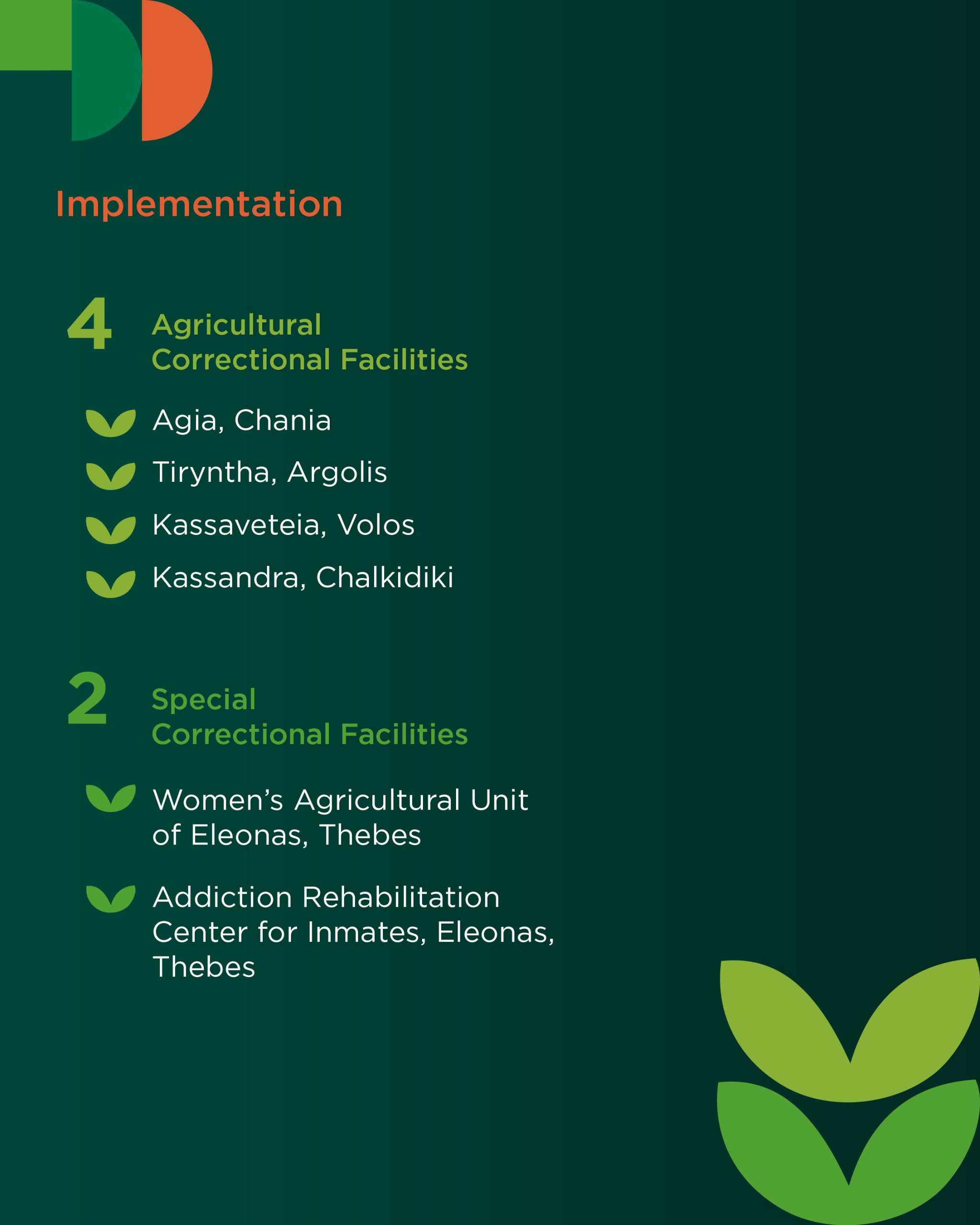
It was a multi-level, two-year social farming programme implemented across six correctional facilities:
4 Agricultural Correctional Facilities
- Agia Chania
- Tiryntha Argolida
- Kassaveteia Volos
- Kassandra Halkidiki
2 Special Correctional Facilities
- Women’s Agricultural Department of Eleonas Thebes
- Drug Rehabilitation Centre for Incarcerated Individuals of Eleonas Thebes
The implementation period of the programme lasted from 01/2024 to 12/2025.
By supporting sustainable food production within the country’s correctional facilities, Social Farming 360° promotes sustainability while offering incarcerated individuals opportunities for training and employment in the agricultural sector. At the same time, it strengthens the training of agronomists working within these facilities.
In essence, through the programme, agriculture is transformed into a tool for learning, empowerment, and social reintegration.
The programme was structured around technical and social interventions operating in a complementary manner.
Within the agricultural component, participants were trained in topics such as olive cultivation, medicinal and aromatic plants, food safety, and product production. Special emphasis was also placed on regenerative agriculture, namely practices related to soil fertility, sustainable cultivation, and biodiversity protection.
At the same time, ActionAid implemented the employability and professional development component, while Pyli Eleftherias (Gate of Freedom) implemented the psychosocial support and social inclusion component.
It should also be highlighted that the programme was not limited to incarcerated individuals, as agronomists and technical agricultural staff working within the correctional facilities also participated. In this way, a significant part of the programme’s technical knowledge is maintained even after its completion, contributing to resilience and long-term productive benefits for the facilities.
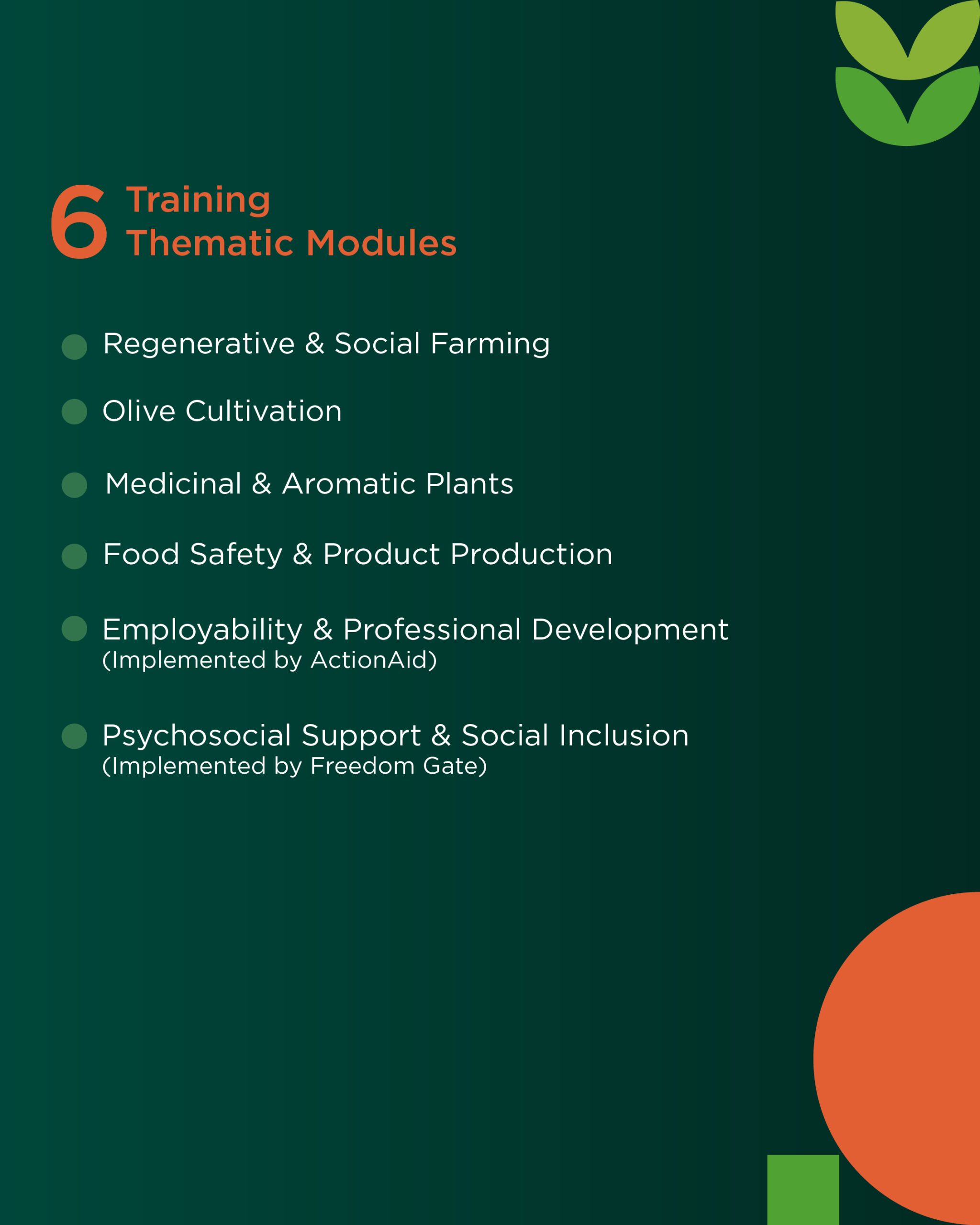
Educational thematic units
- Regenerative & Social Agriculture
- Olive Cultivation
- Medicinal & Aromatic Plants
- Food Safety & Product Production
- Employability & Professional Development (implemented by ActionAid)
- Psychosocial Support & Social Inclusion (implemented by Pyli Eleftherias / Gate of Freedom)
Participation and programme impact
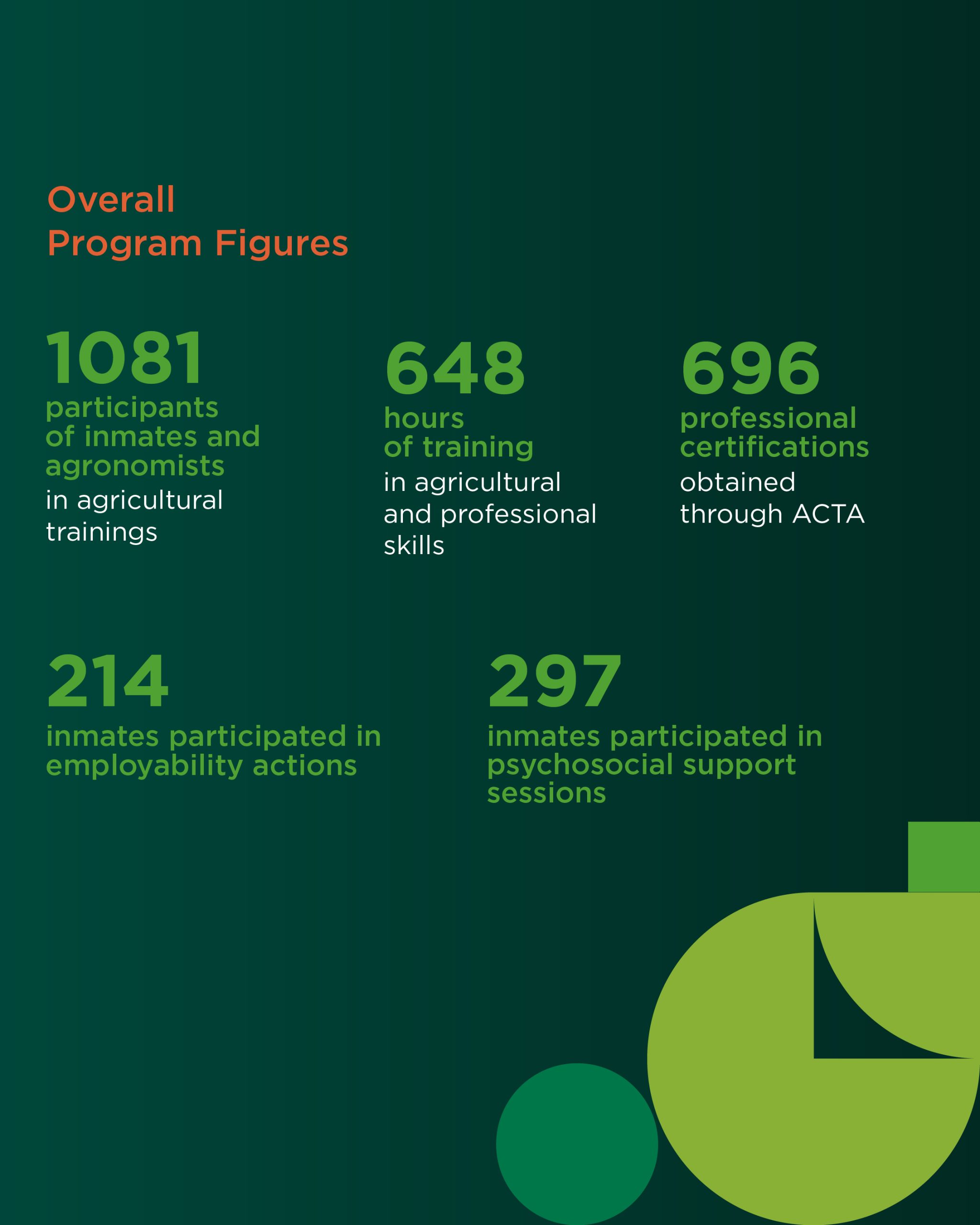
Participation in the programme was significant and indicative of the strong interest it generated. Specifically, the following were recorded:
- 1,081 participations of incarcerated individuals and agronomists in agricultural training sessions
- 648 hours of training in agricultural and professional skills
- 696 ACTA professional certifications
- 231 incarcerated individuals participated in employability activities
- 297 incarcerated individuals participated in psychosocial support sessions
It is worth noting that a considerable number of incarcerated individuals who participated in the programme continued after their release by joining ActionAid reintegration programmes.
At the same time, participants’ testimonies demonstrate that the programme was perceived as an initiative that opened new professional prospects and created an environment of communication, respect, and honesty.
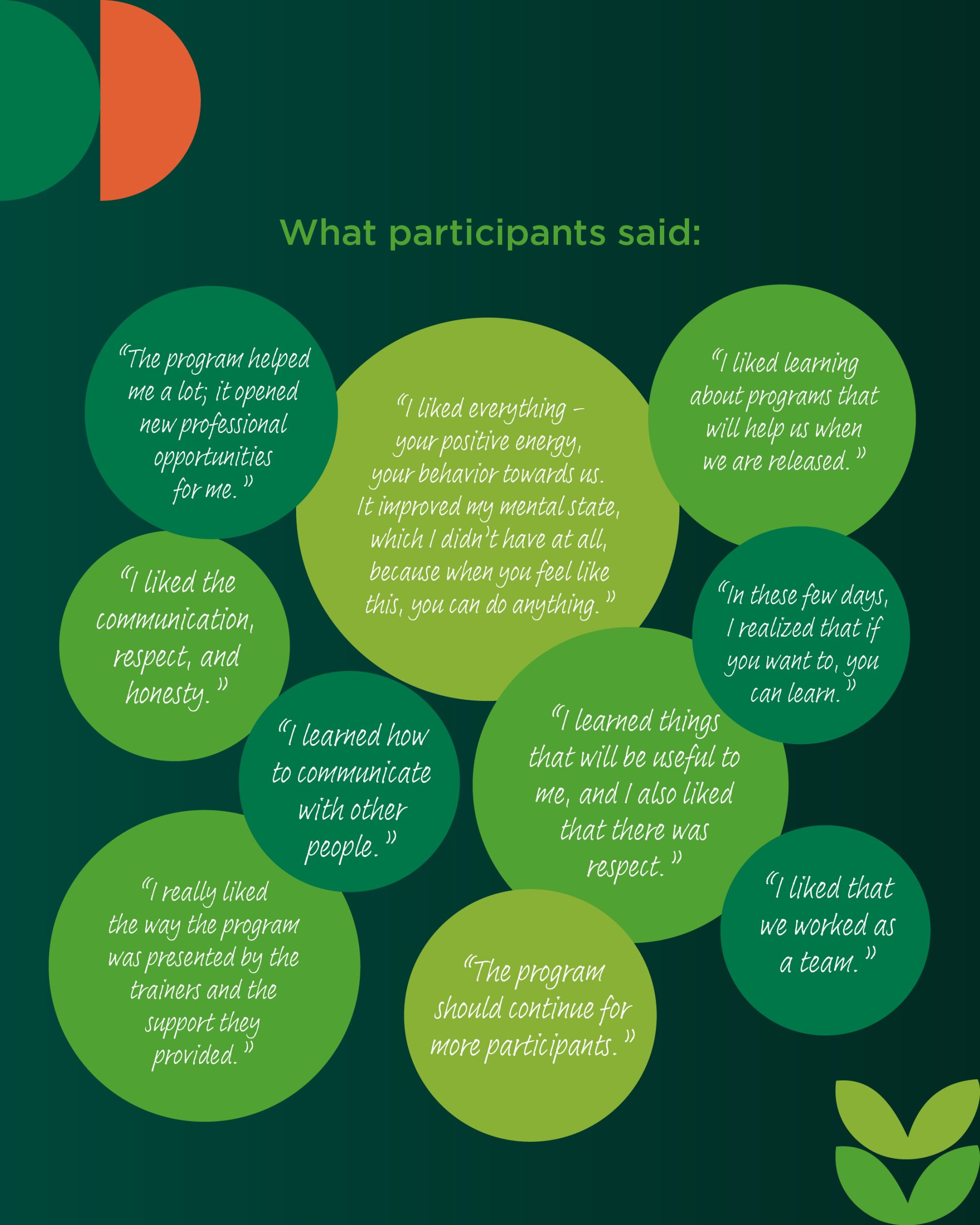
Indicative testimonies from participants
- The programme helped me a lot and opened new professional opportunities for me.
- I appreciated the communication, respect, and honesty.
- The programme should continue for more participants.
- I learned how to communicate with other people.
- I learned things that will be useful to me, and I also appreciated the respect that existed.
- I appreciated learning about programmes that will help us after our release.
- I appreciated the teamwork.
- I really liked the way the programme was presented by the trainers and the support they provided us.
- I liked everything: your positive energy and your behaviour towards us. It improved my psychology, which I completely lacked, because in this way you feel capable of doing anything.
- During these few days, I realised that if you truly want to learn, you can.
The international dimension of the programme
Social Farming 360° also carries a broader institutional and international impact. New Agriculture New Generation was one of 50 organisations worldwide selected for the first Citi Foundation Global Innovation Challenge focused on food security, with each organisation receiving $500,000 in funding for a two-year intervention.
The Citi Foundation also featured a dedicated article highlighting the programme.
Key conclusions
- Agriculture can serve as a powerful rehabilitation tool when combined with structured psychosocial and professional support.
- Certification significantly increases participants’ motivation and perceived self-worth.
- Integrated models (technical + social support) generate stronger behavioural and emotional outcomes compared to standalone skills training.
- Relationships of respect between trainers and participants emerged as a critical success factor.
- Correctional environments benefit from long-term, continuous programmes.
- Multi-stakeholder collaborations (NGOs, agronomists, social support providers) are essential for holistic impact.
Conclusion
In summary, the programme operated across four different dimensions: food production, education, professional preparation, and psychosocial preparation for reintegration, while simultaneously promoting institutional cooperation between public and social sector actors.
Through Social Farming 360°, food security within correctional facilities and related structures was strengthened, while the social reintegration of incarcerated individuals was actively supported.
Watch the programme VIDEO.
Download the program’s fact sheet in PDF.
Read more about the program here.