Νέα Γεωργία Νέα Γενιά

Myths & Facts about Water in Agriculture

The importance of water in modern agriculture

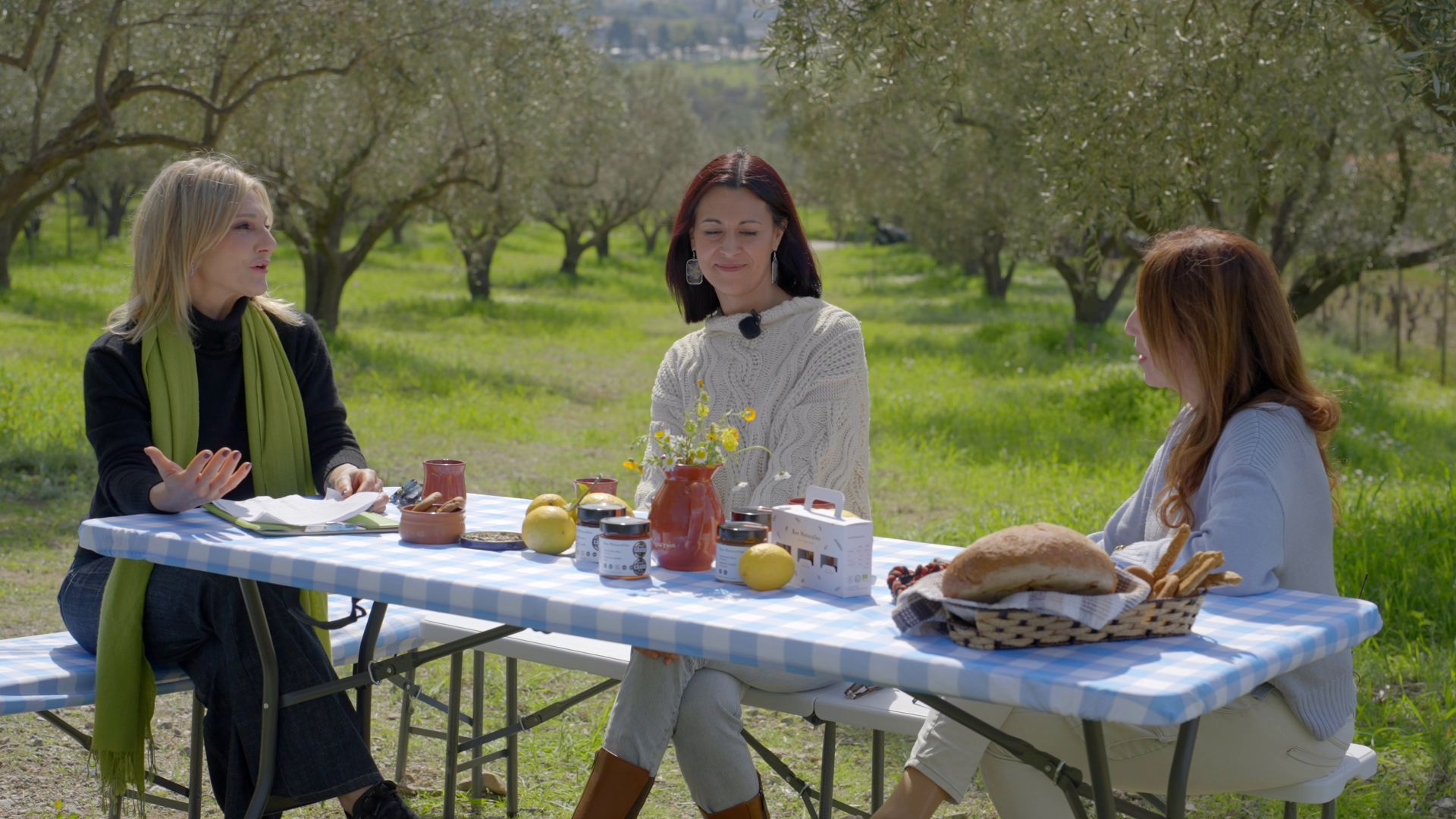
On the occasion of World Water Day, the importance of one of the most critical natural resources for the future of the agri-food sector is brought to the forefront: water.

Agriculture is one of the key sectors where the efficient management of water resources can significantly contribute to the sustainability of production. At the same time, misconceptions around water use in agriculture continue to persist, often not reflecting today’s reality.

Modern practices and sustainable management

In practice, modern agricultural practices, the use of data and the integration of technological tools enable more precise and efficient use of water. Solutions such as drip irrigation, field sensors and monitoring systems help reduce water consumption, while protecting soil quality and enhancing productivity.

The transition to a more efficient and sustainable agri-food model is no longer a future goal, but a process already underway. Understanding the real data and adopting modern practices are key conditions for the responsible management of water in agriculture.

Every drop counts.

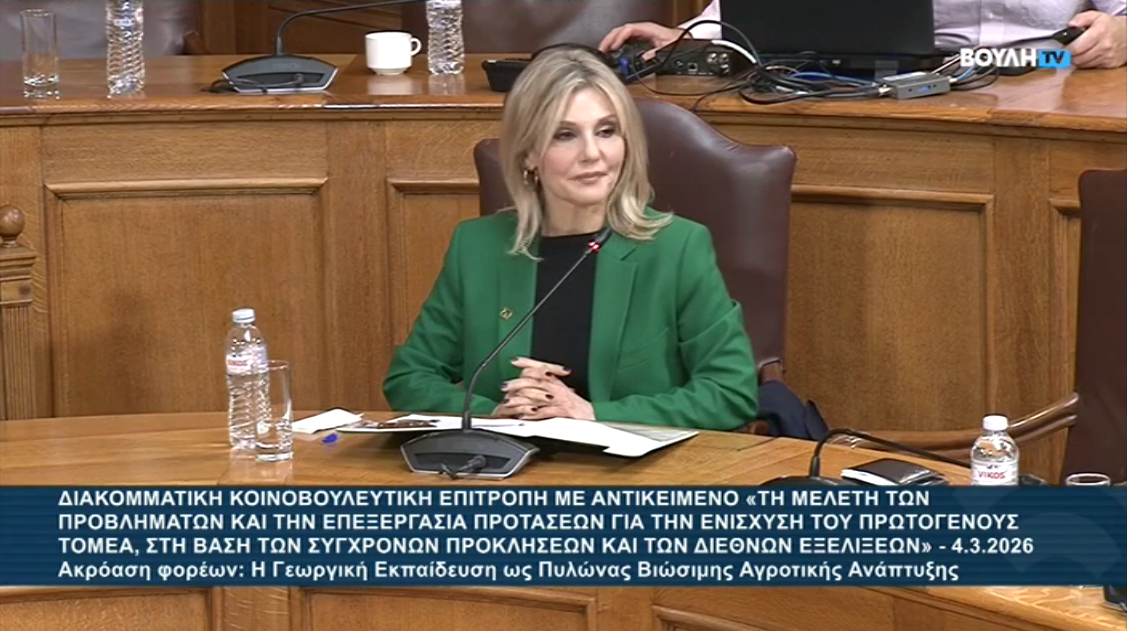
Efi Lazaridou Addresses the Interparty Parliamentary Committee on Strengthening Greece’s Primary Sector

March 4, 2026 – Address to the Interparty Parliamentary Committee

On March 4, 2026, a session of the Interparty Parliamentary Committee was held with the objective of examining key challenges and formulating proposals to strengthen the primary sector in light of contemporary challenges and international developments.

During the session, Efi Lazaridou, CEO of New Agriculture New Generation, delivered a statement focusing on agricultural education as a key pillar for sustainable rural development.

The Role of Agricultural Education Today

As highlighted in the address, agricultural knowledge today extends far beyond production. It encompasses entrepreneurship, technology adoption, sustainable practices, regulatory compliance, collaboration, and risk management.

At the same time, a significant gap in agricultural education in Greece continues to act as a barrier to modernization and competitiveness. Indicatively, 9 out of 10 farm managers lack formal agricultural training, while even among younger generations, the percentage of those with comprehensive agricultural education remains extremely low.

Three Key Areas of Intervention

The address focused on three core areas of intervention considered essential for strengthening the sector:

Knowledge transfer networks and farmer-to-farmer learning

Particular emphasis was placed on Demonstration Farm Networks and farmer-to-farmer learning as effective mechanisms for disseminating practical knowledge at scale.

Although these tools are already included in Greece’s Common Agricultural Policy Strategic Plan, they have yet to be fully implemented at the national level. At the same time, New Agriculture New Generation is already applying these methodologies through pilot initiatives with measurable impact.

Strengthening processing and cottage industry activity

The address also highlighted the need to support producers in developing processing and cottage industry activities through:

  • lifelong learning initiatives
  • tailored advisory services
  • stronger connections with markets and specialized professionals

A key priority identified is the establishment of a comprehensive support mechanism—a “one-stop shop”—to guide producers from concept to market.

Developing leadership skills in the agri-food sector

Special emphasis was placed on the need to cultivate leadership skills among agri-food professionals.

The goal is to foster a new generation of producers who:

  • combine knowledge with practical skills
  • understand the sector at both micro and macro levels
  • drive innovation and collaboration
  • actively contribute to the transformation of the sector

In this context, strengthening soft skills, networking, and access to high-level institutional and business environments is considered essential.

The Four Proposals

The four proposals presented during the intervention are as follows:

First – National skills targets: Establish modern, measurable targets based on real socio-economic impact rather than simple participation in programs, with consistent annual monitoring.

Second – Immediate implementation of AKIS provisions: Activate Demonstration Farm Networks and farmer-to-farmer learning networks across the country, with regional specialization based on local production priorities.

Third – Creation of a one-stop shop support system: Provide structured advisory and guidance services for producers entering processing and cottage industry, ensuring access to business knowledge and tailored consulting.

Fourth – Ambitious collective initiatives and leadership development programs: Strengthen professionals who can assume leadership roles in the agricultural sector through high-impact training and networking initiatives.

Concluding Remarks

As emphasized in the address, agri-food is a matter of national importance, as it directly relates to food production, rural sustainability, and regional cohesion.

New Agriculture New Generation remains committed to contributing actively to this national effort through applied education, knowledge transfer networks, and the strengthening of agri-food entrepreneurship across Greece.

The grafting of queen cells 2026 is set to begin | Phase B of the program “Queen Rearing in Central Greece – Utilization, Conservation and Improvement of Honey Bee Genetic Material | Queen Rearing in Practice.”

The program aims at the practical application of queen rearing techniques and the preservation of the valuable endemic genetic material of honey bees.

Within the framework of the initiative, nine trained queen rearers will carry out queen cell grafting at the apiaries of participating beekeepers, presenting the process in detail and offering on-site guidance and hands-on support to address questions. Each participating beekeeper will have the opportunity to receive up to 30 queen cells free of charge, sourced from selected genetic material, and to become familiar—step by step—with the queen rearing process alongside trained local queen rearers.

The program is implemented in the Regional Units of Boeotia, Evrytania, Phthiotis, and Phocis and is addressed to beekeepers in Central Greece, excluding Evia. Participants are offered specialized field-based training and free queen cells derived from the genetic material of the beneficiary beekeeper.

The grafting activities of the program will take place from February to May 2026, and participation is free of charge.
The program’s core objective is to strengthen biodiversity and support beekeeping in Central Greece through the improvement and conservation of local genetic material, contributing to the sustainability of the sector and the resilience of bee colonies.

The primary goal of the program is to reinforce beekeeping in Central Greece and enhance the region’s biodiversity and local agricultural production, as bees are among the most important pollinators of plants.

At the same time, the long-term objective of the initiative is the large-scale production of selected genetic material across the Regional Units of Boeotia, Evrytania, Phthiotis, and Phocis, with the ultimate aim of increasing productivity and developing more resilient bee colonies through the optimization of endemic genetic material.

The program is co-funded by Nea Georgia Nea Genia, the Region of Central Greece, the John S. Latsis Public Benefit Foundation, and APIVITA, within the framework of the Billion Bees Program.
The program was established through the founding donation of the Stavros Niarchos Foundation (SNF) and is implemented in collaboration with the Agricultural University of Athens, under the scientific supervision of the Laboratory of Sericulture and Apiculture.

Learn more about the program and submit your application via the following link: https://newagri.org/en/lines-of-action/10620/

The grafting of queen cells 2026 is set to begin | Phase B of the program “Queen Rearing in Central Greece – Utilization, Conservation and Improvement of Honey Bee Genetic Material | Queen Rearing in Practice.”

The program aims at the practical application of queen rearing techniques and the preservation of the valuable endemic genetic material of honey bees.

Within the framework of the initiative, nine trained queen rearers will carry out queen cell grafting at the apiaries of participating beekeepers, presenting the process in detail and offering on-site guidance and hands-on support to address questions. Each participating beekeeper will have the opportunity to receive up to 30 queen cells free of charge, sourced from selected genetic material, and to become familiar—step by step—with the queen rearing process alongside trained local queen rearers.

The program is implemented in the Regional Units of Boeotia, Evrytania, Phthiotis, and Phocis and is addressed to beekeepers in Central Greece, excluding Evia. Participants are offered specialized field-based training and free queen cells derived from the genetic material of the beneficiary beekeeper.

The grafting activities of the program will take place from February to May 2026, and participation is free of charge.
The program’s core objective is to strengthen biodiversity and support beekeeping in Central Greece through the improvement and conservation of local genetic material, contributing to the sustainability of the sector and the resilience of bee colonies.

The primary goal of the program is to reinforce beekeeping in Central Greece and enhance the region’s biodiversity and local agricultural production, as bees are among the most important pollinators of plants.

At the same time, the long-term objective of the initiative is the large-scale production of selected genetic material across the Regional Units of Boeotia, Evrytania, Phthiotis, and Phocis, with the ultimate aim of increasing productivity and developing more resilient bee colonies through the optimization of endemic genetic material.

The program is co-funded by Nea Georgia Nea Genia, the Region of Central Greece, the John S. Latsis Public Benefit Foundation, and APIVITA, within the framework of the Billion Bees Program.
The program was established through the founding donation of the Stavros Niarchos Foundation (SNF) and is implemented in collaboration with the Agricultural University of Athens, under the scientific supervision of the Laboratory of Sericulture and Apiculture.

Learn more about the program and submit your application via the following link: https://newagri.org/en/lines-of-action/10620/

The grafting of queen cells 2026 is set to begin | Phase B of the program “Queen Rearing in Central Greece – Utilization, Conservation and Improvement of Honey Bee Genetic Material | Queen Rearing in Practice.”

The program aims at the practical application of queen rearing techniques and the preservation of the valuable endemic genetic material of honey bees.

Within the framework of the initiative, nine trained queen rearers will carry out queen cell grafting at the apiaries of participating beekeepers, presenting the process in detail and offering on-site guidance and hands-on support to address questions. Each participating beekeeper will have the opportunity to receive up to 30 queen cells free of charge, sourced from selected genetic material, and to become familiar—step by step—with the queen rearing process alongside trained local queen rearers.

The program is implemented in the Regional Units of Boeotia, Evrytania, Phthiotis, and Phocis and is addressed to beekeepers in Central Greece, excluding Evia. Participants are offered specialized field-based training and free queen cells derived from the genetic material of the beneficiary beekeeper.

The grafting activities of the program will take place from February to May 2026, and participation is free of charge.
The program’s core objective is to strengthen biodiversity and support beekeeping in Central Greece through the improvement and conservation of local genetic material, contributing to the sustainability of the sector and the resilience of bee colonies.

The primary goal of the program is to reinforce beekeeping in Central Greece and enhance the region’s biodiversity and local agricultural production, as bees are among the most important pollinators of plants.

At the same time, the long-term objective of the initiative is the large-scale production of selected genetic material across the Regional Units of Boeotia, Evrytania, Phthiotis, and Phocis, with the ultimate aim of increasing productivity and developing more resilient bee colonies through the optimization of endemic genetic material.

The program is co-funded by Nea Georgia Nea Genia, the Region of Central Greece, the John S. Latsis Public Benefit Foundation, and APIVITA, within the framework of the Billion Bees Program.
The program was established through the founding donation of the Stavros Niarchos Foundation (SNF) and is implemented in collaboration with the Agricultural University of Athens, under the scientific supervision of the Laboratory of Sericulture and Apiculture.

Learn more about the program and submit your application via the following link: https://newagri.org/en/lines-of-action/10620/

The grafting of queen cells 2026 is set to begin | Phase B of the program “Queen Rearing in Central Greece – Utilization, Conservation and Improvement of Honey Bee Genetic Material | Queen Rearing in Practice.”

The program aims at the practical application of queen rearing techniques and the preservation of the valuable endemic genetic material of honey bees.

Within the framework of the initiative, nine trained queen rearers will carry out queen cell grafting at the apiaries of participating beekeepers, presenting the process in detail and offering on-site guidance and hands-on support to address questions. Each participating beekeeper will have the opportunity to receive up to 30 queen cells free of charge, sourced from selected genetic material, and to become familiar—step by step—with the queen rearing process alongside trained local queen rearers.

The program is implemented in the Regional Units of Boeotia, Evrytania, Phthiotis, and Phocis and is addressed to beekeepers in Central Greece, excluding Evia. Participants are offered specialized field-based training and free queen cells derived from the genetic material of the beneficiary beekeeper.

The grafting activities of the program will take place from February to May 2026, and participation is free of charge.
The program’s core objective is to strengthen biodiversity and support beekeeping in Central Greece through the improvement and conservation of local genetic material, contributing to the sustainability of the sector and the resilience of bee colonies.

The primary goal of the program is to reinforce beekeeping in Central Greece and enhance the region’s biodiversity and local agricultural production, as bees are among the most important pollinators of plants.

At the same time, the long-term objective of the initiative is the large-scale production of selected genetic material across the Regional Units of Boeotia, Evrytania, Phthiotis, and Phocis, with the ultimate aim of increasing productivity and developing more resilient bee colonies through the optimization of endemic genetic material.

The program is co-funded by Nea Georgia Nea Genia, the Region of Central Greece, the John S. Latsis Public Benefit Foundation, and APIVITA, within the framework of the Billion Bees Program.
The program was established through the founding donation of the Stavros Niarchos Foundation (SNF) and is implemented in collaboration with the Agricultural University of Athens, under the scientific supervision of the Laboratory of Sericulture and Apiculture.

Learn more about the program and submit your application via the following link: https://newagri.org/en/lines-of-action/10620/

New Job Opening | Operations Associate

The non-profit organization New Agriculture New Generation works to advance the agrifood sector in Greece by implementing training programs, building advisory networks, and fostering innovation and entrepreneurship with a positive social impact.

The Operations Department of the organization is seeking a professional to join its offices in Thessaloniki. The ideal candidate will have knowledge of operations, project management, and reporting, along with a comprehensive understanding of the operational requirements of an organization. They will be characterized by strong organizational skills, attention to detail, a positive collaborative mindset, and a willingness to explore new methods and processes to support the organization’s daily activities.

The selected candidate will report to the Director of Operations and will support and implement the day-to-day functioning of the organization, ensuring the effective management of processes, human and material resources, as well as the smooth implementation of operational policies and standards. The role involves close collaboration with the organization’s departments, contributing to stability, consistency, operational efficiency, and the achievement of strategic and socio-economic objectives.

Responsibilities

  • Support daily operational and administrative tasks across departments

  • Coordinate and support the functioning of the Thessaloniki office

  • Maintain, implement, and update internal procedures and SOPs

  • Coordinate the preparation of internal and external reports

  • Support procurement and contracting processes

  • Organize internal communication, meetings, and follow-ups

  • Organize and maintain documentation and filing systems

  • Support basic HR processes (onboarding, personnel records)

Required Qualifications

  • 1–3 years of professional experience in an operations, administration, or project support role

  • Strong organizational skills and attention to detail

  • Ability to manage multiple tasks and deadlines

  • Proficiency in office tools (e.g., Google Workspace / MS Office)

  • Eagerness to learn, collaborative spirit, and sense of responsibility

Desired Qualifications

  • –Familiarity with project management tools (e.g., Asana, Trello, Monday.com)

  • Experience with EU-funded programs (e.g., Horizon, Erasmus+)

  • Understanding of AI tools

  • Understanding of the non-profit sector

  • Basic knowledge of procurement, reporting, or HR processes

What We Offer

  • Private health insurance

  • Hybrid work (remote working days)

  • Opportunities for professional growth, networking, and skill development

  • Ongoing guidance and exposure to organizational and operational processes

  • Structured, collaborative, and supportive working environment

  • Participation in an organization with social and developmental impact

Interested candidates are invited to submit their CV and cover letter by March 1, 2026, to the following email addresses:

[email protected]

[email protected] 

Building and Working with the Team – The 4th Training Session of Agrifood Leadership 2025–2026 in Thessaloniki

The 4th training session of the Agrifood Leadership 2025–2026 program was successfully completed in Thessaloniki from Friday, February 13 to Sunday, February 15, 2026. The session focused on the theme “Building and Working with the Team” and was led by Anastasia Sarchosoglou, Agronomist – Food Scientist, MSc-Med, Innovation & Entrepreneurship Consultant in the Agrifood Sector.

The Agrifood Leadership 2025–2026 program is implemented by New Agriculture New Generation under the auspices of the Ministry of Rural Development and Food. Rutgers University (USA) serves as the program’s Technical and Strategic Advisor. The training session was sponsored by LIDL HELLAS.

The program was established through the founding donation of the Stavros Niarchos Foundation (SNF).

Focus on Effective Team Collaboration

During the training session, participants focused on the importance of effective teamwork as a key factor for success and sustainable development in the agrifood sector. The objective was to understand the stages of team development and the factors that strengthen cohesion, trust, and productivity.

Through experiential exercises, collaborative scenario simulations, and group problem-solving activities, participants developed skills in effective communication, clear role allocation, conflict management, and collective decision-making.

The training experience highlighted that a successful team is not merely the sum of its members, but a dynamic system of collaboration built on trust, transparency, and commitment. In this way, participants strengthened their role as active and effective team members contributing meaningfully to innovation and collective progress within the agrifood ecosystem.

The opening remarks of the training session were delivered by Nikos Lysigakis, Senior Corporate Affairs Manager at LIDL HELLAS, who emphasized the importance of investing in human capital and the new generation of professionals in the sector.

Inspiration from Corporate Philosophy

A standout moment of the program was the presentation by Dimitris Koulaxidis, Senior Purchasing Manager at Lidl Hellas, who shared insights from contemporary business practices within the Purchasing sector.

He highlighted the strategic role of procurement in the company’s growth and competitiveness, the importance of collaboration with reliable suppliers, the selection of high-quality products, and the integration of sustainable practices. He also presented how data analysis and responsiveness to market trends support decision-making and the effective operation of the supply chain.

Educational Visit to LIDL HELLAS Central Logistics in Sindos

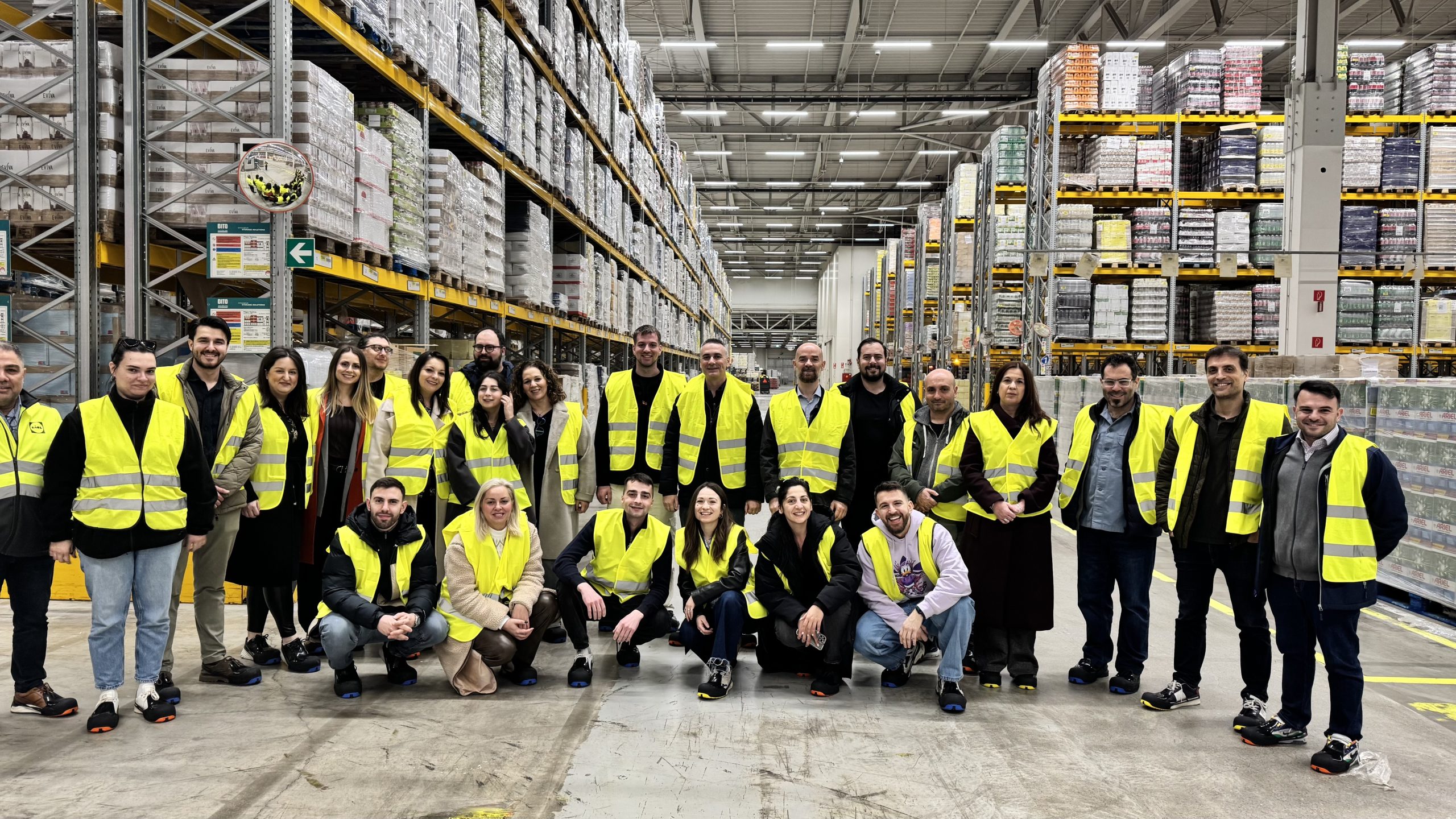
On the same day, participants visited the Central Logistics Distribution Center of Lidl Hellas in the Industrial Area of Sindos, where they had the opportunity to experience firsthand the operation of a modern and fully organized supply chain system.

The warehouse tour was conducted by Damianos Getsios, Head of Warehouse at Lidl Hellas, who provided a detailed presentation of the warehouse organization and management model, the processes of receiving, storage, and distribution of products, as well as the quality and safety standards applied.

New Agriculture New Generation warmly thanks LIDL HELLAS for its valuable support and hospitality in Thessaloniki and at its central facilities.

Supporters of the program’s remaining training sessions include: the Cooperative of Producer Groups of Imathia, the Agricultural Poultry Cooperative of Ioannina PINDOS, COMPO EXPERT Hellas, and Chios Mastiha Growers Association.

The program is also supported by NBIS.

Event on the New CAP 2028–2034 Held Successfully in Patras: The Role of Regions in Design and Implementation

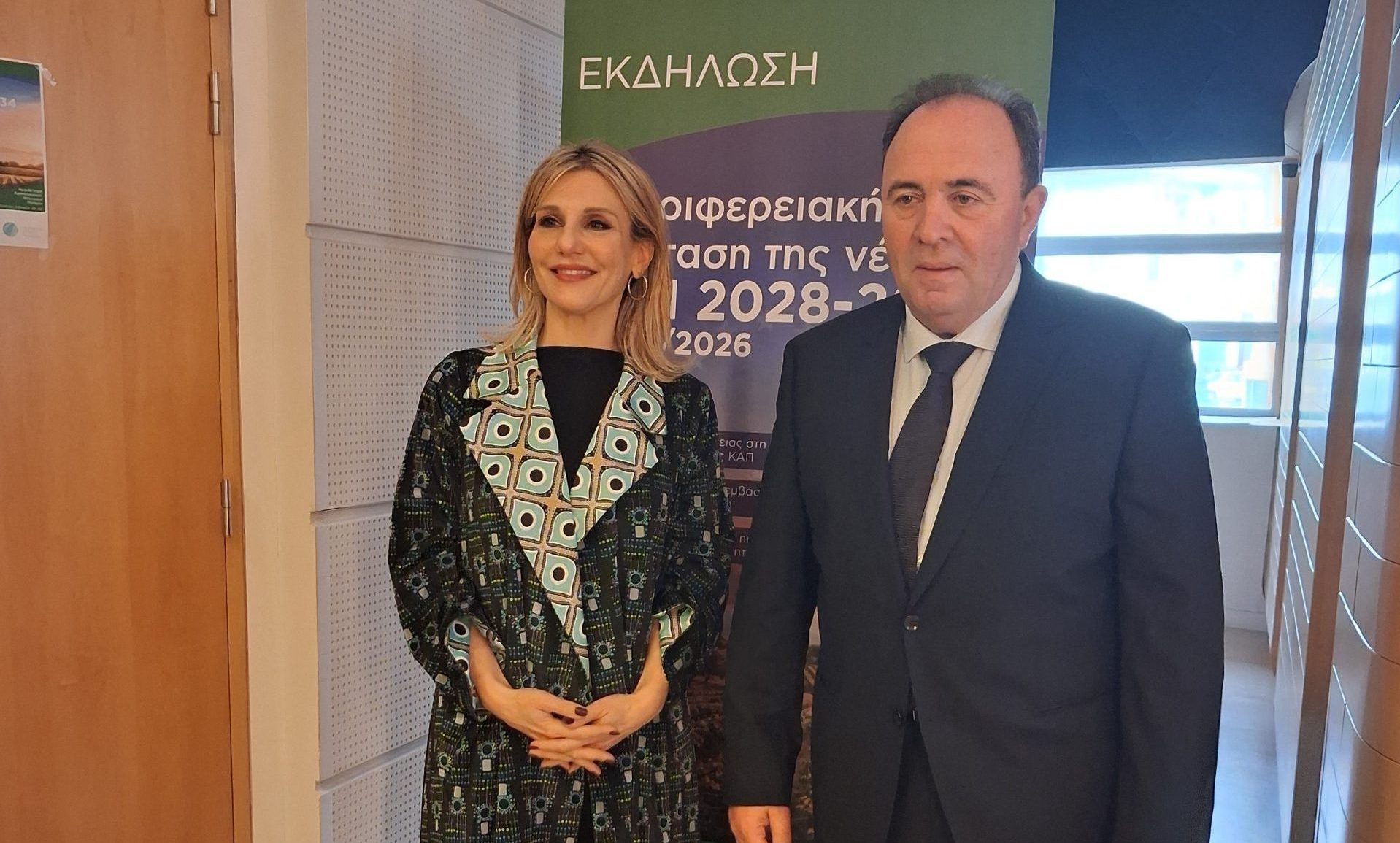
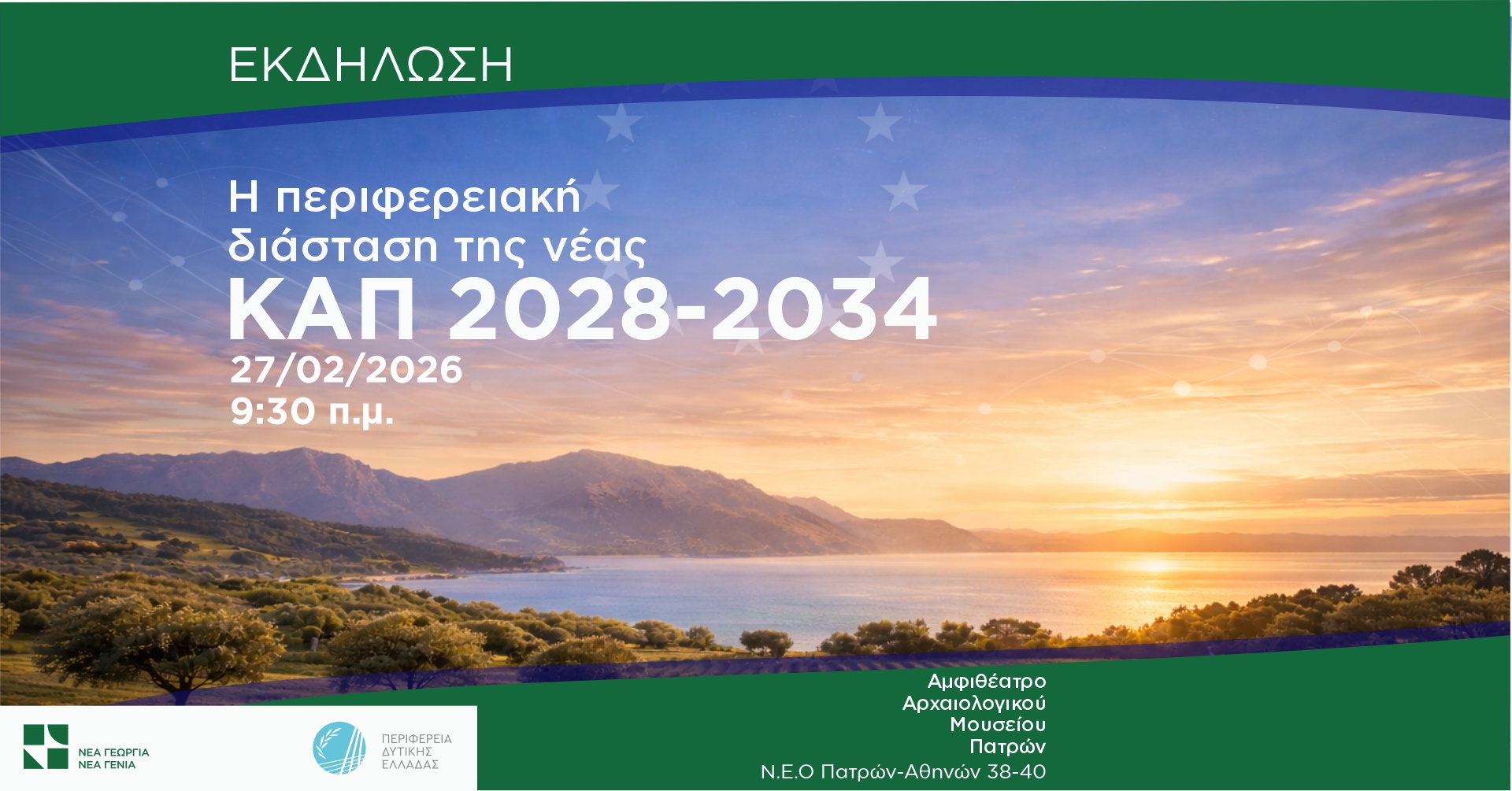
The event on the New Common Agricultural Policy (CAP) 2028–2034 and the role of Regions in its design and implementation was successfully held in Patras, with significant attendance. The event was co-organized by the Region of Western Greece and New Agriculture New Generation.

The event brought together representatives of the national government, the European Commission, local and regional authorities, academia, and the agri-food sector, confirming the strong interest in the upcoming programming period and the challenges it entails.

During the presentations and the open consultation session, it was highlighted that the New CAP 2028–2034 constitutes a critical mechanism for transitioning towards a more sustainable, resilient, and knowledge-driven production model. Particular emphasis was placed on increased environmental requirements, the need for the economic viability of farming operations, and the strengthened role of the Region in national strategic planning.

Intervention by Effie Lazaridou and the Contribution Framework of New Agriculture New Generation

In her remarks, Effie Lazaridou, CEO of New Agriculture New Generation, underlined that the success of the new CAP in Western Greece will depend on:

• institutional cooperation between the Region, universities, and producers,
• technical capacity and the dissemination of applied knowledge,
• and the existence of effective coordination mechanisms linking research with practice.

The organization presented the framework of its contribution to the new period, structured around three main pillars:

  1. Applied education and training tailored to the needs of producers and regional sectors.

  2. Linking research, policy, and production through pilot initiatives and collaborative schemes.

  3. Entrepreneurial empowerment of small and medium-sized farms through management tools, cooperation models, and market access support.

Ms. Lazaridou stated:

“As New Agriculture New Generation, we are ready to contribute systematically:

• by fostering connections between local authorities, universities, and producers,
• through educational programs tailored to regional needs,
• by providing entrepreneurial support to the new generation of farmers and agri-businesses,
• by establishing platforms for dialogue and cooperation,
• and through pilot interventions that can serve as scalable implementation models.

It is, after all, the core role of civil society to implement pilot actions, measure their value, document their results, and subsequently deliver them to the State and competent institutional bodies so that they may adopt and scale them.”

Institutional Greetings and Key Presentations

Opening remarks were delivered by Mr. Nektarios Farmakis, Regional Governor of Western Greece; Mr. Andreas Kastaniotis, Member of Parliament (New Democracy) and former Deputy Minister of Foreign Affairs; and Mr. Nikolaos Kakavas, President of the Panhellenic Federation of Public Geotechnical Employees.

Presentations were delivered by Mr. Antonios Filippis, Secretary General of the General Secretariat for Agricultural Policy and International Relations at the Ministry of Rural Development and Food; Mr. Spyridon Papaspyrou, Head of the Directorate of Agricultural Economy of the Region of Western Greece; Mr. Menelaos Gardikiotis, President of the Board of the Geotechnical Chamber of Greece (GEOTEE); Mr. Nikos Kalinis, Programme Director for the Greek CAP Strategic Plan (2023–2027), Directorate-General for Agriculture and Rural Development of the European Commission; and Mr. Efthathios Klonaris, Professor at the Department of Agricultural Economics and Development of the Agricultural University of Athens.

A Shared Conclusion: From Measure Management to a Resilient Regional Agri-Food Ecosystem

Participants commonly agreed that the New CAP represents an opportunity to move from the management of individual measures to the development of a comprehensive regional agri-food ecosystem characterized by resilience, competitiveness, and meaningful support for rural communities.

New Agriculture New Generation reaffirms its commitment to systematically contribute, through evidence-based approaches and collaboration, to the design and implementation of policies that strengthen the sustainable development of Greek agri-food systems.

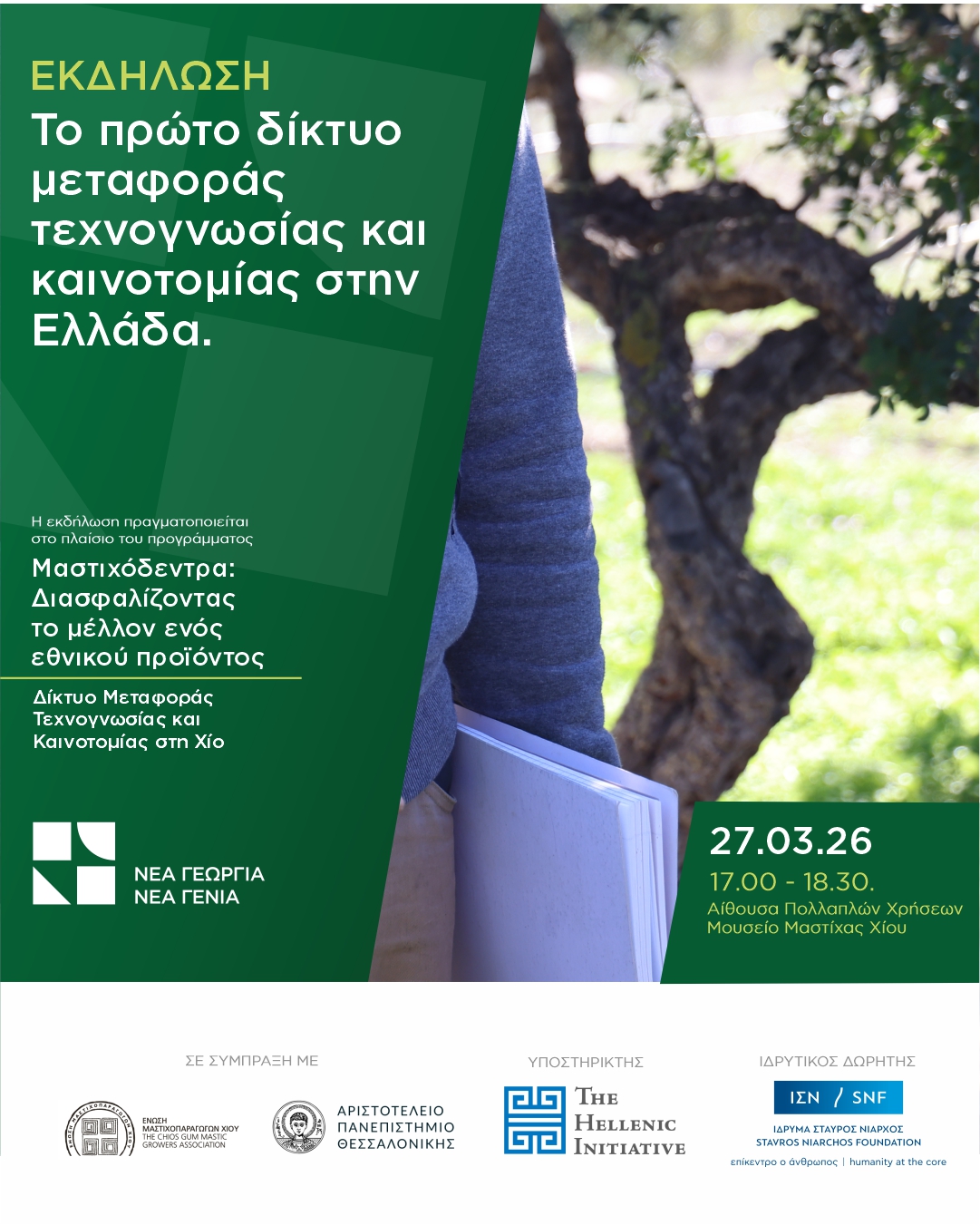
Event: “Cultivating the Future of Mastic: Education, Research, and Innovation” as part of the program “Mastic Trees: Ensuring the Future of a National Product”

New Agriculture New Generation announces the event titled “Cultivating the Future of Mastic: Education, Research, and Innovation,” which will take place on Friday, November 7, 2025, at 18:00, at the Homerion Cultural Center of the Municipality of Chios.

The event is organized as part of the program “Mastic Trees: Ensuring the Future of a National Product – Knowledge Transfer and Innovation Network in Chios,” which aims to ensure the sustainability, protection and promotion of mastiha cultivation on the island.

The program is designed and implemented in collaboration with the Laboratory of Floriculture, Department of Agriculture, Aristotle University of Thessaloniki and the Chios Gum Mastic Growers Association, under the scientific coordination of Associate Professor Mr. Stefanos Chatzilazarou.

It is co-funded by New Agriculture New Generation through the founding donation of the Stavros Niarchos Foundation (SNF), The Hellenic Initiative and the Chios Gum Mastic Growers Association.

To date, the program has trained more than 240 mastiha growers through the first organized network for knowledge transfer and innovation in Chios and continues its strong course by promoting knowledge exchange, empowering growers and fostering the sustainable development of local production.

The event will bring together scientists, growers and stakeholders, aiming to present the progress and future of the program, highlight best practices and discuss the modern prospects of mastic cultivation through the use of research, innovation and precision agriculture tools.

For more information, please visit: https://newagri.org/en/lines-of-action/mastichodentra-diasfalizontas-to-mellon-enos-ethnikou-proiontos/

Event Program

18:00–18:30 | Arrival of participants

 18:30–18:50 | Welcome Remarks

  • George Toumbos, President of the Board, Chios Gum Mastic Growers Association
  • Elina Klaridopoulou, Senior Program Officer, Stavros Niarchos Foundation (SNF)
  • Michael G. Psaros, THI Vice Chair of the Board
  • Michael Printzos,, Country Head, The Hellenic Initiative, Greece
  • Effie Lazaridou, CEO, New Agriculture New Generation

18:50–19:20 | Presentation: Overview of the program’s implementation to date

  • Stefanos Chatzilazarou, Associate Professor, Aristotle University of Thessaloniki
  • Stefanos Kostas, PhD, Special Teaching Staff, Aristotle University of Thessaloniki, Laboratory of Floriculture

19:20–20:00 | Panel Discussion: Experiences from the network and the benefits of knowledge transfer from producer to producer

  • Despina Kyli, Lead Mastiha Grower
  • Alexis Tsounakos, Lead Mastiha Grower

Moderator: Sotiris Katselos, Communications Director, New Agriculture New Generation

20:00–20:45 | Presentation: Digital agriculture: Applications, challenges and prospects

  • Spyros Fountas, Professor of Precision Agriculture, Agricultural University of Athens
  • Michalis Asimoglou, Electrical Engineer

20:45–21:00 | Q&A Session