Νέα Γεωργία Νέα Γενιά

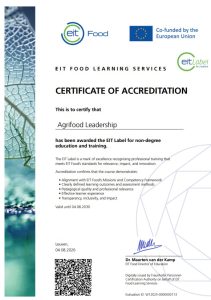
Agrifood Leadership receives European EIT Food accreditation

A Unique Distinction

The Agrifood Leadership program becomes the first and only specialized leadership skills development program in the agrifood sector in Greece to obtain the European EIT Label accreditation from EIT Food.

What the EIT Label accreditation means

The EIT Label is a mark of excellence for education and training programs that meet the high quality standards of the European Institute of Innovation and Technology (EIT), with an emphasis on educational content design, meaningful skills development, and measurable impact. With this award, Agrifood Leadership is now recognized as a program meeting European specifications, is independently evaluated by an external body, and offers certificates with value across the entire European labor market.

The role of EIT Food

EIT Food is the largest food innovation community in Europe, a Knowledge and Innovation Community (KIC) of the European Institute of Innovation and Technology, connecting more than 50 leading companies, universities, research centers, and startups across 13 European countries. Its goal is to transform the European food system toward healthier nutrition, climate neutrality, and a fair, resilient supply system, while also investing in the training of thousands of industry professionals and entrepreneurs every year.

Applications open for the 2026-2027 cycle until September 20th

The program is run by the organization Nea Georgia Nea Genia, under the scientific guidance of Rutgers University (New Jersey, USA), with accreditation from EIT Food and support from GROW, and in collaboration with major companies from the Greek agrifood ecosystem.

The new cycle includes more than 120 hours of coursework (across 9 thematic modules), workshops, and networking activities, with educational trips to regions of Greece and to Brussels, combined with online modules, and will run from November 2026 to June 2027.

Interested executives, entrepreneurs, and professionals in the agrifood sector can submit their application online until September 20, 2026, with final selection made following evaluation and personal interviews, as places are limited.

Find more information

Submit your application

By joining the Agrifood Leadership professional network, graduates gain access to knowledge, collaborations, and new career opportunities as members of the Agrifood alumni, within a dynamic ecosystem that continuously invests in its members, supports them, and helps them grow.

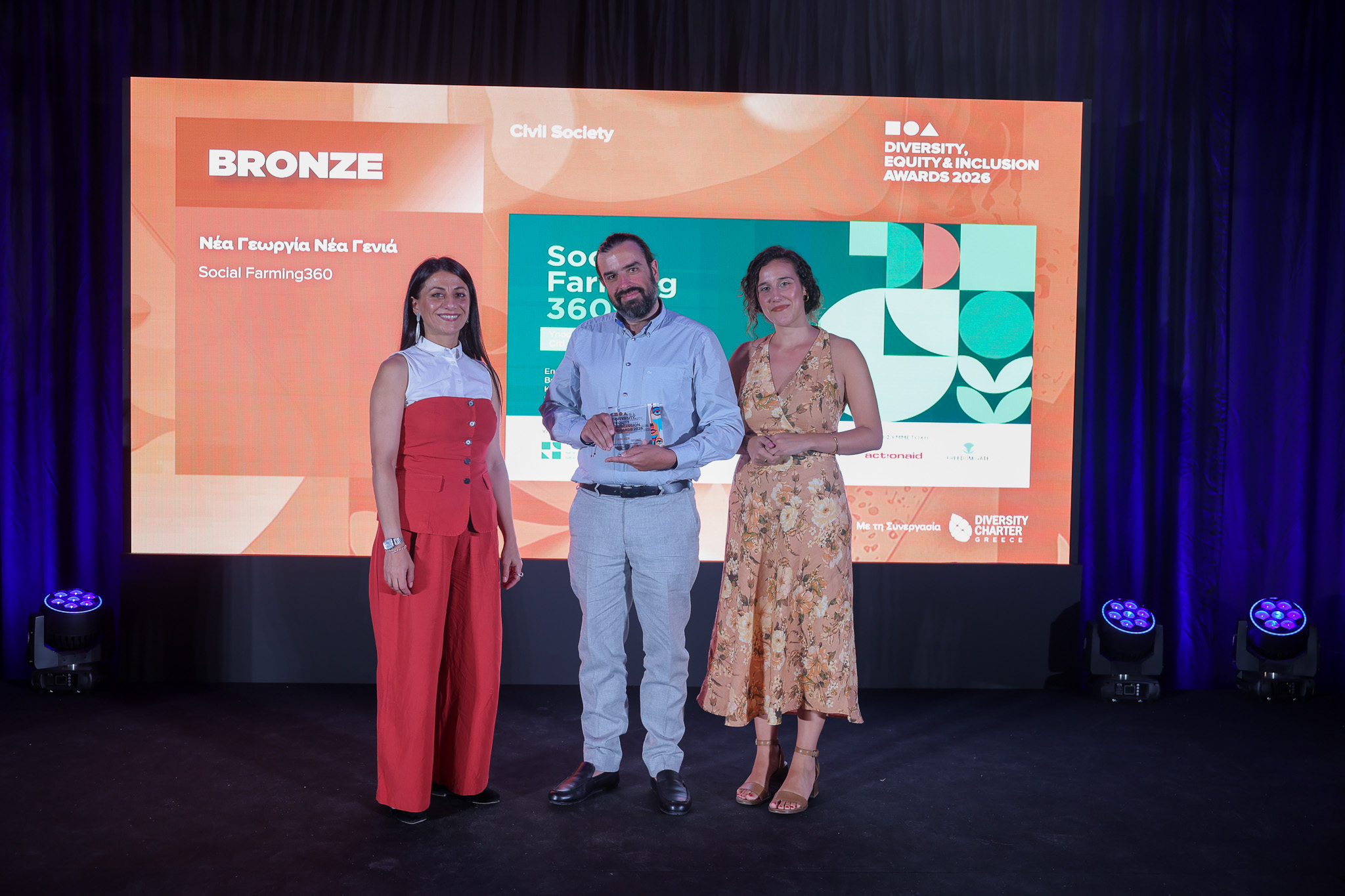
The Social Farming 360° program was honored with a Bronze Award at the 2026 Diversity, Equity & Inclusion Awards

A Significant Achievement for the Social Farming 360° Program

The Social Farming 360° program was honored with a Bronze Award in the Civil Society category of the Diversity, Equity & Inclusion Awards 2026, an initiative that highlights initiatives that make a substantial contribution to promoting diversity, equity, and inclusion.

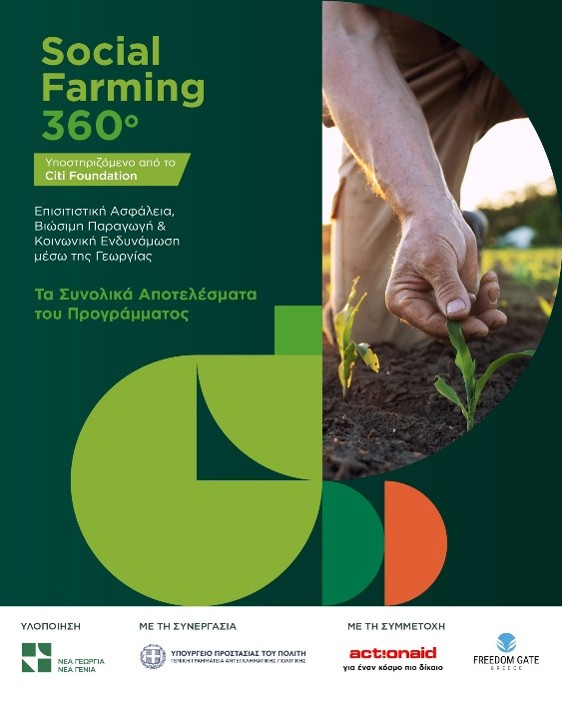
The Social Farming 360° program was implemented by the organization New Agriculture New Generation, with the full support of the Citi Foundation, in close collaboration with the General Secretariat for Anti-Crime Policy of the Ministry of Citizen Protection, and with the participation of ActionAid and the Pyli Eleftherias (Freedom Gate).

The program ran from January 2024 to December 2025 and was implemented in six correctional facilities across the country, recording 1,081 participants and 648 hours of training, while 696 ACTA professional certifications were awarded. At the same time, hundreds of inmates participated in vocational and psychosocial empowerment programs.

This distinction served as a significant moral recognition of the collective effort made by all program participants, as well as by the beneficiaries who embraced the program and contributed to its success.

At the same time, it highlights that the agri-food sector can serve as a field for meaningful social contribution.

Documentary: The Stories Behind the Program

As part of Social Farming 360°, a short documentary was created that captures the participants’ experiences and stories.

The documentary will premiere on July 22 at 8:00 p.m. on the YouTube channel of the organization New Agriculture New Generation.

More information about the program

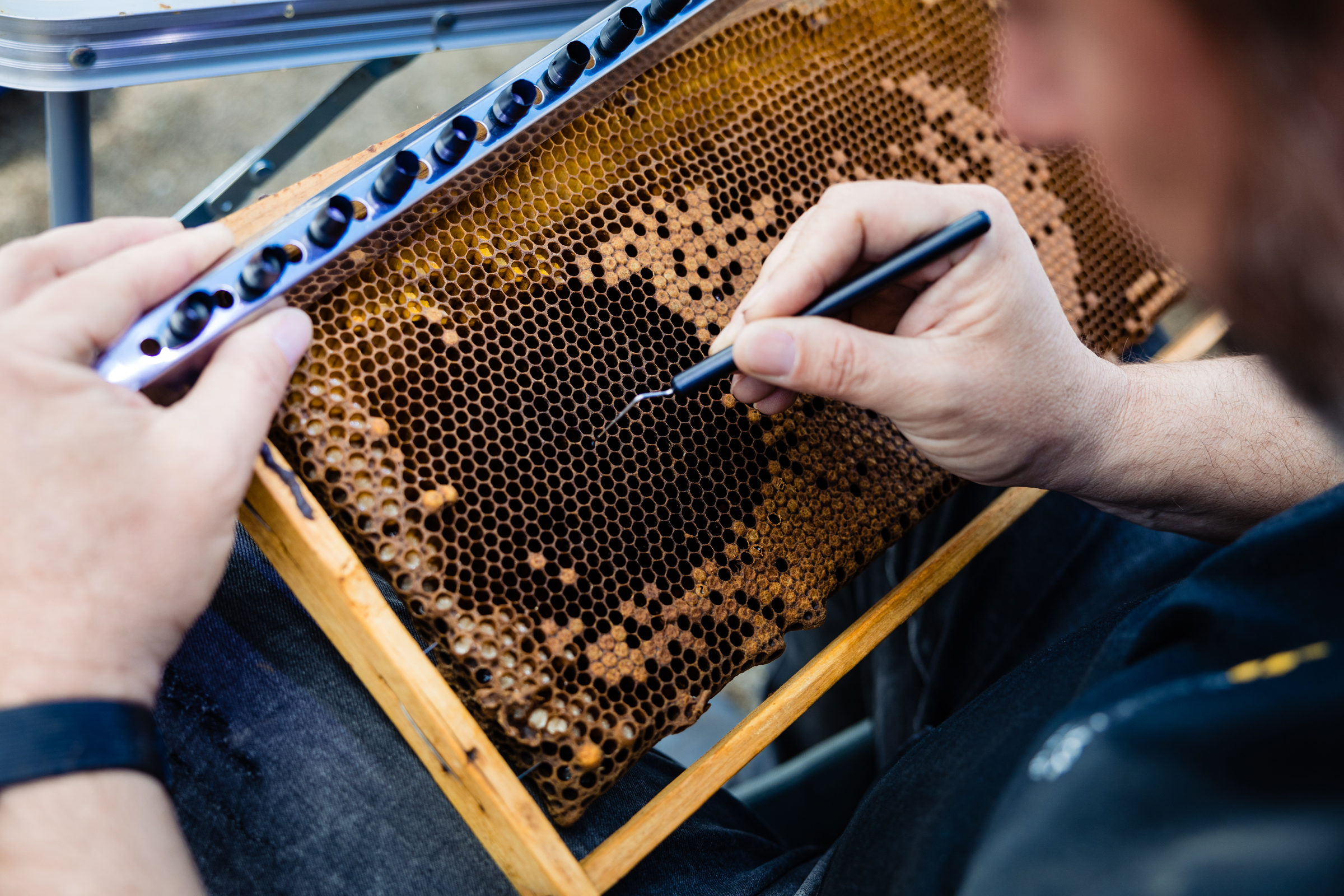
The grafting of queen cells 2026 is set to begin | Phase B of the program “Queen Rearing in Central Greece – Utilization, Conservation and Improvement of Honey Bee Genetic Material | Queen Rearing in Practice.”

The program aims at the practical application of queen rearing techniques and the preservation of the valuable endemic genetic material of honey bees.

Within the framework of the initiative, nine trained queen rearers will carry out queen cell grafting at the apiaries of participating beekeepers, presenting the process in detail and offering on-site guidance and hands-on support to address questions. Each participating beekeeper will have the opportunity to receive up to 30 queen cells free of charge, sourced from selected genetic material, and to become familiar—step by step—with the queen rearing process alongside trained local queen rearers.

The program is implemented in the Regional Units of Boeotia, Evrytania, Phthiotis, and Phocis and is addressed to beekeepers in Central Greece, excluding Evia. Participants are offered specialized field-based training and free queen cells derived from the genetic material of the beneficiary beekeeper.

The grafting activities of the program will take place from February to May 2026, and participation is free of charge.
The program’s core objective is to strengthen biodiversity and support beekeeping in Central Greece through the improvement and conservation of local genetic material, contributing to the sustainability of the sector and the resilience of bee colonies.

The primary goal of the program is to reinforce beekeeping in Central Greece and enhance the region’s biodiversity and local agricultural production, as bees are among the most important pollinators of plants.

At the same time, the long-term objective of the initiative is the large-scale production of selected genetic material across the Regional Units of Boeotia, Evrytania, Phthiotis, and Phocis, with the ultimate aim of increasing productivity and developing more resilient bee colonies through the optimization of endemic genetic material.

The program is co-funded by Nea Georgia Nea Genia, the Region of Central Greece, the John S. Latsis Public Benefit Foundation, and APIVITA, within the framework of the Billion Bees Program.
The program was established through the founding donation of the Stavros Niarchos Foundation (SNF) and is implemented in collaboration with the Agricultural University of Athens, under the scientific supervision of the Laboratory of Sericulture and Apiculture.

Learn more about the program and submit your application via the following link: https://newagri.org/en/lines-of-action/10620/

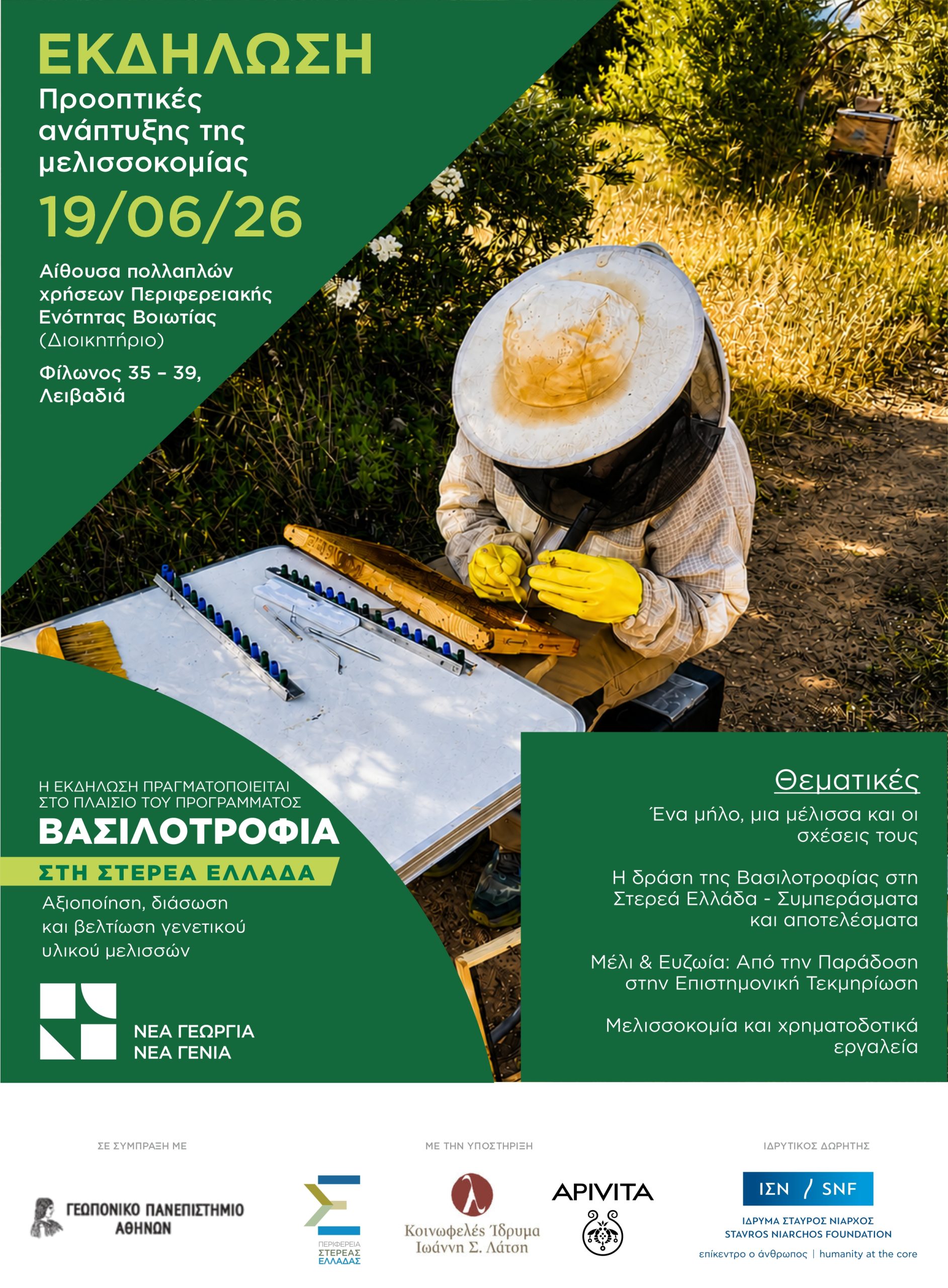
Event in Livadeia on the Prospects for Beekeeping Development within the Framework of the “Queen Rearing in Central Greece” Program

The Region of Central Greece and New Agriculture New Generation are organizing an event entitled “Prospects for Beekeeping Development” on Friday, June 19, at 19:00, at the Multi-Purpose Hall of the Regional Unit of Boeotia (Administrative Building, Filonos 35–39, Livadeia).

Within the Framework of the “Queen Rearing in Central Greece” Program

The event is being held within the framework of the program “Queen Rearing in Central Greece – Utilization, Conservation and Improvement of Honey Bee Genetic Material”, an initiative aimed at strengthening the sustainability and competitiveness of Greek beekeeping through the conservation, utilization and improvement of the genetic material of local honey bee populations.

During the event, the results and key findings of the program will be presented, while distinguished scientists, industry professionals and institutional representatives will highlight the contribution of beekeeping to rural development, biodiversity, nutrition and well-being.

Event Speakers

The event program includes presentations by:

• Aikaterini Kalatzi, Vice Governor for Mountainous and Forest Policy of the Region of Central Greece.

• Dimitris Voloudakis, Programs General Director, New Agriculture New Generation

• Alexandros Gkousiaris, professional beekeeper and beekeeping trainer.

• Georgios Goras, Assistant Professor at the Agricultural University of Athens and Head of the Laboratory of Sericulture and Apiculture.

• Kalliopi Karampoiki, Capacity Building Senior Manager at New Agriculture New Generation.

• Fotis Tekos, CEO of FoodOxys and spin-off entrepreneur of the University of Thessaly.

• Nikos Floros, Directorate of Agricultural and Fisheries Policy, Region of Central Greece.

Queen Rearing and Contemporary Challenges

Particular emphasis will be placed on the importance of queen rearing as a tool for improving the productivity and resilience of honey bee colonies, as well as on the contemporary challenges and opportunities shaping the beekeeping sector.

The event is open to the public and will conclude with a discussion session, offering beekeepers, producers and interested citizens the opportunity to exchange views and experiences.

Refreshments will be offered following the event.

Participation is free of charge.

Detailed Agenda

19:00 – 19:30 | Registration & Arrival

19:30 – 19:45 | Welcome Remarks

  • Aikaterini Kalatzi, Deputy Regional Governor for Mountainous and Forest Policy, Region of Central Greece
  • Dimitris Voloudakis, General Director of Programs, New Agriculture New Generation

19:45 – 19:55 | An Apple, a Bee, and Their Relationship

  • Alexandros Gkousiaris, Professional Beekeeper and Beekeeping Trainer

19:55 – 20:25 | Queen Rearing in Central Greece: Key Findings and Results

  • Georgios Gkoras, Assistant Professor and Head of the Sericulture & Apiculture Laboratory, Agricultural University of Athens
  • Kalliopi Karampoiki, Capacity Building Senior Manager, New Agriculture New Generation

20:25 – 20:45 | Honey & Well-Being: From Tradition to Scientific Evidence

  • Fotis Tekos, CEO, Foodoxys (University of Thessaly Spin-off)

20:45 – 21:00 | Beekeeping and Funding Opportunities

  • Nikos Floros, Directorate of Agricultural and Fisheries Policy, Region of Central Greece

Open Discussion with the Audience

Following the event, refreshments will be offered to participants.

Funding and Partnerships

The program is co-funded by New Agriculture New Generation, the Region of Central Greece, the John S. Latsis Public Benefit Foundation and APIVITA through the Billion Bees Program.

The program was created through the founding grant of the Stavros Niarchos Foundation (SNF). It is implemented in collaboration with the Agricultural University of Athens, under the scientific guidance of the Laboratory of Sericulture and Apiculture.

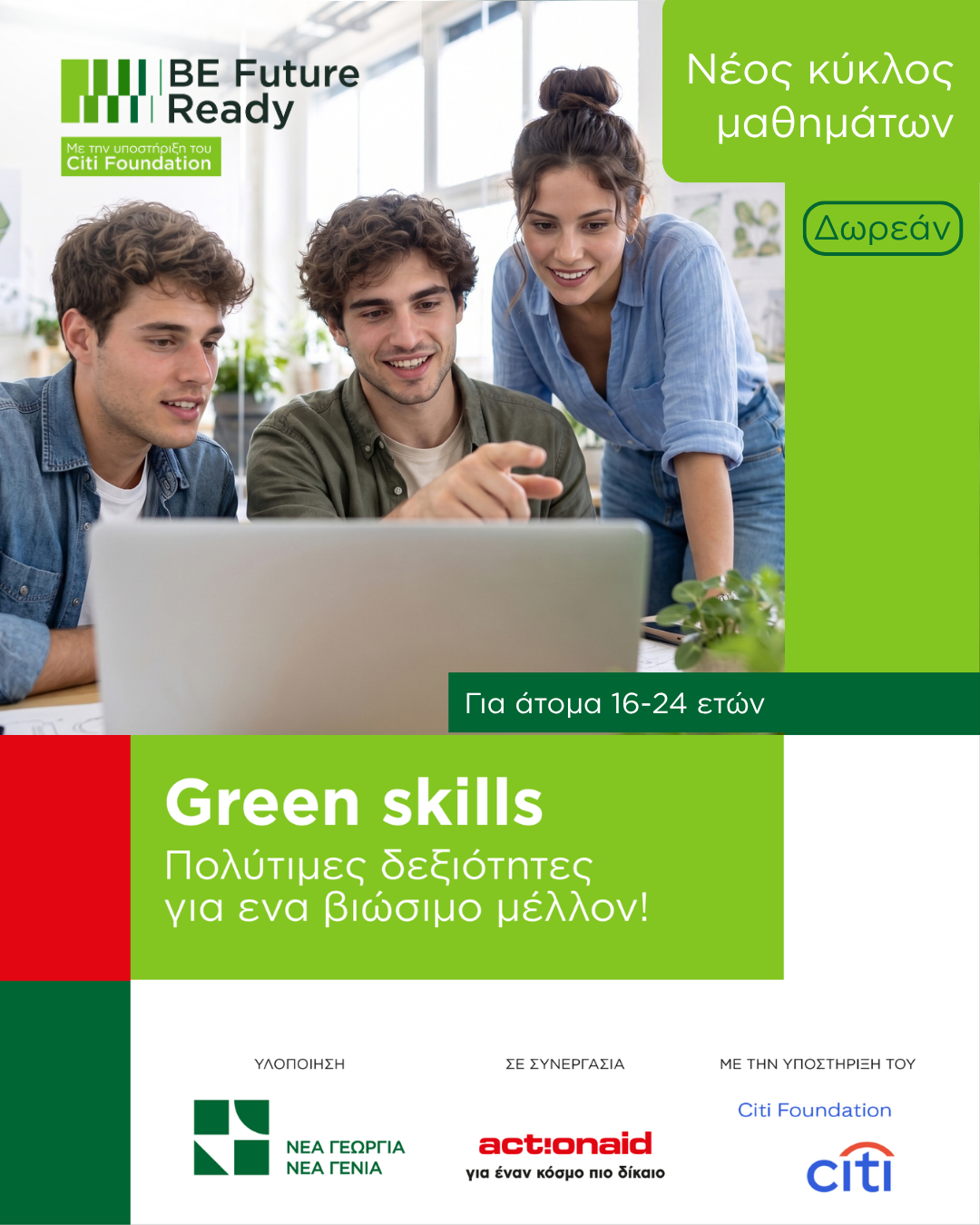
Applications Now Open for the BE Future READY Green Skills Training Programme

Free, certified training in green skills for young people in the agrifood sector — the first open call of the BE Future READY programme is now live!

This is the first open training opportunity of the BE Future READY programme!

New Agriculture New Generation is pleased to announce that applications are now open for the 1st Green Skills Training Cycle, the first open educational activity of the BE Future READY (Bridge to Employment: Future READY) programme.

Implemented by New Agriculture New Generation in partnership with ActionAid and with the support of the Citi Foundation, the programme aims to serve as a meaningful bridge to sustainable employment for more than 500 young people across Greece.

Green Skills Training

The programme consists of four training cycles, each comprising 60 hours of instruction, with a total capacity of 240 participants.

Participation is completely free of charge and leads to an ACTA certification upon successful completion.

The programme will run from July 2026 through December 2027, with all training delivered online via CULTIVATE, New Agriculture New Generation’s digital learning platform.

Programme Curriculum

The curriculum has been carefully designed by drawing on New Agriculture New Generation’s extensive experience in delivering educational programmes and agrifood business acceleration initiatives.

In addition, the content was informed by a dedicated survey conducted among prospective participants to better understand their interests and learning needs.

Training modules include:

  • Soil Health and Regenerative Agriculture
  • Sustainable Business Models (Marketing & Business Model Canvas)
  • Water Management and Efficient Resource Use
  • Climate Resilience and Climate Change Adaptation
  • Renewable Energy and Sustainability
  • Organic Farming
  • Biodiversity and Ecosystem Protection
  • Sustainable Consumer Choices in Food Systems
  • Carbon Farming
  • Introduction to Circular Agriculture
  • Green Technologies and Digital Transformation
  • Green Certifications, Traceability and ESG in the Agrifood Sector

The educational material has been developed by experienced agronomists and trainers from New Agriculture New Generation, providing participants with a comprehensive introduction to the agrifood sector, sustainable agricultural practices and emerging technologies.

Who Can Apply?

The programme is designed for young people aged 15–24 who wish to develop new skills or strengthen their employability in the agrifood sector. Selected programme activities are also open to young adults aged 25–29.

Priority will be given to:

  • Unemployed and underemployed young people
  • Young people living in rural and semi-urban areas
  • Women pursuing careers in the agrifood sector
  • Young people from low-income households
  • Young people with migrant or refugee backgrounds

Why Join?

The green transition is creating new demands and opportunities across the labour market. Employers are increasingly seeking professionals with knowledge of sustainability, organic farming, carbon farming and emerging green technologies.

Through the Green Skills Training programme, participants will:

  • Gain free, ACTA-certified training
  • Strengthen their CV with in-demand green skills
  • Learn online with complete flexibility
  • Become part of a growing network of more than 500 young people
  • Take an important step towards employment in the agrifood sector

How to Apply

Applications are open from 1 July 2026 until the first 60 applications have been received on a first-come, first-served basis, or no later than 26 July 2026.

If more than 60 eligible applications are submitted during the first cycle, additional eligible applicants will have the opportunity to participate in the next training cycle, which will open in September 2026.

Apply now!

For detailed information, announcements and FAQs, visit www.befutureready.gr

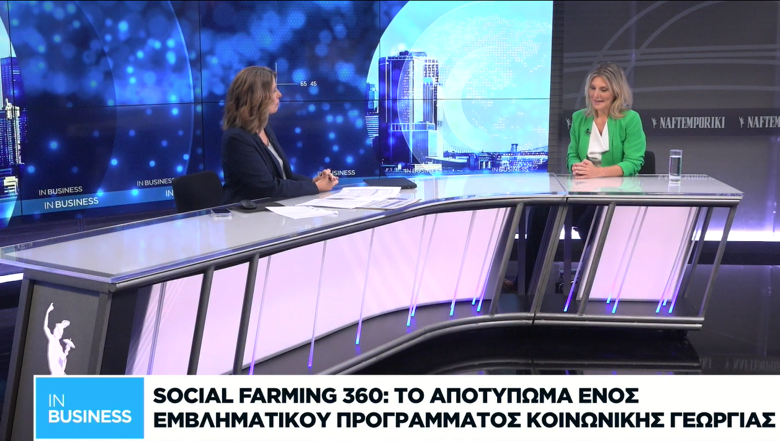
Social Farming 360°: A New Documentary Showcases the Transformative Power of Social Farming

Social Farming 360° Through the Stories of Its People

The Social Farming 360° programme was implemented across six correctional facilities in Greece, demonstrating how vocational training in sustainable agriculture can become a meaningful tool for empowering incarcerated individuals and supporting their social reintegration.

With 1,081 participations, 648 hours of training, and 696 ACTA-certified professional qualifications, the programme represents a pioneering model for skills development and social inclusion within correctional settings.

A Documentary Capturing the Programme’s Real Impact

To further highlight the significance and social impact of Social Farming 360°, a short documentary was produced following visits to two of the six agricultural correctional facilities where the training took place.

Through authentic personal testimonies, programme beneficiaries and contributors share their experiences with honesty and openness. Guided by open-ended conversations rather than scripted responses, they reflect on the challenges they faced, the skills they developed, and the ways in which the programme influenced their lives and future prospects.

These personal stories capture the programme’s impact in a way that no statistic can fully convey, shedding light on different journeys of growth, transformation, and new beginnings.

Watch the Documentary

The documentary is available on the New Agriculture New Generation YouTube channel.

Click here or watch it below.


The Social Farming 360° programme was implemented by New Agriculture New Generation, with the full support of the Citi Foundation, in close collaboration with the General Secretariat for Anti-Crime Policy of the Ministry of Citizen Protection, and with the participation of ActionAid Hellas and Freedom Gate Greece.

New Agriculture New Generation at SNF Nostos 2026 | The Future of Rural Life

New Agriculture New Generation Takes Center Stage at SNF Nostos 2026 with a Landmark Discussion on the Future of Rural Life and Food Systems

Sharing a common vision with the Stavros Niarchos Foundation and contributing to the transformation of Greece’s agrifood sector, New Agriculture New Generation participated in SNF Nostos 2026, leading a high-level discussion on the future of agriculture.

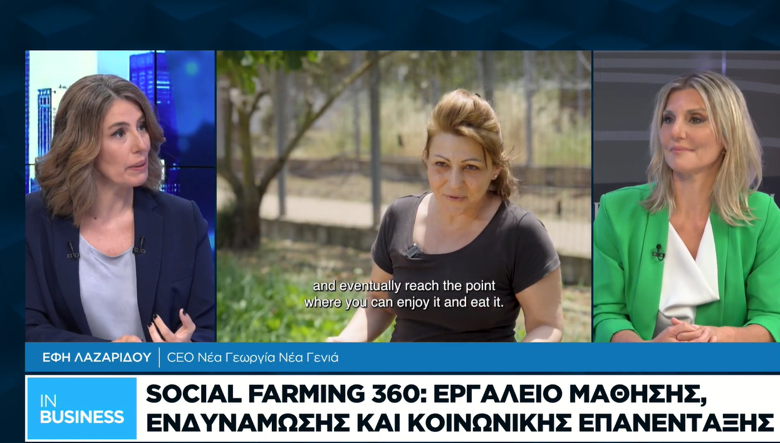
The panel, “Back to the Land: Agriculture as a Path to Rural Renewal,” moderated by Effie Lazaridou, CEO of New Agriculture New Generation (NANG), brought together farmers, entrepreneurs, policymakers, and food systems leaders from Greece, the United States, and across Europe to explore a question that is quietly reshaping societies:

Can returning to the land become a meaningful, viable, and attractive career path for the next generation?

Participants and Focus

The discussion was moderated by Effie Lazaridou, CEO of New Agriculture New Generation.

The panel featured:

  • Effie Lazaridou, CEO, New Agriculture New Generation
  • Tassos Haniotis, Economist and former senior official at the European Commission (Common Agricultural Policy)
  • Kathleen Finlay, Food systems expert and CEO of a regional food organization in the United States
  • Erick Doyle, Farmer and former President of the New Jersey State Board of Agriculture
  • Angeliki Drakou, Lawyer-turned-agrifood entrepreneur and co-founder of the organic herb company Grizos kai Prasinos in Komotini
  • Robert M. Goodman, Professor and former Dean of Rutgers University (via recorded video message)

The discussion combined policy and economic perspectives with practical experiences from farming and agrifood entrepreneurship in Greece and the United States.

The Myth vs. Reality

Effie Lazaridou opened the discussion with a story that immediately captured the audience’s attention.

At a team-building workshop she had attended a few months earlier, participants were asked to describe their vision of the future. Many of them—professionals in their 30s and 40s—shared the same dream: moving to a remote Greek island or mountain village, starting a small farm, living off the land, “doing yoga, meditating, and having an olive grove.”

An idyllic picture, far removed from the noise of the city.

“Very far from the reality of farming,” she remarked, before setting the tone for the discussion.

Food systems are not pastoral fantasies—they are critical infrastructure and a matter of national security.

Rural communities across Greece are facing mounting pressure from economic uncertainty, climate change, desertification, demographic decline, and the urgent challenge of feeding a global population expected to reach 10 billion.

The question before the panel was clear:

How can we make returning to the land not just an idealized dream, but a genuinely viable option?

Global Perspectives, Greek Challenges

The panel brought together diverse voices, each offering a unique relationship with agriculture.

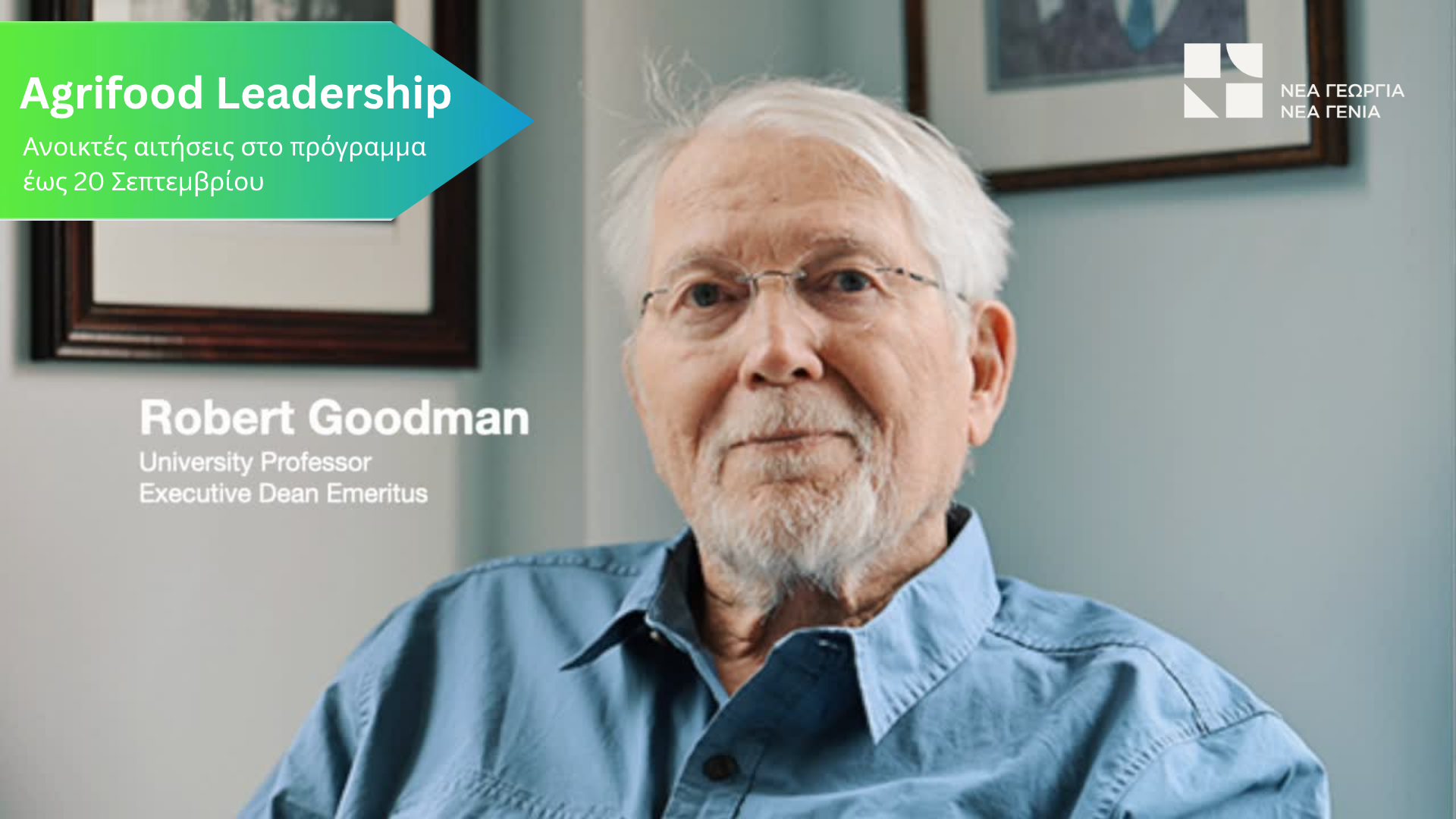
In his recorded message, Robert M. Goodman, Professor and former Dean at Rutgers University, emphasized that Greece’s agrifood sector is at a critical turning point.

He highlighted that Greece’s diverse geography and rich culinary heritage support an extraordinary range of crops and products, and argued that the country’s tradition of family-scale, non-industrial farming can be a competitive advantage rather than a weakness.

The central question, he argued, is how Greece can build a “distinctively Greek” agrifood model based on quality, value-added products, PDO and PGI certifications, agritourism, and a food system designed to nourish people rather than simply supply commodity markets.

Drawing on more than three decades of experience with the Common Agricultural Policy, Tassos Haniotis provided the broader economic perspective.

Real agricultural prices have stabilized and are showing a modest upward trend during the 21st century, reversing decades of decline.

Food inflation, once considered exceptional, has become a structural reality. Unlike producer prices, retail food prices rarely return to previous levels.

His central policy recommendation was clear: European agricultural subsidies should reward soil performance, not simply land ownership.

“Almost 50% of the land in the European Union is agricultural,” he noted, “yet policy has managed to create a false divide between the economy and the environment, when, at farm level, the two are inseparable.”

From the U.S. perspective, Kathleen Finlay explained that her journey into agriculture began through environmental work and a belief that food is the most tangible way to discuss humanity’s relationship with nature.

She described how her organization trains first-generation farmers—people without a farming background—in regenerative agriculture and farm entrepreneurship.

Her message was both practical and philosophical:

We must stop designing food systems to maximize profits for a few and instead build systems that promote collective wellbeing.

As an example, she described how collaboration among apple growers, cider makers, sommeliers, and local advocates revitalized New York State’s hard cider industry.

Her conclusion:

“Change happens from the ground up—hopefully alongside policy change, but ultimately from the ground up.”

Erick Doyle, a third-generation farmer and former President of the New Jersey State Board of Agriculture, offered the perspective from the field.

Originally a mathematics graduate, he entered farming unexpectedly after helping his parents establish their retirement farm.

Thirty years later, he has become both a successful farmer and a leading advocate for agriculture.

The challenge facing New Jersey, he explained, closely mirrors that of Greece.

Not only are people leaving agriculture—the land itself is disappearing to housing developments, warehouses, and data centers.

His solution was simple:

Mentorship.

Experienced farmers should not merely hire young people—they should actively mentor them, pass on knowledge, build their confidence, and inspire a new generation.

A Greek Perspective from the Field

Representing the Greek experience, Angeliki Drakou shared her transition from law to agrifood entrepreneurship in Komotini, where she co-founded Grizos kai Prasinos, a company producing organic herbal teas and beverages.

She identified three major obstacles facing young people who want to build a future in rural Greece:

  • Access to land — Much of Greece’s agricultural land remains in the hands of older generations, while existing subsidy schemes often discourage diversification.
  • Labour shortages — Rural businesses struggle to recruit both skilled and unskilled workers.
  • Targeted education and business support — Many aspiring entrepreneurs lack practical knowledge in costing, marketing, and business planning, despite having strong technical or agronomic expertise.

Drakou argued that new collaboration models could enable small businesses to share machinery, expertise, and personnel, while also calling for practical, nationally coordinated education programmes tailored to the real needs of farmers and agrifood entrepreneurs.

The Role of New Agriculture New Generation

During the discussion, Drakou reflected on the impact of Agroanelixi, one of New Agriculture New Generation’s flagship programmes, on the growth of her business.

“For the first time, I learned how to build a proper business plan and identify new markets for our products. What made the biggest difference was that it wasn’t theoretical—I had access to people with real market experience.”

She added that the professional relationships built through the programme continue to support her business years later.

New Agriculture New Generation operates precisely at the intersection of skills development, entrepreneurship support, and ecosystem building.

Through programmes that combine technical knowledge, business education, mentoring, and networking, the organization aims to:

  • Equip young people with the skills needed to enter and thrive in the agrifood sector.
  • Support innovative agrifood businesses across Greece.
  • Foster collaboration among farmers, entrepreneurs, academia, and market stakeholders.
  • Contribute to a more sustainable, competitive, and inclusive agrifood ecosystem.

Through flagship programmes such as Agroanelixi and Agrifood Leadership, both currently open for applications, New Agriculture New Generation continues to transform Greece’s agrifood sector while supporting farmers and emerging entrepreneurs across the country.

Reasons for Optimism

The discussion concluded on a hopeful note.

Each speaker reflected on what gives them optimism about the future of rural communities.

Erick Doyle spoke about the children who visit his farm on school trips and later become involved in agricultural organizations, arguing that once young people experience agriculture firsthand, the connection to the land rarely disappears.

Tassos Haniotis, paraphrasing a famous political slogan, reminded the audience:

“It’s food, stupid.”

Food is not a niche issue—it is humanity’s most fundamental need, and sooner or later it inevitably becomes a political priority.

Angeliki Drakou expressed optimism about younger generations’ growing desire for purpose, quality of life, and a deeper connection with their work.

Kathleen Finlay highlighted the emergence of a new generation of farmers who are creative, entrepreneurial, multidisciplinary, and redefining what it means to work the land.

The land is ready. The real question is whether our systems, policies, and institutions are ready to meet the next generation halfway.

WATCH the full discussion.

Working Meeting on Arta’s Development Vision with the Participation of New Agriculture New Generation

Discussions focused on the development prospects of the Arta region, the potential of its key economic sectors, the adoption of new technologies, and the strengthening of specialized education.

An important working meeting was held at Arta City Hall with the Mayor of Arta, Christoforos Siafakas, and the Deputy Mayor, Michalis Kotsarinis, in the presence of Effie Lazaridou, CEO of New Agriculture New Generation.

The discussion centered on a long-term vision for the region’s economic development over the coming decade, highlighting the significant opportunities offered by key sectors of the local economy, including poultry farming, dairy production, beekeeping, and agriculture, in close connection with agro-logistics.

Participants agreed that the adoption of new technologies, combined with specialized education, is a fundamental prerequisite for modernizing production and strengthening the region’s competitiveness.

The importance of attracting investment and fostering innovation was also emphasized, with the aim of creating an environment that encourages young people to remain in the region, build their future, and thrive within their local communities.

The exchange of views reaffirmed the importance of dialogue and collaboration among all stakeholders, with the shared goal of leveraging the region’s comparative advantages and creating greater opportunities for local communities, particularly for the younger generation.

18 Awards for Agroanelixi Programme Beneficiaries at the Specialist Awards 2026

The awards highlight the quality, innovation, and potential of the businesses that participated in the programme

Nea Gea Nea Genia proudly congratulates the beneficiaries of the Agroanelixi programme who were honoured at the Specialist Awards 2026, a prestigious institution celebrating quality, innovation, and creativity in the agrifood sector.

For the past several years, the Specialist Awards have been a valued partner of the Agroanelixi programme, offering beneficiaries complimentary entries to the Tasting Awards. Through this opportunity, participants are able to showcase their products in a well-established evaluation process, gain valuable recognition, and strengthen both their market presence and business growth.

This year’s awards stand as a strong testament to the dedication, consistency, and passion with which producers and agrifood businesses continue to evolve, creating high-value products with a distinctive identity and character.

Awards received by Agroanelixi programme alumni

Specifically, graduates of the Agroanelixi programme received the following distinctions:

Platinum Award

  • Hazelnut Spread – Nomad Honey

Gold Awards

  • Sun-Dried Florina Pepper with Sweet Boukovo – Varecon
  • “Pu & Pu” Organic Herbal Blend – Grizo & Prasino
  • Organic/Biodynamic Corinthian Raisins – Stamatopoulos Biodynamic Farm
  • Organic Heather Honey – Bee Naturalles
  • “Not Worthit” – Rose Geranium & Bergamot – Grizo & Prasino
  • Baklava Topping – Yiam

Silver Awards

  • Naturally Dried Figs – Oikotechnia | Bourazidis Estates
  • Caramelised Onion Chutney – Yiam
  • Mango & Agave Tea 300ml RTD – Lemonodasos
  • Whole Lemon Lemonade 300ml RTD – Lemonodasos
  • Organic Fennel & Anise Honey – Bee Naturalles
  • Paliouri Honey from Pella – Mouriki

Bronze Awards

  • Hibiscus & Agave Tea 300ml RTD – Lemonodasos
  • Organic Oak Honey – Bee Naturalles
  • Efkrato Monovarietal Tsounati EVOO – Efkrato – Silvergreen
  • Stalia Premium EVOO – Stalia

Special recognition also goes to Mouriki, which was named Specialist Producer – Producer of the Year, an award that further highlights the outstanding quality and dynamic presence of the company.

These achievements fill us with pride and reaffirm the mission of the Agroanelixi programme: to support people and businesses that invest in knowledge, extroversion, quality, and the sustainable development of the Greek agrifood sector.

Warm congratulations to all award recipients. We wish them every success and hope these distinctions serve as a springboard for even greater growth, recognition, and future achievements.

Agroanelixi 2026 – Farmers of the Future

The success of the programme’s beneficiaries demonstrates the value of investing in knowledge, innovation, and the continuous development of Greek agrifood businesses.

Applications for Agroanelixi – Farmers of the Future 2026 remain open until 19 July 2026.

Learn more about the programme and submit your application at agroanelixi.gr.

Special Closing Event of the Agrifood Leadership 2025–2026 Programme

With great enthusiasm, strong participation, and inspiring, insightful speeches, the Agrifood Leadership 2025–2026 programme concluded during a special event held on Friday, June 26, 2026, at Lidl House Athens, in the Arsakeio Arcade.

The event had a celebratory character, marking three years since the launch of the programme, and brought together representatives of the agrifood sector, trainers, supporters, alumni, partners, and members of the wider Agrifood Leadership community.

The Agrifood Leadership 2025–2026 programme is implemented by New Agriculture New Generation under the auspices of the Hellenic Ministry of Rural Development and Food. The programme’s Technical and Strategic Advisor is Rutgers University (USA). The programme was established through the founding grant of the Stavros Niarchos Foundation (SNF).

An Event Dedicated to the Programme’s Journey and Impact

The event provided a meaningful opportunity to reflect on the journey, evolution, and impact of Agrifood Leadership, highlighting the importance of leadership, collaboration, lifelong learning, and the development of strong professional communities for the future of Greece’s agrifood ecosystem.

The event was opened by Michalis Karagiannis, Project Manager of the programme, who welcomed attendees and introduced the framework of the anniversary gathering, dedicated both to reviewing the programme’s third cycle and to its dynamic future.

Next, Effie Lazaridou, CEO of New Agriculture New Generation, spoke about the contribution of Agrifood Leadership to empowering professionals in the primary and agrifood sectors, emphasizing the role of education, mentoring, and networking in shaping a new generation of professionals equipped with vision, knowledge, and leadership skills.

A welcome address was delivered by Argyro Zerva, Secretary General for Union Resources and Infrastructure at the Hellenic Ministry of Rural Development and Food, who highlighted the importance of education and collaboration among young people active in the agrifood sector, as well as the value of programmes that provide up-to-date knowledge, specialized expertise, and practical tools for their professional development.

This was followed by remarks from Nikos Lysigakis, Senior Consultant Corporate Affairs at Lidl Hellas, who spoke about the importance of supporting initiatives that promote knowledge, innovation, and sustainable development in the agrifood sector, emphasizing the value of collaboration among organizations, businesses, and individuals who share a common vision for the future of Greek agrifood.

Speeches, Videos and International Leadership Perspectives

The keynote speaker of the event was Eleni Kehri, winemaker, oenologist, and chemical engineer, who shared her personal and professional journey, highlighting key aspects of leadership, entrepreneurship, resilience, and continuous growth within the agrifood sector.

As part of the event, attendees watched a video message from Robert Goodman, University Professor and Executive Dean Emeritus at Rutgers University, as well as a commemorative video entitled “Three Years of Agrifood Leadership,” showcasing significant milestones, experiences, people, and achievements from the programme’s journey to date.

Michalis Karagiannis then presented the importance of the programme’s Alumni community and announced new initiatives aimed at maintaining, strengthening, and further activating the connections among graduates. The Alumni community serves as a vibrant network for exchanging knowledge, experiences, and collaborations, creating added value for the agrifood sector.

A fireside chat followed between Erick Doyle, farmer and business owner of Readington River Farm and alumnus of the New Jersey Leadership Development Program Class 7, and Dimitris Voloudakis, General Programs Director of New Agriculture New Generation and Scientific Director of the programme, on the topic “A Paradigm of Leadership.” The discussion highlighted international best practices, personal experiences, and the importance of leadership as a driving force behind the development of dynamic communities and sustainable partnerships in the agrifood sector.

Reflecting on the Third Cycle and Looking Ahead

A particularly meaningful moment of the event was the greetings delivered by Agrifood Leadership trainers and supporters, who highlighted the importance of continuity, collaboration, and the active participation of all stakeholders in the programme’s success and continued growth.

The event concluded with a review of the third cycle of Agrifood Leadership, followed by the presentation of certificates of participation to the programme participants.

Following the official programme, a networking session gave participants the opportunity to exchange ideas, experiences, and perspectives on the future of the agrifood sector, while further strengthening the relationships built throughout their participation in the programme.

Agrifood Leadership continues to invest in the people of the agrifood sector by fostering a strong community of professionals who share a common vision for a more modern, sustainable, outward-looking, and competitive agrifood ecosystem.

The fourth cycle of the programme will run from November 2026 to June 2027. For the first time, the programme will also be held under the auspices of EIT Food.

Applications for the new cycle are available through the programme’s website.

New Agriculture New Generation extends its sincere thanks to Lidl Hellas for its valuable support and generous hospitality at the new Lidl House Athens venue.

Supporters of the programme’s additional educational activities include the Consortium of Producer Cooperatives of Imathia, PINDOS Agricultural Poultry Cooperative of Ioannina, the Chios Gum Mastic Growers Association, COMPO EXPERT, the Kalavryta Agricultural Dairy Cooperative, and Lidl Hellas.

The programme is also supported by NBIS.