Νέα Γεωργία Νέα Γενιά

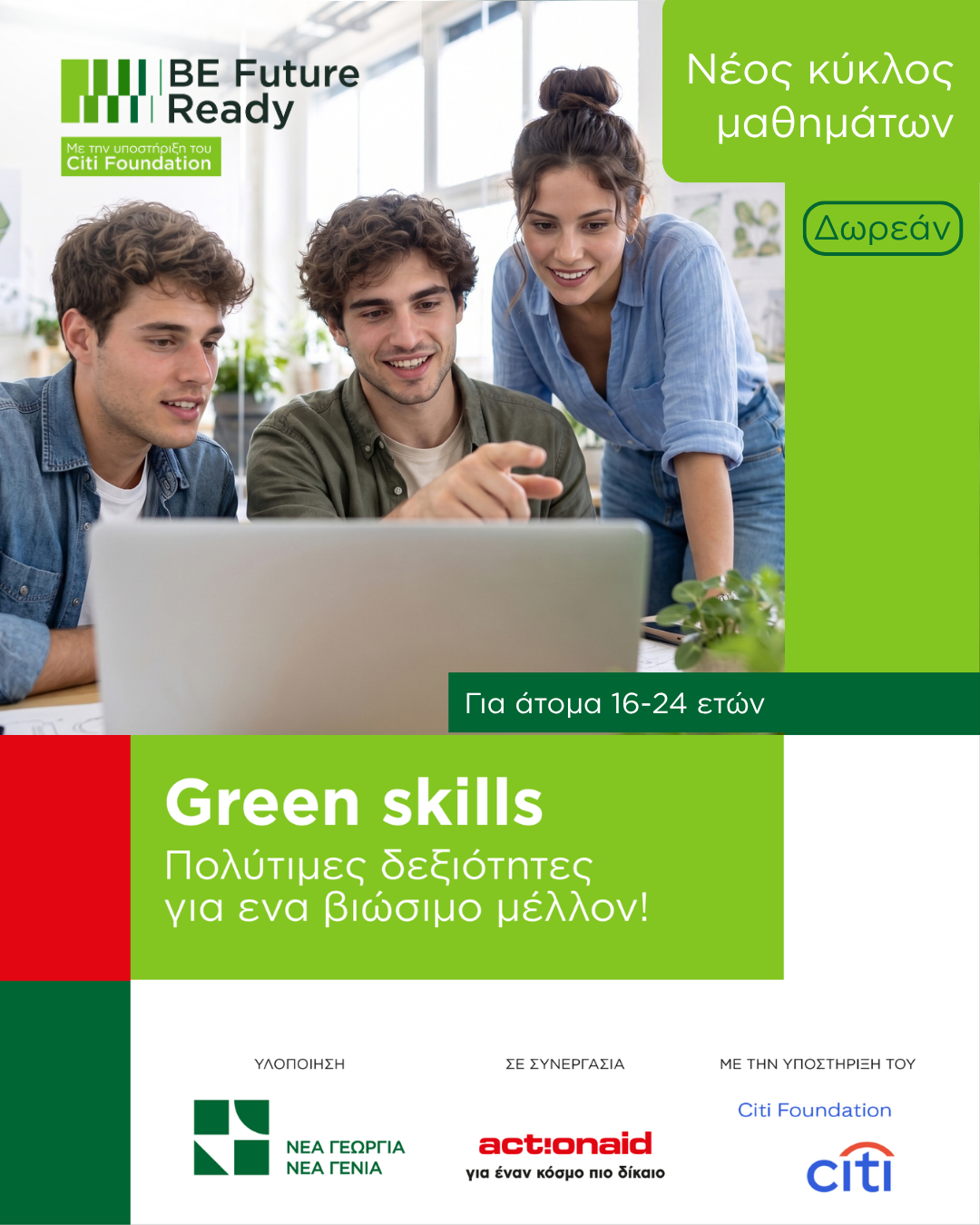
Open applications for the 2nd training cycle of the Green Skills initiative under BE Future READY

Free, certified training in green skills for young people in the agrifood sector

The first 60 young participants have already completed the courses of the first training cycle. Are you ready to join the second cycle and enter the world of green skills?

New Agriculture New Generation announces the opening of applications for the Green Skills Training – 2nd Cycle, the first open training activity of the BE Future READY programme (Bridge to Employment: Future READY). Implemented by New Agriculture New Generation in partnership with ActionAid and with the support of the Citi Foundation, the programme aims to serve as a meaningful bridge to sustainable employment for more than 500 young people across Greece.

The Green Skills Training programme

The programme consists of four training cycles, each lasting 60 hours, with the aim of engaging a total of 240 participants. Training is provided entirely free of charge and leads to certification by ACTA.

The programme runs from July 2026 to December 2027. All courses are delivered online through CULTIVATE, the learning platform of New Agriculture New Generation.

Programme curriculum

The course modules have been carefully designed by drawing on New Agriculture New Generation’s extensive experience in delivering training programmes and business acceleration initiatives in the agrifood sector. The curriculum was also informed by a dedicated survey of prospective beneficiaries, which helped identify the topics that matter most to them.

The thematic modules include:

  • Soil Health and Regenerative Agriculture

  • Sustainable Business Models: Marketing and Business Model Canvas

  • Water Management and Efficient Resource Use

  • Climate Resilience and Adaptation to Climate Change

  • Renewable Energy Sources and Sustainability

  • Organic Farming

  • Biodiversity and Ecosystem Protection

  • Sustainable Consumer Choices in Food Systems

  • Carbon Farming

  • Introduction to Circularity in Agriculture

  • Green Technologies and Digitalisation

  • Green Certifications, Traceability and ESG in the Agrifood Sector

The training material has been developed by experienced and specialised agronomists and trainers from New Agriculture New Generation. It provides a comprehensive introduction to the sector, sustainable practices and modern technologies.

Who can apply?

The programme is aimed at young people aged 15–24 who want to develop skills or strengthen their professional readiness for the agrifood sector.

Priority will be given to:

  • Unemployed and underemployed young people

  • Young people from rural and semi-urban areas

  • Women in the agrifood sector

  • Young people from low-income households

  • Young people with a migrant or refugee background

Why participate?

The green transition is creating new skills needs and employment opportunities. Businesses are increasingly looking for young professionals who understand sustainability, organic farming, carbon farming and new technologies.

Through Green Skills Training, you can:

  • Gain free, certified knowledge

  • Strengthen your CV

  • Learn online with full flexibility

  • Become part of a network of more than 500 young people

  • Take a meaningful step towards the agrifood sector and real employment opportunities

How to apply

Applications are open from 22 September until the first 60 applications are received, on a first-come, first-served basis, or no later than 25 October 2026.

If applications for the current cycle exceed 60, additional eligible applicants will be able to attend the courses in a subsequent cycle, which will open early next year (2027).

Apply now via the APPLICATION FORM.

For detailed information, announcements and FAQs, visit www.befutureready.gr.
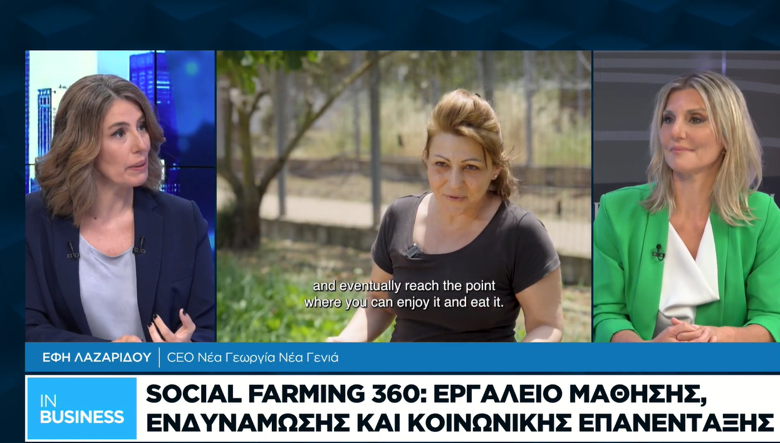
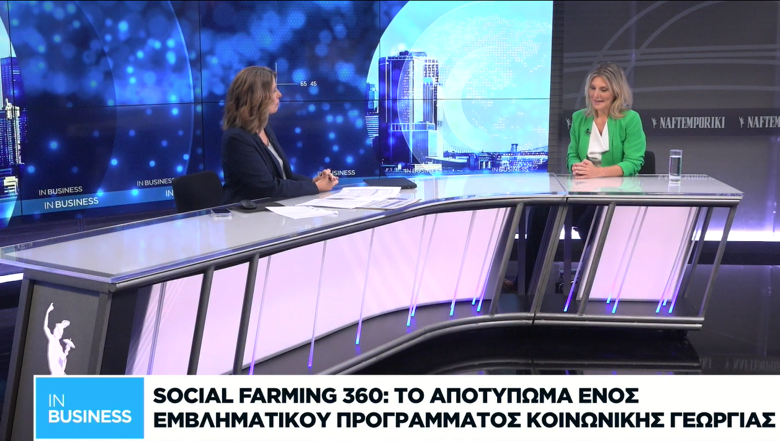
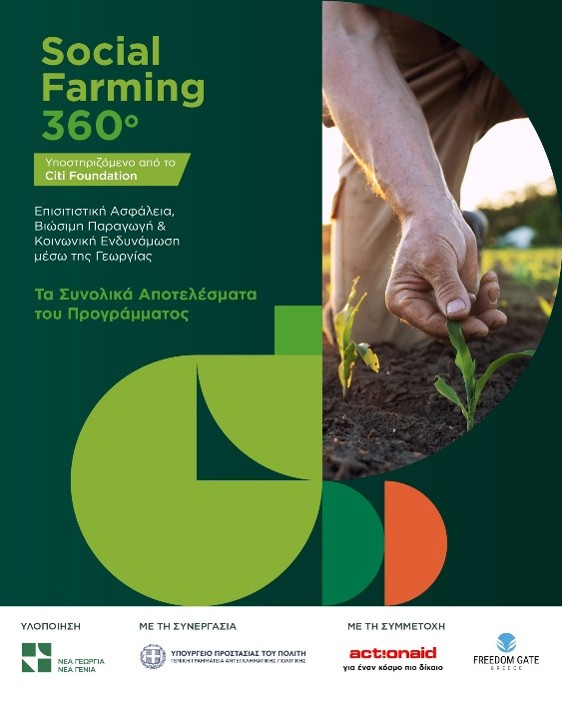
Social Farming 360°: The Social Impact of the Programme | Efi Lazaridou on Naftemporiki TV

Efi Lazaridou, Chief Executive Officer of New Agriculture New Generation, spoke to Naftemporiki TV – IN BUSINESS about the social impact, methodology and results of the Social Farming 360 programme.

The interview highlighted the role of social farming as a tool for education, empowerment and support for the reintegration of people living in agricultural correctional facilities. The programme was completed in June 2026 after two years of implementation, combining agricultural training, employment support and psychosocial care.

The programme’s starting point

Asked what Social Farming 360 is, when it began and what its core objective was, Ms Lazaridou explained that it was a holistic social farming initiative implemented in facilities with agricultural production.

As she noted:

“It was an effort to transform agricultural production within agricultural correctional facilities. In essence, it is an effort to support people’s reintegration into society on the next day, once they have completed their sentence.”

The intervention focused on helping participants acquire knowledge and practical skills related to agriculture and food production, while also providing support on employment and mental-health-related issues. The programme was selected for funding by Citi Foundation through an international call and was implemented between 2024 and 2026.

Agriculture, employment and reintegration

The discussion placed particular emphasis on the importance of supporting people who often remain invisible to society, as well as on the potential to link reintegration with a sector that needs human resources.

When asked how this type of training can meaningfully contribute to participants’ next steps, Ms Lazaridou underlined:

“We do not only give attention to people who are often invisible inside prisons; we also give them the tools to reintegrate. At the same time, these are people who can become active in the agricultural sector, a sector that needs workforce.”

As she explained, social farming can serve as a setting for socialisation, skills development and the creation of genuine employment prospects for vulnerable social groups.

The scale of the initiative

Asked about the number of facilities and participants involved, Efi Lazaridou stated that the programme reached a total of six facilities with agricultural production: four agricultural correctional facilities and two closed facilities.

Participation was voluntary, and engagement was particularly positive. More than 1,000 participants received training in agriculture and food-production topics, while more than 300 people received psychosocial and employment support.

The training covered contemporary agricultural practices, with an emphasis on environmentally sustainable and regenerative approaches. Activities included the cultivation of aromatic and medicinal plants, such as oregano and thyme, the development of vegetable gardens, and plant propagation.

“It was important to transfer knowledge to participants on new practices that relate to regenerative agriculture and more environmentally sustainable approaches,” Ms Lazaridou noted.

A collaboration with meaningful impact

The implementation of Social Farming 360 was based on the collaboration of public and social-sector organisations. New Agriculture New Generation was responsible for agricultural training; ActionAid Hellas supported the employment empowerment component; and Pyles Eleftherias provided psychosocial support services.

The contribution of the General Secretariat for Anti-Crime Policy of the Ministry of Citizen Protection, the management teams of the facilities, and the agronomists and staff working in them was also crucial.

The interview also referred to the programme’s short documentary, in which participants share personal experiences of taking part in the initiative. Ms Lazaridou stressed that the testimonies were recorded authentically, without intervention in the content of those who chose to speak.

When asked about what might follow after the programme’s completion, Efi Lazaridou expressed her hope that the experience of Social Farming 360 could serve as a foundation for the continuation and expansion of similar initiatives.

“It would be highly desirable to see an initiative like this—one that has been designed, implemented, measured and proven useful—embraced by the State and applied in other facilities as a practice with continuity.”

Agricultural training, psychosocial support and career guidance are, as she explained, crucial components in supporting reintegration and creating new prospects.

“We are talking about skills, psychological support and employment support. These give people the opportunity to dream and hope for a different future.”

Learn more about the programme’s social impact and watch the documentary, featuring testimonials from programme beneficiaries.

Watch the full interview on the organisation’s YouTube channel.

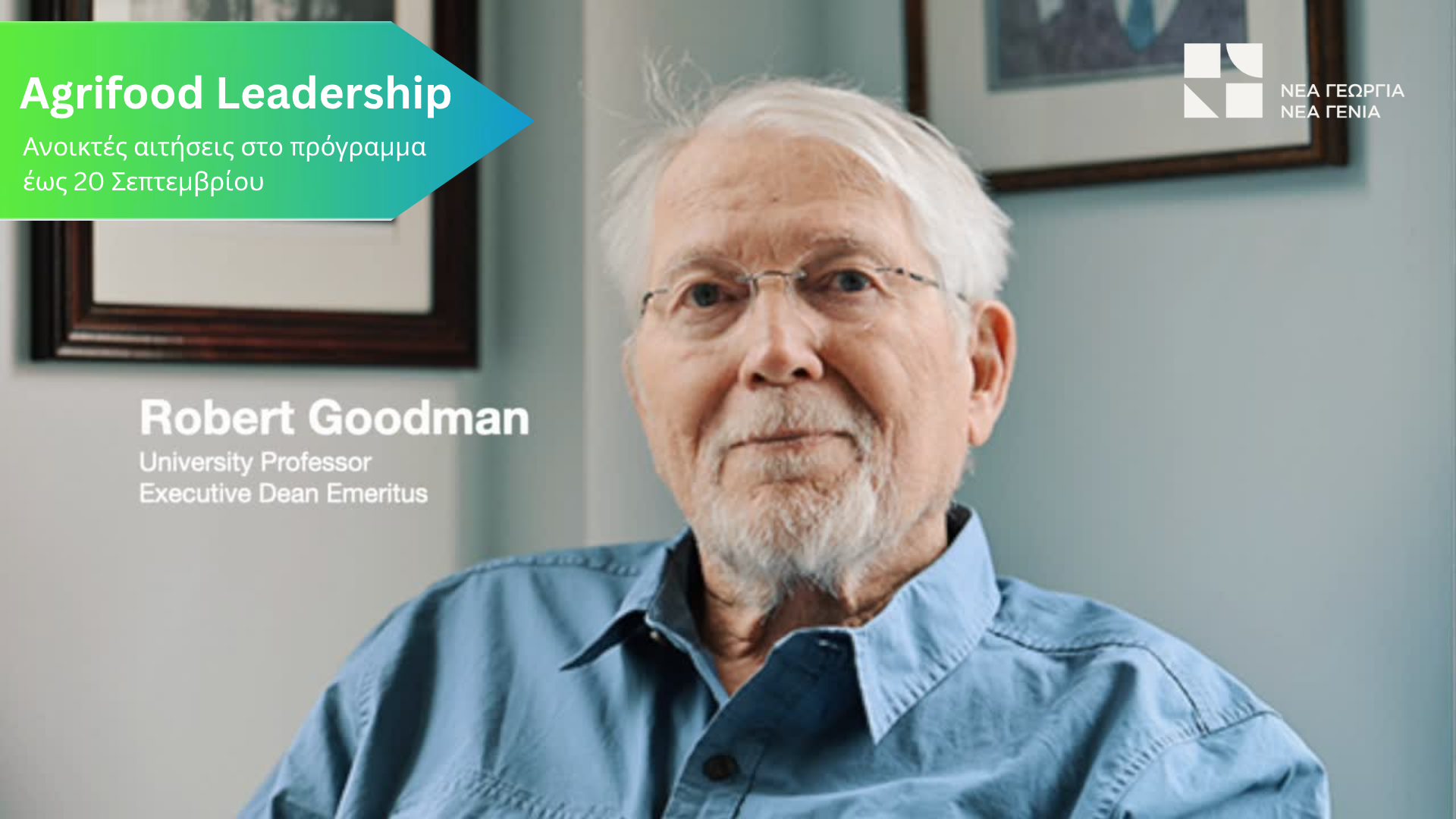
An Inspiring Message for Agrifood Leaders | Robert M. Goodman

When scientific knowledge and long-standing academic experience are accompanied by a genuine interest in people and in the future of the agrifood sector, a message can carry particular weight.

With this perspective, Professor Robert M. Goodman, University Professor and Executive Dean Emeritus at Rutgers University in New Jersey, USA, addressed the graduates of the Agrifood Leadership Programme 2025–2026 of New Agriculture New Generation at the programme’s closing event in the summer of 2026.

His active involvement in the collaboration between Rutgers University and New Agriculture New Generation, combined with his significant academic, scientific and leadership experience, gave particular value to his message. As a University Professor and Executive Dean Emeritus, Professor Goodman brings a perspective that connects scientific research, education, innovation and the real needs of agrifood communities.

As he noted, agriculture should not be viewed as a collection of separate activities. Food production, nutrition, culinary traditions and rural landscapes are interconnected parts of a broader ecosystem—one that supports jobs, decent livelihoods, resilience and a significant share of Greece’s economic and cultural wealth.

The ambition of the Agrifood Leadership Programme goes beyond preparing better farmers, processors, financiers, manufacturers, marketing professionals or export managers. Its goal is to cultivate leaders who can understand systems, connect people and sectors, and recognise the opportunities that emerge through collaboration.

To illustrate this ecosystem-based approach, Professor Goodman referred to the development of new disease-resistant hazelnut varieties, which enabled the sustainable revival of hazelnut cultivation in New Jersey through the coordinated contribution of many disciplines and professionals across the sector.

In closing, he encouraged graduates to look beyond individual roles and conventional solutions. By remaining open to unexpected partnerships, often-overlooked resources and new forms of value, they can help build a more resilient, innovative and interconnected agrifood ecosystem in Greece.

As Professor Goodman concludes:

“Don’t be so focused on what you are looking for that you fail to see what you have found.”

Watch his full message.

The Agrifood Leadership Programme of New Agriculture New Generation was developed under the scientific guidance of Rutgers University, New Jersey, USA.

Applications for the new Agrifood Leadership 2026–2027 cycle are open until 20 September 2026.

Learn more about the programme and submit your application.

Stella Tofea: Building Her Dreams with Almonds and Sweet Corn

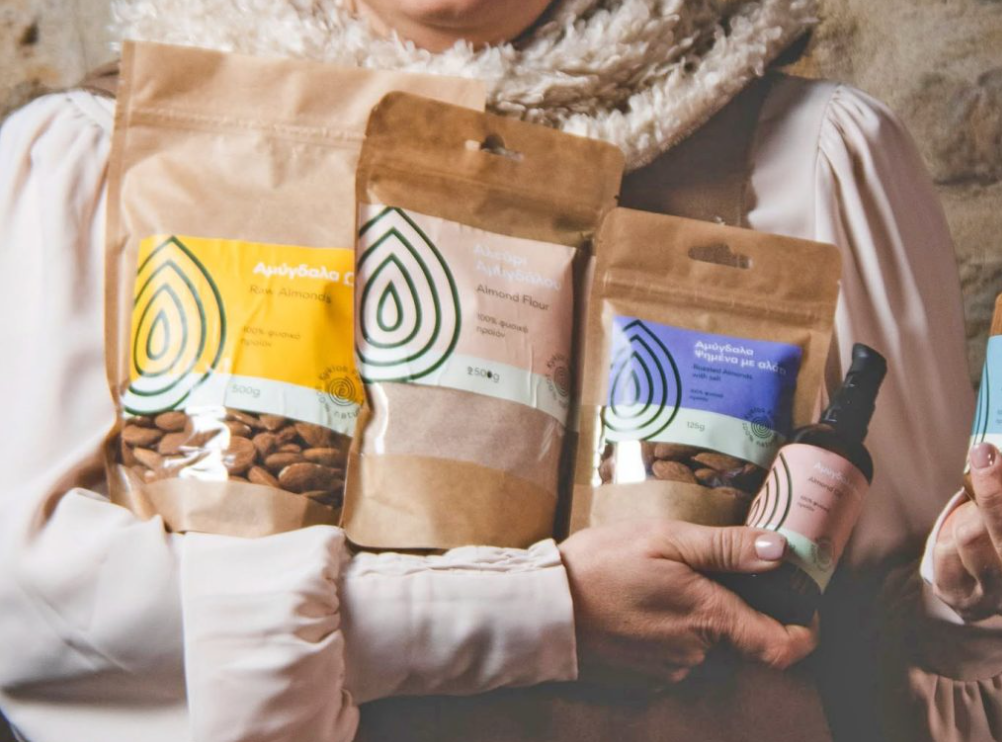
Stella Tofea is an agricultural technologist based in Genisea, Xanthi, where she has been continuing her family’s farming tradition for the past decade. She cultivates almonds, kiwifruit and sweet corn under an integrated crop-management system. She is the founder of the Kyklos Farm cottage industry, whose flagship product is the almond. Her range includes almond oil, almond butter, raw and roasted almonds, as well as almond flour.

As she explains, the almonds she grows stand out for their rich flavour. They are rich in valuable nutrients and help promote a feeling of fullness.

“They are ideal as a healthy snack, pair well with breakfast and can also be used in cooking. Their flavour is the best proof of the care we devote to every stage of the production process, with the aim of achieving the highest quality,” she says. Speaking to Ypaithros Chora, she also explains that her almond oil—which has gained a loyal following, particularly among women—is produced through cold pressing in order to preserve all its valuable nutrients intact.

Kyklos on the Road

Restless in spirit, artistic by nature, yet realistic in the day-to-day struggle of being a young farmer and cottage-industry producer, Stella Tofea decided to take another entrepreneurial step forward.

Together with her husband, Dimitris Apostolidis, she created the mobile food concept Kyklos on the Road. Its licence was issued in his name, as required by the relevant legal framework. Their goal is to promote products that travel directly from the field to the consumer.

Flavours born on their farm, or produced by local growers, travel on four wheels under the slogan: “street food from the producer to the consumer.” Sweet corn was initially at the heart of their street-food concept, but over time they developed an imaginative and diverse menu. It includes sandwiches with locally smoked mackerel, delicious hot dogs, and a new summer menu featuring sweet corn from their own production—grilled, boiled or fried. The common denominator in every recipe is their love for, and care of, the raw ingredients.

Stella Tofea distributes her products throughout Greece, while the food truck travels to events across the Region of Eastern Macedonia and Thrace.

At the same time, she says she is particularly fond of tall trees, peaceful places and cheerful people. The green economy, respect for the environment and for Mother Earth—which enables her to produce high-quality products in her home region and make a living from her work—are fundamental principles of her philosophy. She seeks to use natural resources responsibly and views the consumer not merely as a customer, but as an integral part of her products’ life cycle.

Another reason she and her husband established the mobile food truck was the opportunity it offers for direct contact with the public. By participating in open events, concerts and local festivals, they aim to share their gastronomic offering and build an authentic relationship with consumers.

Support Programmes

Stella Tofea is among the beneficiaries of New Agriculture New Generation, an organisation supported by the Stavros Niarchos Foundation that seeks to foster employment and entrepreneurship opportunities for young people in Greece’s agrifood sector. She also implemented farm-improvement plans with ena Development Consultants.

“I received funding to develop my farm operation, built facilities and acquired the equipment needed for the cottage-industry unit. I chose to implement some programmes myself, trusting my own knowledge, but time was not always on my side. Bureaucracy is always unforgiving, and as a result I missed deadlines because, at the same time, I had to deal with problems that constantly arose in the field,” she concludes.

Source: Ύπαιθρος Χώρα (ypaithros.gr).

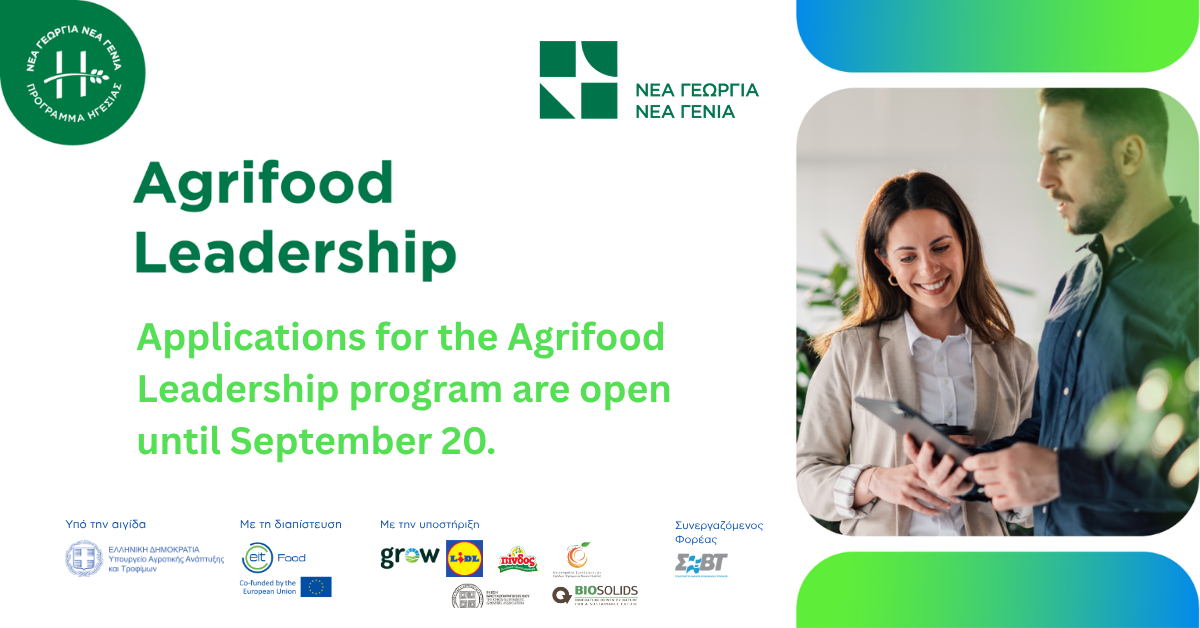
Applications Open Until 20 September for Agrifood Leadership

Applications for the pioneering leadership-development programme for agrifood professionals, implemented by New Agriculture New Generation, will remain open until 20 September. Agrifood Leadership combines theoretical training on contemporary topics with experiential learning focused on the agrifood production ecosystem.

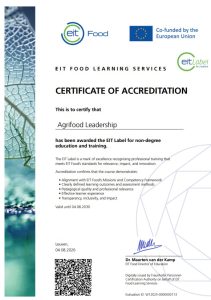
For the first time, the programme has received EIT Food accreditation. At the same time, the new Alumni Community is being launched, activating a vibrant network of programme graduates.

The new programme cycle will run from November 2026 to June 2027.

The programme is aimed at people who wish to strengthen their knowledge and skills, broaden their professional horizons, and develop modern leadership tools to address the challenges of the agrifood sector. Through a comprehensive learning experience, participants engage with executives, businesses and organisations helping shape the future of the sector.

Agrifood Leadership includes a series of experiential three-day educational study visits to different regions of Greece and Brussels, as well as online training sessions, offering more than 120 hours of learning, workshops and networking activities in total. Participants will have the opportunity to visit decision-making centres, businesses and organisations within the agrifood ecosystem; take part in leadership role-play exercises; and connect with a dynamic network of professionals in Greece and abroad.

The learning experience is designed around experiential learning, collaborative work and practical application, enabling participants to immediately use the tools and skills they acquire.

The programme is being successfully implemented for the fourth consecutive year, under the auspices of the Ministry of Rural Development and Food and with the support of leading companies in the sector. This year, for the first time, the programme has received accreditation from the leading European organisation EIT Food, as well as support from GROW.

The programme is supported by Lidl, PINDOS, the Chios Mastiha Growers Association, BIOSOLIDS, and the Cooperative Consortium of Producers of Imathia Prefecture as Educational Activities Sponsors. The Hellenic Food Industries Association (SEVT) participates as a collaborating organisation.

Programme graduates now form an active alumni community that collaborates, shares good practices and co-creates initiatives with a positive impact on the Greek agrifood sector, further strengthening the programme’s value and momentum.

Through the Alumni Community, activities are implemented to support members’ continuous development, networking and professional advancement, with the participation of distinguished executives and businesses. In this context, in 2027 a masterclass will be delivered by Theodoros Matakiadis, Head of Global Disruptive Innovation Portfolio at Bayer CropScience Vegetable Seeds. In addition, Deloitte specialists will provide tailored advisory support to up to five entrepreneurs/businesses from the alumni community, based on their specific needs and stage of development.

Those wishing to participate in the new Agrifood Leadership cycle and become part of a dynamic community of agrifood professionals may submit their application until 20 September.

Applications are submitted online through the programme website: https://agrifoodleadership.newagri.org.

Places are limited, and the final selection of participants will be made following an assessment and interview process. Interested applicants are encouraged to apply early for the opportunity to secure a place in a programme that combines an international outlook, high-quality training and European quality accreditation.

For more information about Agrifood Leadership and the new programme cycle, interested parties may visit https://agrifoodleadership.newagri.org/ or contact the Programme Manager, Michalis Karagiannis, at [email protected].

Watch a short video on the programme’s history.

New Job Opening | Development Associate (Fundraising)

Job Description

We are looking for an Associate for our Athens office to join the Development department and actively contribute to the development of strategic partnerships and fundraising initiatives that make a difference.

If you’re someone with excellent communication skills, an outgoing personality, creative thinking, and a passion for networking, then you might be the person we’re looking for.

In this role, you will:

✨ Develop and strengthen relationships with companies, nonprofit organizations, donors, and strategic partners.

✨ Seek out new funding and growth opportunities.

✨ Participate in drafting and preparing proposals that support the organization’s work and goals.

✨ You’ll collaborate with the Communications department on initiatives related to corporate partnerships and projects of mutual interest.

If you’re inspired to build relationships, identify opportunities, and contribute to a project with a meaningful social impact, we’d love to meet you.

Key Responsibilities

  • Support the development and maintenance of relationships with existing and potential funders, companies, and partners
  • Identify and approach new potential funders with the goal of expanding the network of partners in Greece and abroad
  • Participating in meetings, presentations, events, and networking activities to develop new contacts and partnerships
  • Preparation of funding proposals, presentations, and informational materials in Greek and English
  • Identify funding opportunities from companies, non-profit organizations, and European or international programs
  • Maintain regular communication and follow-up with funders and partners, and support donor engagement and stewardship activities
  • Assisting in the planning and implementation of fundraising and crowdfunding campaigns
  • Collaborate with various teams within the organization to prepare new funding proposals.
  • Collaborate with the Communications Department to create written materials and presentations and to support the organization’s events

Candidate Profile

  • 1–2 years of relevant experience in fundraising, sales, business development or a related role.
  • Ability to identify new opportunities, an outgoing personality, and comfort in actively approaching and building relationships with potential donors and partners.
  • Excellent communication and interpersonal skills, with confidence in giving presentations and strong written and verbal communication skills in Greek and English
  • Creativity in developing new campaigns and partnerships.
  • Initiative, consistency, and organizational skills, with the ability to follow up effectively
  • Team spirit and willingness to collaborate with different groups and subjects.
  • Bachelor’s degree in Business Administration, Marketing/Communication, Economics, International/European Studies, or a related field.

Desired Qualifications

  • Familiarity with corporate partnerships, nonprofit organizations, and/or European funding programs.
  • Comfort in using digital tools and platforms for fundraising, crowdfunding, presentations and project management (e.g. Canva, Monday).
  • Interest in the sectors of agri-food, entrepreneurship, innovation and social impact.

Provided

  • Private health insurance.
  • Possibility of working remotely.
  • Competitive salary package with yearly gross salary ranging from €19.000 to €22.000, depending on qualifications and experience.
  • Additional benefits related to the nature of the position.
  • Opportunities for professional development, networking and acquiring new knowledge.
  • Structured, collaborative and supportive work environment.
  • Participation in an organization with a significant social and developmental footprint.

Note: The selected candidate must be available to start work immediately.

Interested candidates are requested to send their CVs and a cover letter by 15/9/2026 to the following e-mails:

[email protected]

[email protected]

The Organization may complete the selection process before the application deadline if the suitable candidate is identified.

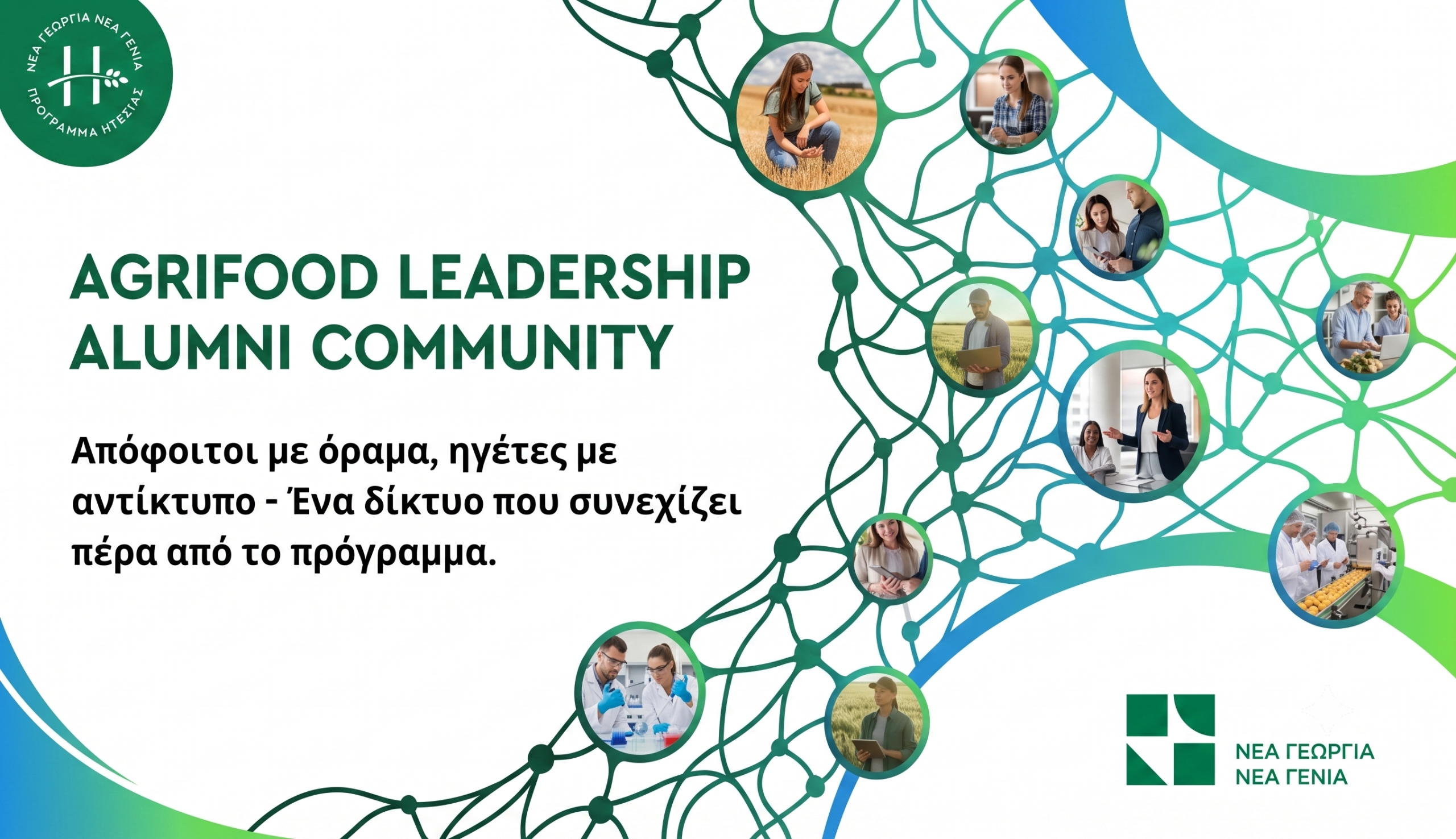
Agrifood Leadership Alumni Community

The alumni community shaping the future of agrifood

The relationships, collaborations and exchange of experience developed during the first three cohorts of the Agrifood Leadership programme do not end at graduation. On the contrary, they provide the foundation for an active community of emerging and established professionals who can jointly shape the future of Greece’s agrifood sector.

With this philosophy in mind, New Agriculture New Generation is creating the Agrifood Leadership Alumni Community: a dedicated space for connection, collaboration, lifelong learning and professional development for all programme alumni.

A community that continues beyond the programme

The first three Agrifood Leadership cohorts brought together people with diverse professional paths but a shared interest in advancing the agrifood sector: producers, agronomists, business executives, cooperative members, consultants, entrepreneurs and professionals from across the wider ecosystem.

Through the programme, participants formed connections, exchanged ideas and knowledge, and built relationships based on trust. These relationships have the potential to develop into new professional opportunities, innovative ideas, joint initiatives, partnerships and actions with a meaningful impact on the sector.

New Agriculture New Generation continues to stand alongside its alumni, maintaining close contact and strengthening a network that extends beyond the duration of the educational programme. The Alumni Community was created precisely to give this relationship continuity, structure and new opportunities.

What is the Alumni Community?

An alumni community is more than a list of graduates. It is an active community of people who stay connected after completing a programme, share experiences, support one another and continue to grow together.

For Agrifood Leadership, the community will serve as a network where alumni can:

  • Connect with people from different areas of the agrifood sector.

  • Communicate directly and exchange questions, ideas and good practices.

  • Find partners for business, research or funded initiatives.

  • Stay informed about job, collaboration, funding and networking opportunities.

  • Continue their education and professional development.

  • Contribute their own knowledge, experience and perspective to the sector’s challenges.

The value of such a community lies in the strength of its members: the more people actively participate, share knowledge and build bridges across different organisations and activities, the greater its collective impact becomes.

A dedicated space on CULTIVATE

The Agrifood Leadership Alumni Community will be based in a specially designed space on the CULTIVATE platform. There, alumni will be able to meet digitally, communicate and access content, activities and opportunities designed around their needs.

This space aims to become a dynamic collaboration hub, offering features such as:

  • Alumni profiles presenting members’ professional identity, career journey and interests.

  • Easy member search and connection by cohort, area of expertise or professional field.

  • Discussion spaces and thematic groups—for example, for producers, agronomists, business executives, consultants or cooperative members.

  • Opportunities to post collaborations, job openings, calls for proposals, events and other useful resources.

  • Access to learning activities and continuing professional development materials.

Alumni co-create the community

The Agrifood Leadership Alumni Community is being designed with the participation of the alumni themselves. In the long term, the aim is for the community to gradually become alumni-led: members will be able to propose, select and co-design the learning, networking and other activities that offer the greatest value to them, with the ongoing support of the New Agriculture New Generation team.

Initial input from alumni during an online meeting clearly highlighted their priorities. The need for new collaborations emerged as the most important expectation from the network, followed by professional opportunities, knowledge and upskilling, inspiration and mentoring. When asked what makes a strong alumni network, the most common responses were collaboration, networking, communication, knowledge, community and support.

Alumni also showed strong interest in activities that strengthen connection and shared development, including masterclasses with CEOs and industry experts, executive coaching sessions, policy briefings on topics such as the Common Agricultural Policy (CAP), the Green Deal and artificial intelligence, peer-to-peer mentoring, and asynchronous learning courses.

Upcoming activities

The community will grow gradually through activities that connect knowledge with practice, and networking with tangible opportunities. Indicatively, alumni will be able to take part in:

  • Online masterclasses with CEOs, entrepreneurs and agrifood experts.

  • Executive coaching and peer-to-peer mentoring among alumni.

  • Policy briefings on developments related to the CAP, the Green Deal, artificial intelligence and other critical topics.

  • Thematic meetings, alumni breakfasts or dinners organised by sector and professional interest.

  • Experience-sharing activities, case studies and presentations of good practices.

  • Opportunities for joint proposals, pilot projects, export connections and new business collaborations.

  • Platforms for members to contribute as speakers, mentors, trainers or contributors.

We are launching dynamically: the first Agrifood Leadership Alumni Community activity will take place in early October, with an online masterclass featuring Theodoros Matakiadis, Head of Global Disruptive Innovation Portfolio at Bayer CropScience Vegetable Seeds. And this is only the beginning—many more activities, learning opportunities and networking opportunities will follow.

Applications for the 4th cohort are open until 20 September

Would you like to become part of a community that connects knowledge, leadership and collaboration in agrifood?

Applications for the fourth cohort of the Agrifood Leadership programme are open until 20 September. Apply now and become part of a network of people who never stop learning, collaborating and creating new opportunities for the sector.

Learn more about the programme and find the application form on the Agrifood Leadership website.

Agrifood Leadership receives European EIT Food accreditation

A Unique Distinction

The Agrifood Leadership program becomes the first and only specialized leadership skills development program in the agrifood sector in Greece to obtain the European EIT Label accreditation from EIT Food.

What the EIT Label accreditation means

The EIT Label is a mark of excellence for education and training programs that meet the high quality standards of the European Institute of Innovation and Technology (EIT), with an emphasis on educational content design, meaningful skills development, and measurable impact. With this award, Agrifood Leadership is now recognized as a program meeting European specifications, is independently evaluated by an external body, and offers certificates with value across the entire European labor market.

The role of EIT Food

EIT Food is the largest food innovation community in Europe, a Knowledge and Innovation Community (KIC) of the European Institute of Innovation and Technology, connecting more than 50 leading companies, universities, research centers, and startups across 13 European countries. Its goal is to transform the European food system toward healthier nutrition, climate neutrality, and a fair, resilient supply system, while also investing in the training of thousands of industry professionals and entrepreneurs every year.

Applications open for the 2026-2027 cycle until September 20th

The program is run by the organization Nea Georgia Nea Genia, under the scientific guidance of Rutgers University (New Jersey, USA), with accreditation from EIT Food and support from GROW, and in collaboration with major companies from the Greek agrifood ecosystem.

The new cycle includes more than 120 hours of coursework (across 9 thematic modules), workshops, and networking activities, with educational trips to regions of Greece and to Brussels, combined with online modules, and will run from November 2026 to June 2027.

Interested executives, entrepreneurs, and professionals in the agrifood sector can submit their application online until September 20, 2026, with final selection made following evaluation and personal interviews, as places are limited.

Find more information

Submit your application

By joining the Agrifood Leadership professional network, graduates gain access to knowledge, collaborations, and new career opportunities as members of the Agrifood alumni, within a dynamic ecosystem that continuously invests in its members, supports them, and helps them grow.

Digital taste and smell may be closer than we think

Our beneficiaries:

Meet Digital Bites, one of the winners of the Trophy-Τροφή Challenge

A discussion with Theodoros Sofianos

Theodoros Sofianos, together with Loukas Kakalis and Michalis Tziortzis, participated in the Ideas category of the Trophy-Τροφή Challenge competition which was once again implemented with great success by the organization “New Agriculture New Generation“. The team presented an idea that can be a real innovation in the agri-food sector.

Digital Bites is working to create a gadget that can digitally reproduce the senses of taste and smell, enabling users to experience any taste digitally and remotely, even from their home.

About the team:

Theodoros, Loukas and Michalis, they all come from Thessaloniki. Theodoros studied at the School of Agriculture of the Aristotle University in the Department of Food Technology, while at the same time he has specialized in the organoleptic evaluation of food. Lucas, on the other hand, is an Electrical Engineer, a graduate of the Aristotle University, and Michalis is a Mechanical Engineer, graduate of the same university.

The funny thing is, according to Theodoros, that their acquaintance happened completely by chance in the army, where they served together and since then, they have remained close friends. “At the beginning of 2021, as we were on a watch with Lucas early in the morning, we talked about concepts such as innovation, ideas related to artificial intelligence and much more, mainly to idle away time,” says Theodoros. “Somehow, at some point we wondered what it would be like if someone could somehow digitize taste or smell?”

So somehow the idea came to their mind and, although it remained in the drawer for some time, the Trophy-Τροφή Challenge competition arise and they decided to go for it.

Making things happen:

A few months ago, Theodoros saw an announcement for the launch of the Trophy-Τροφή Challenge, implemented by “New Agriculture New Generation”, and this served as a springboard to communicate with his friends, Loukas and Michalis. “I felt that there was an opportunity here, that we could finally begin our application and make things happen through the competition”, he says.

The device that ‘hacks’ the biology of human sensors

The truth is that we live in a world that gets ‘more digital’ every day. However, in the field of agri-food, technology does not seem to have advanced that much, Theodoros mentions. “If you want to buy a food product, why not try it digitally first and then see if you are really interested?” he says.

Digital Bites has started creating a small peripheral device that reproduces three senses together, taste, smell and some aspects connected to the sense of touch, such as temperature for example. This device communicates with the tongue or nasal cavity and sends the necessary electrical signals to the user’s brain, giving the ‘sense of these senses’, that is, how the human brain perceives them.

«Trophy-ΤροφήChallenge»:

“The competition was the trigger we needed to get started”

The team managed to be one of the winners of the Ideas category of the Trophy-Τροφή Challenge and Theodoros is really happy for their distinction.

“I think it was a great experience and a big opportunity for us. Our participation in the Trophy-Τροφή Challenge was something that kept us going and finally united us in a common goal and purpose,” he says.

He also states that the team has finally stood on its own feet and that they were particularly helped by all the advice and knowledge they received from distinguished scientists and professionals in the agri-food sector, through their participation in the competition.

“We feel the coaches and the team of the organization are always there to help us. They offer us encouragement and guidance on how to continue our project“

The team has now almost perfected its business model with the help of the mentors assigned to them by the “New Agriculture New Generation” organization as part of their prize. At the same time, they have already ordered, through the cash prize they received, a large part of the necessary equipment in order to build the necessary software and start creating the various ‘profiles’ of flavors, as Theodoros says.

“We focus first on food companies and industry professionals. We believe that on the one hand they would be more receptive to using such technology and on the other hand, it would be something that might help them in the field of research and product development” says Theodoros while adding “Ideally, in some years we want to make it an integral part of e-commerce for food and why not, to be part of the increasingly emerging metaverse“.