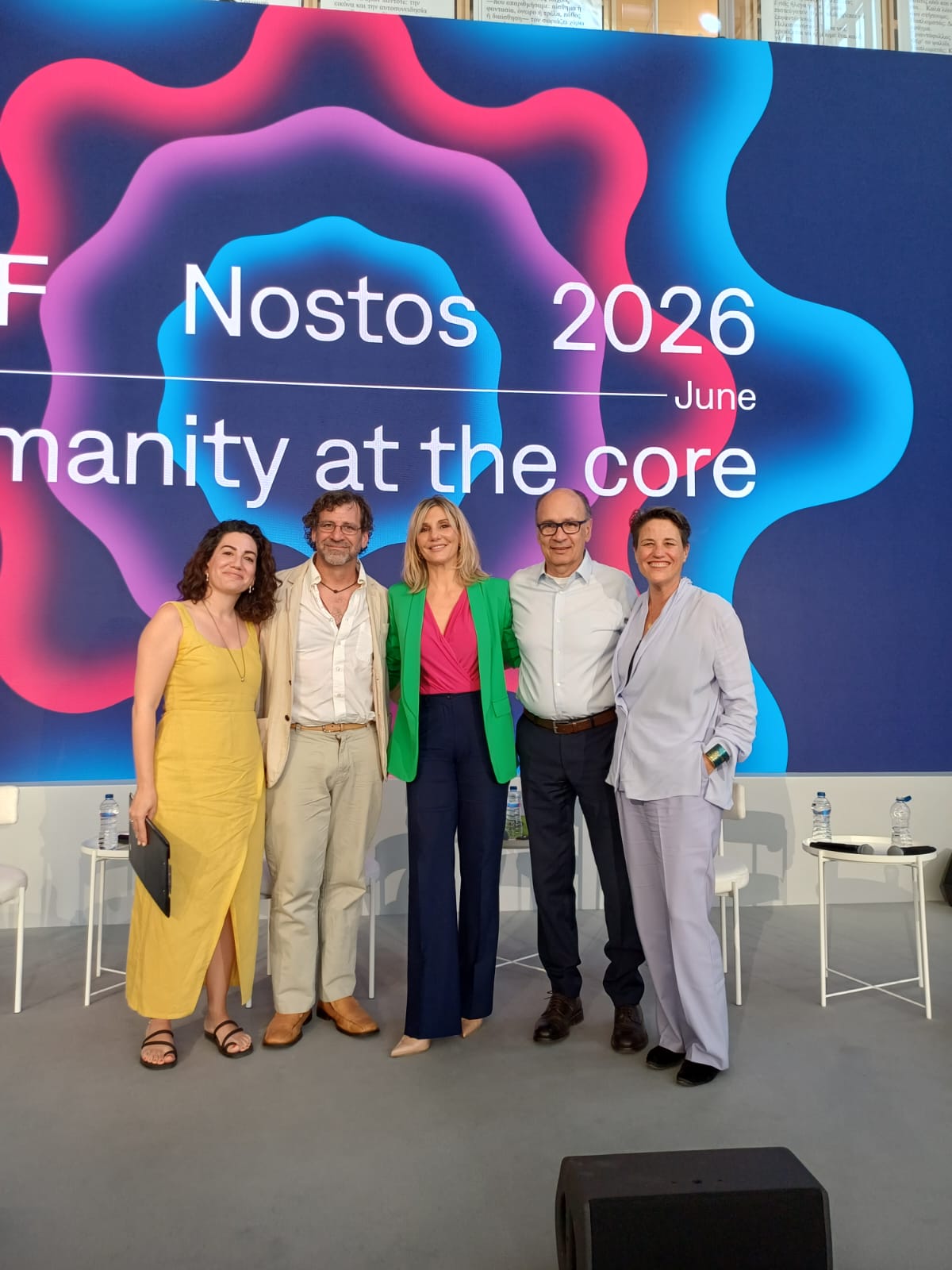
New Agriculture New Generation Takes Center Stage at SNF Nostos 2026 with a Landmark Discussion on the Future of Rural Life and Food Systems
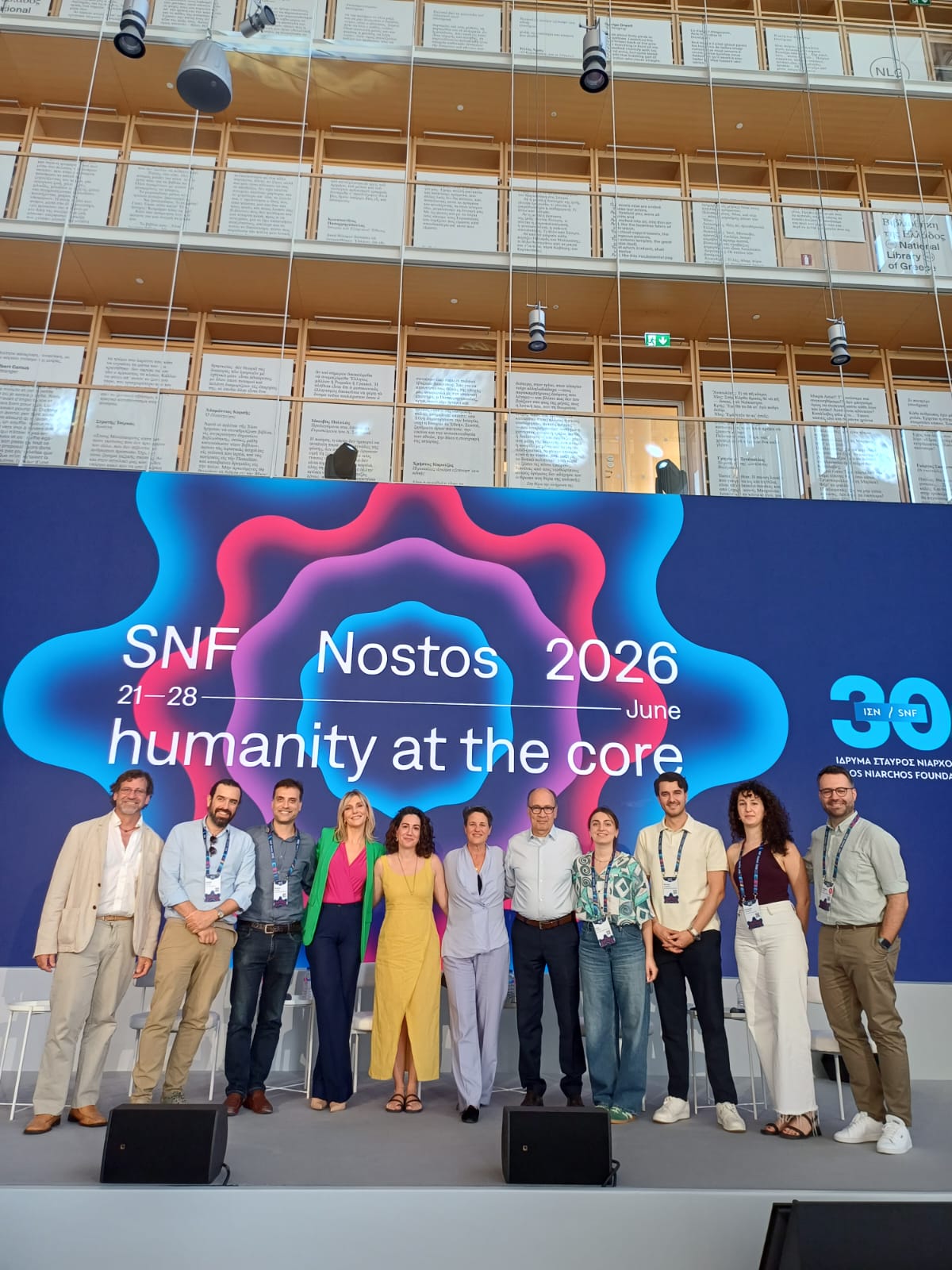
Sharing a common vision with the Stavros Niarchos Foundation and contributing to the transformation of Greece’s agrifood sector, New Agriculture New Generation participated in SNF Nostos 2026, leading a high-level discussion on the future of agriculture.
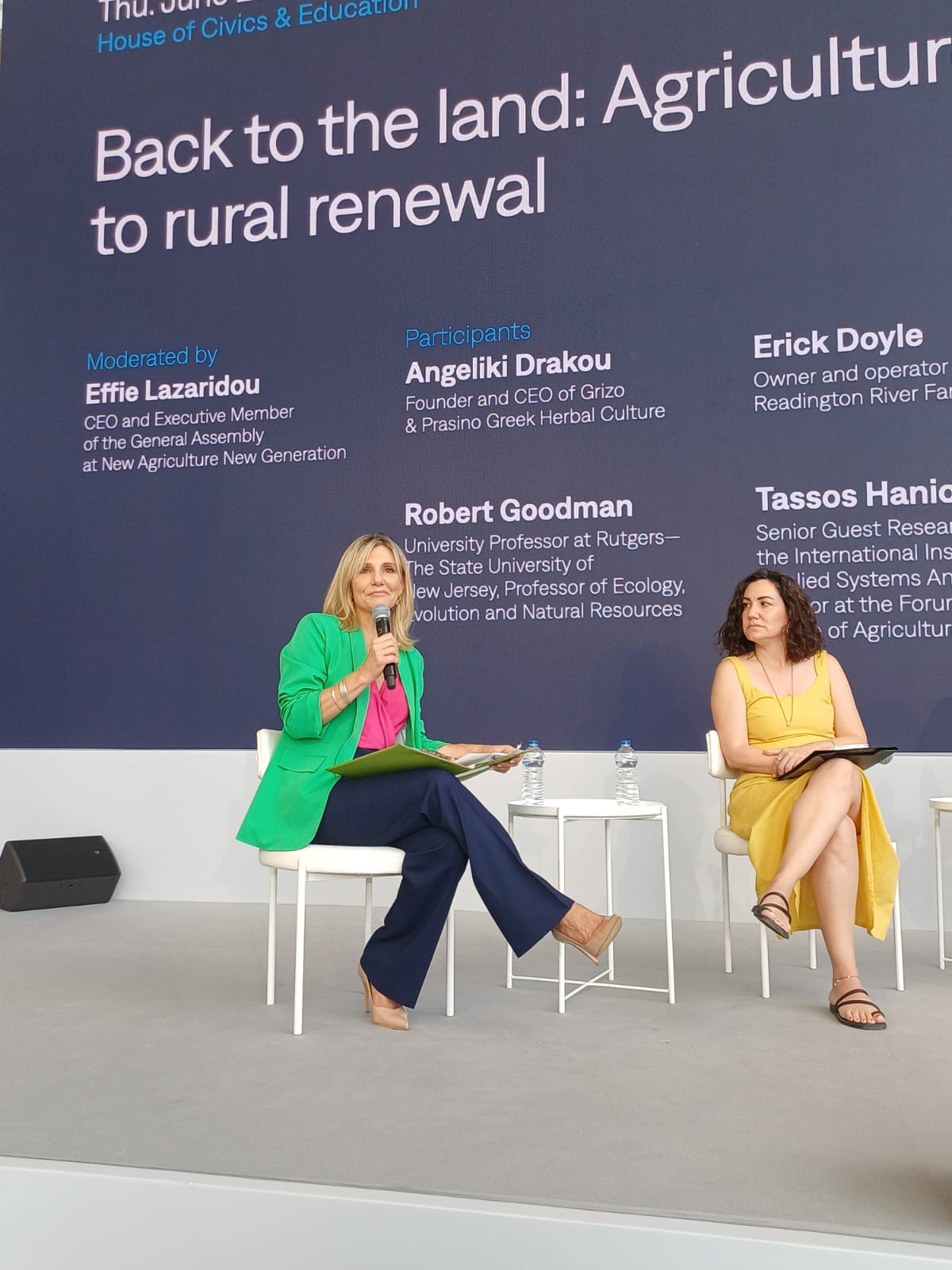
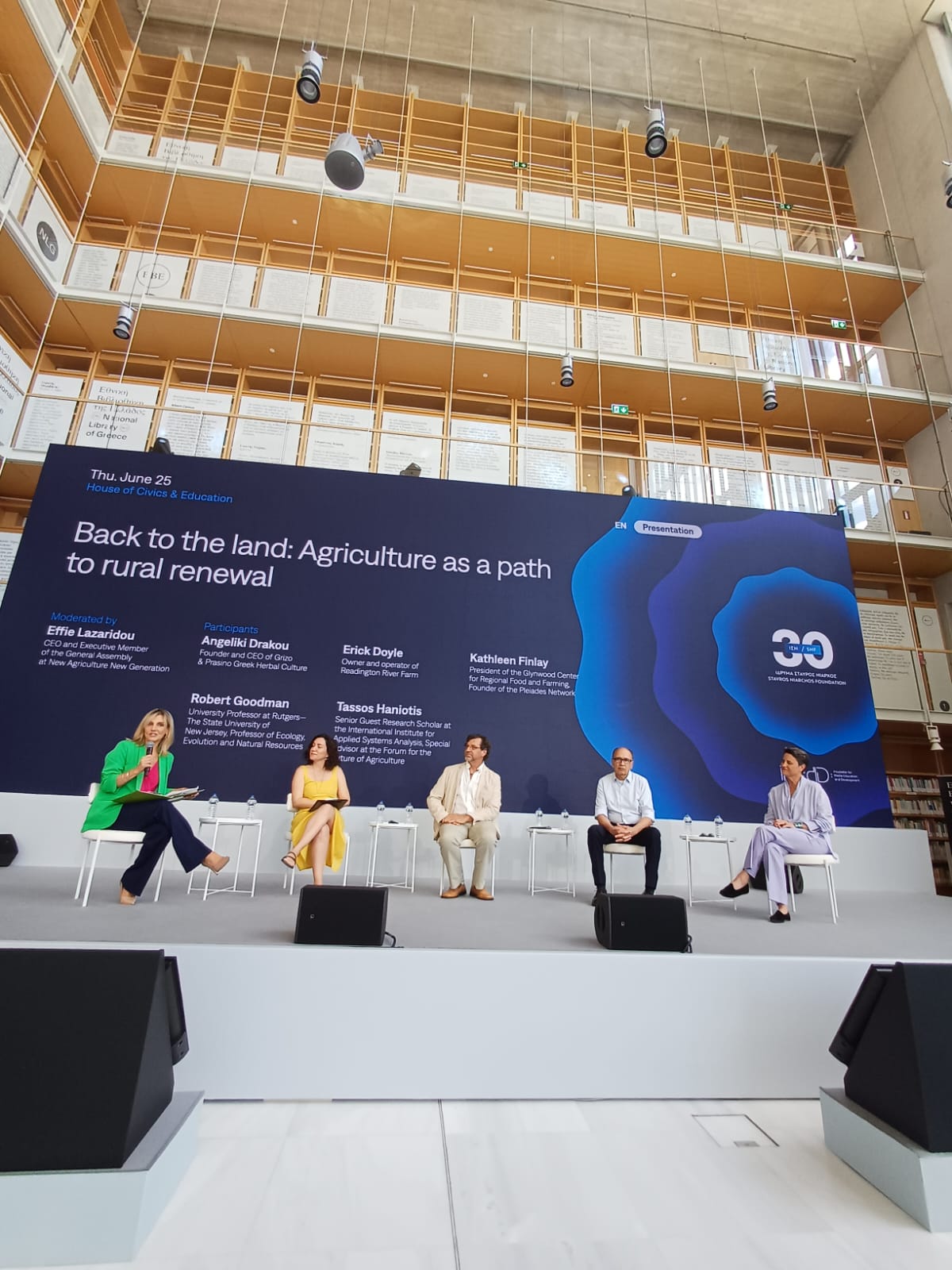
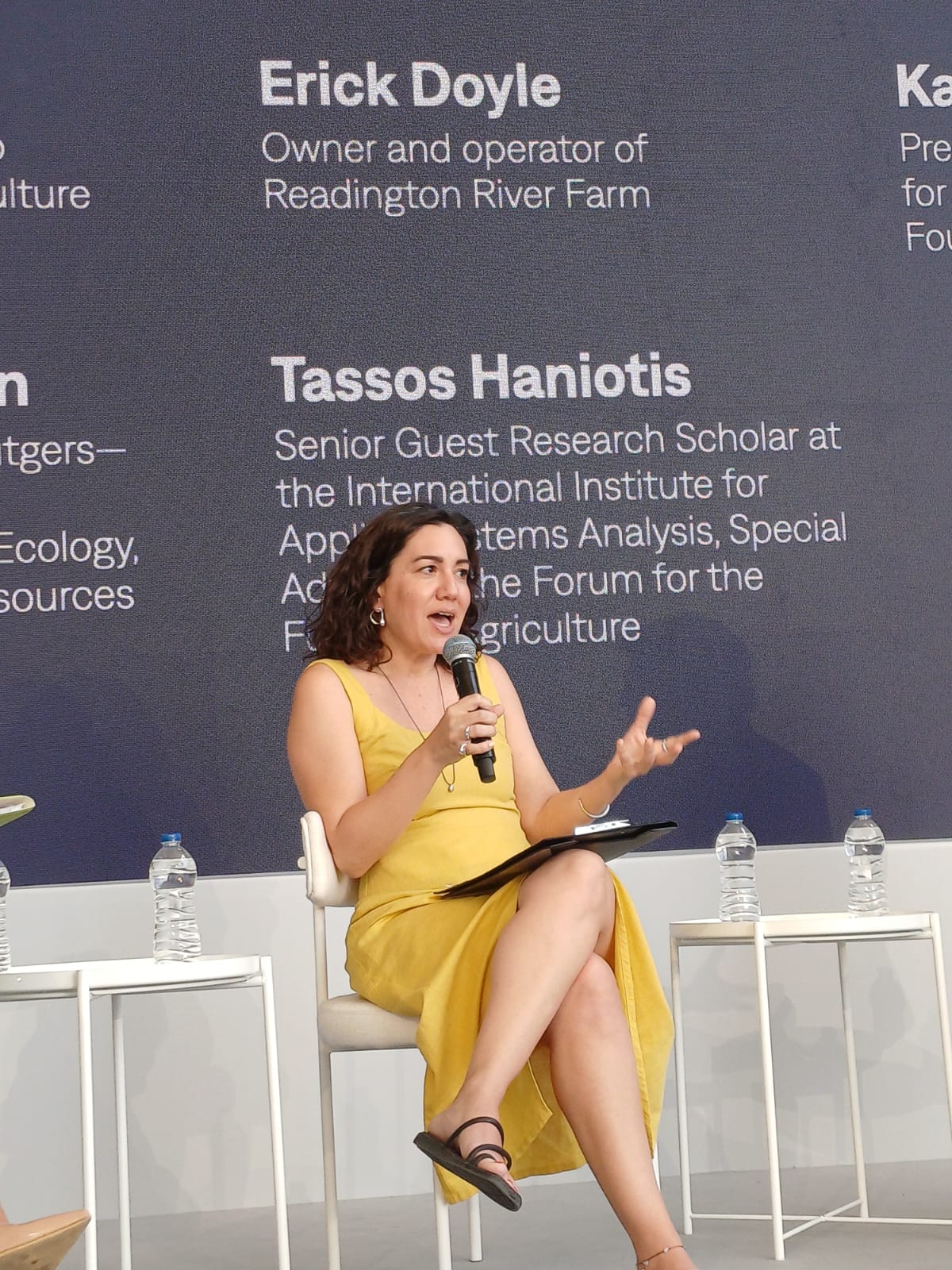
The panel, “Back to the Land: Agriculture as a Path to Rural Renewal,” moderated by Effie Lazaridou, CEO of New Agriculture New Generation (NANG), brought together farmers, entrepreneurs, policymakers, and food systems leaders from Greece, the United States, and across Europe to explore a question that is quietly reshaping societies:
Can returning to the land become a meaningful, viable, and attractive career path for the next generation?
Participants and Focus
The discussion was moderated by Effie Lazaridou, CEO of New Agriculture New Generation.
The panel featured:
- Effie Lazaridou, CEO, New Agriculture New Generation
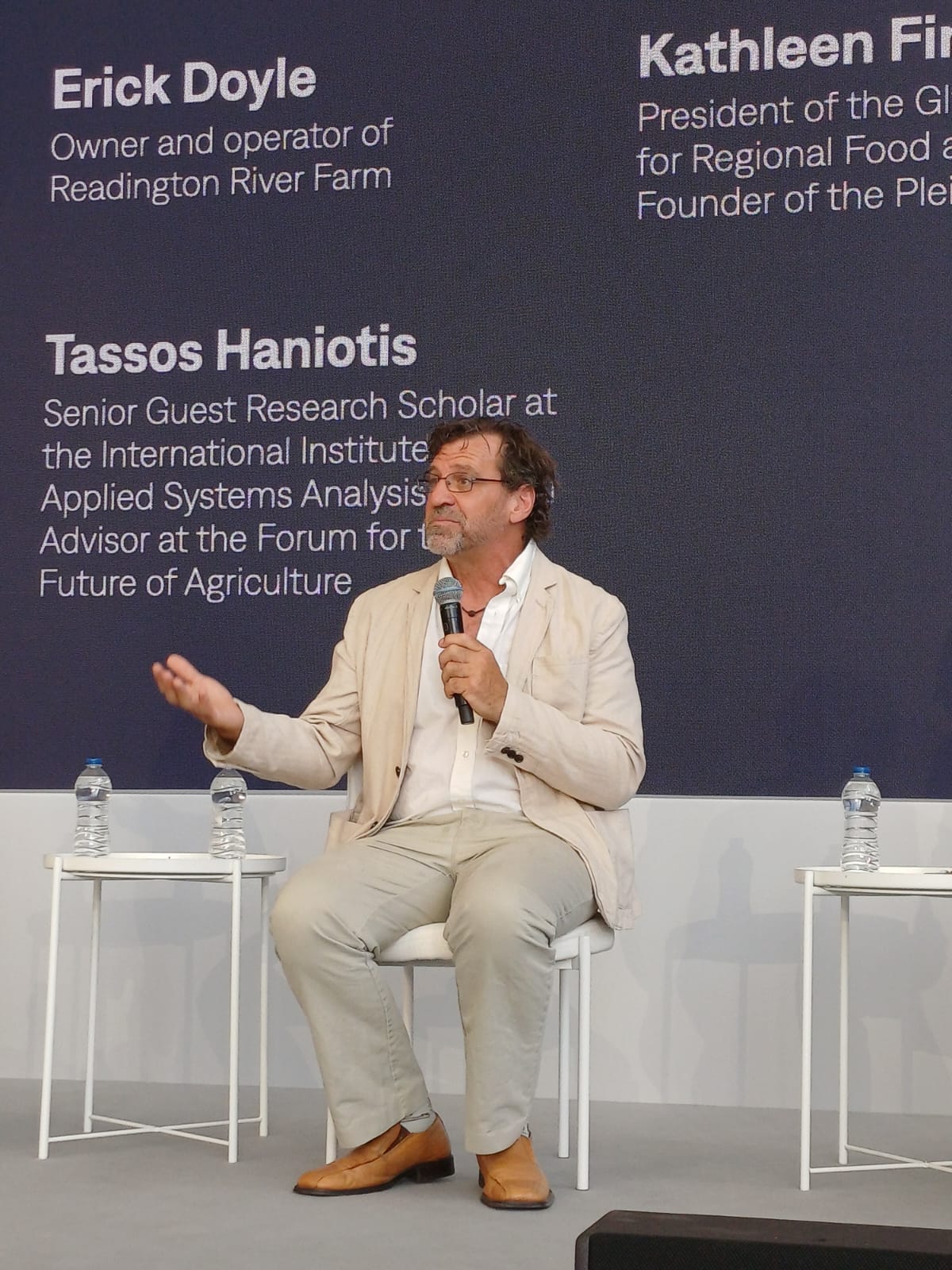
- Tassos Haniotis, Economist and former senior official at the European Commission (Common Agricultural Policy)
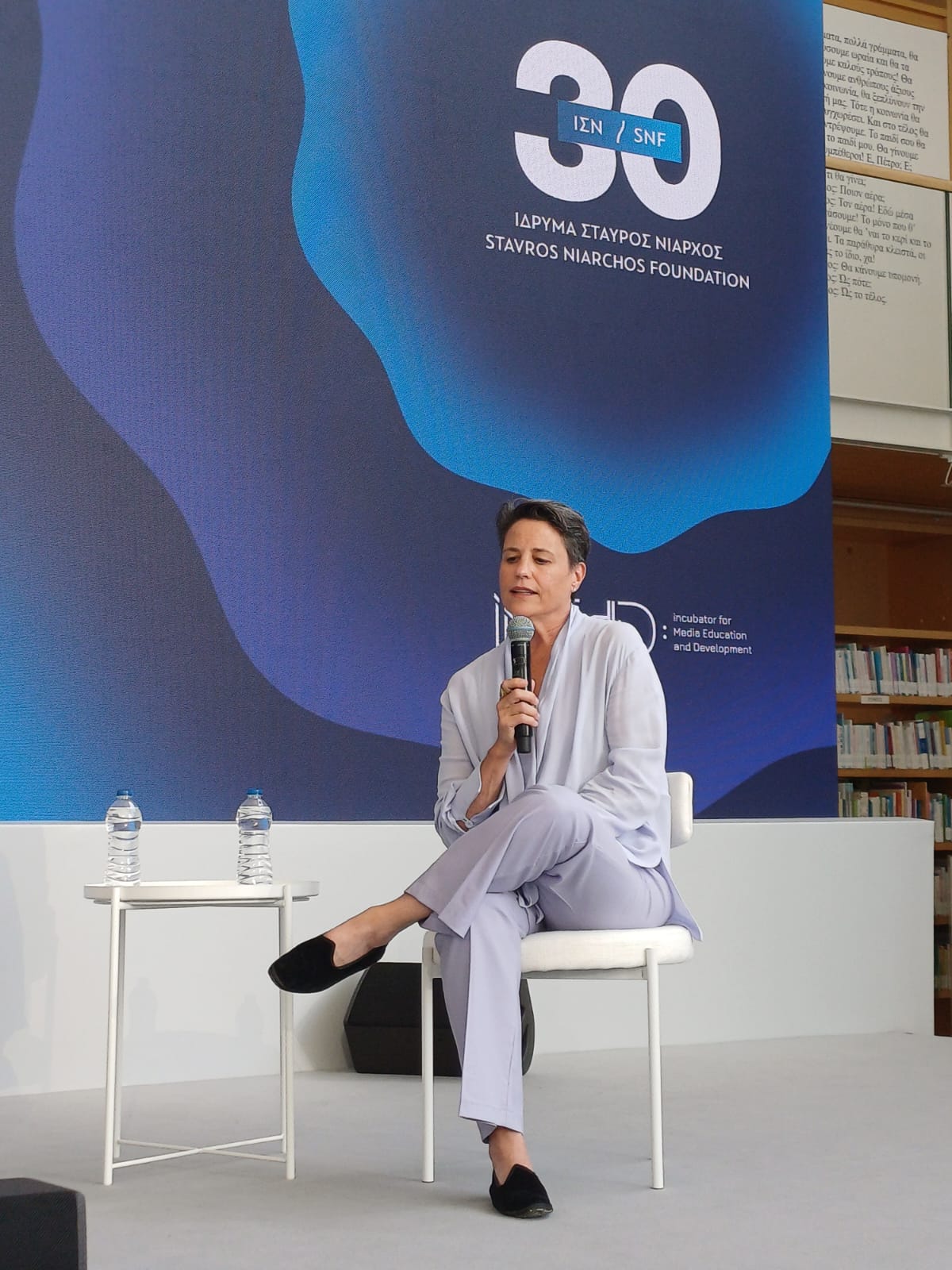
- Kathleen Finlay, Food systems expert and CEO of a regional food organization in the United States
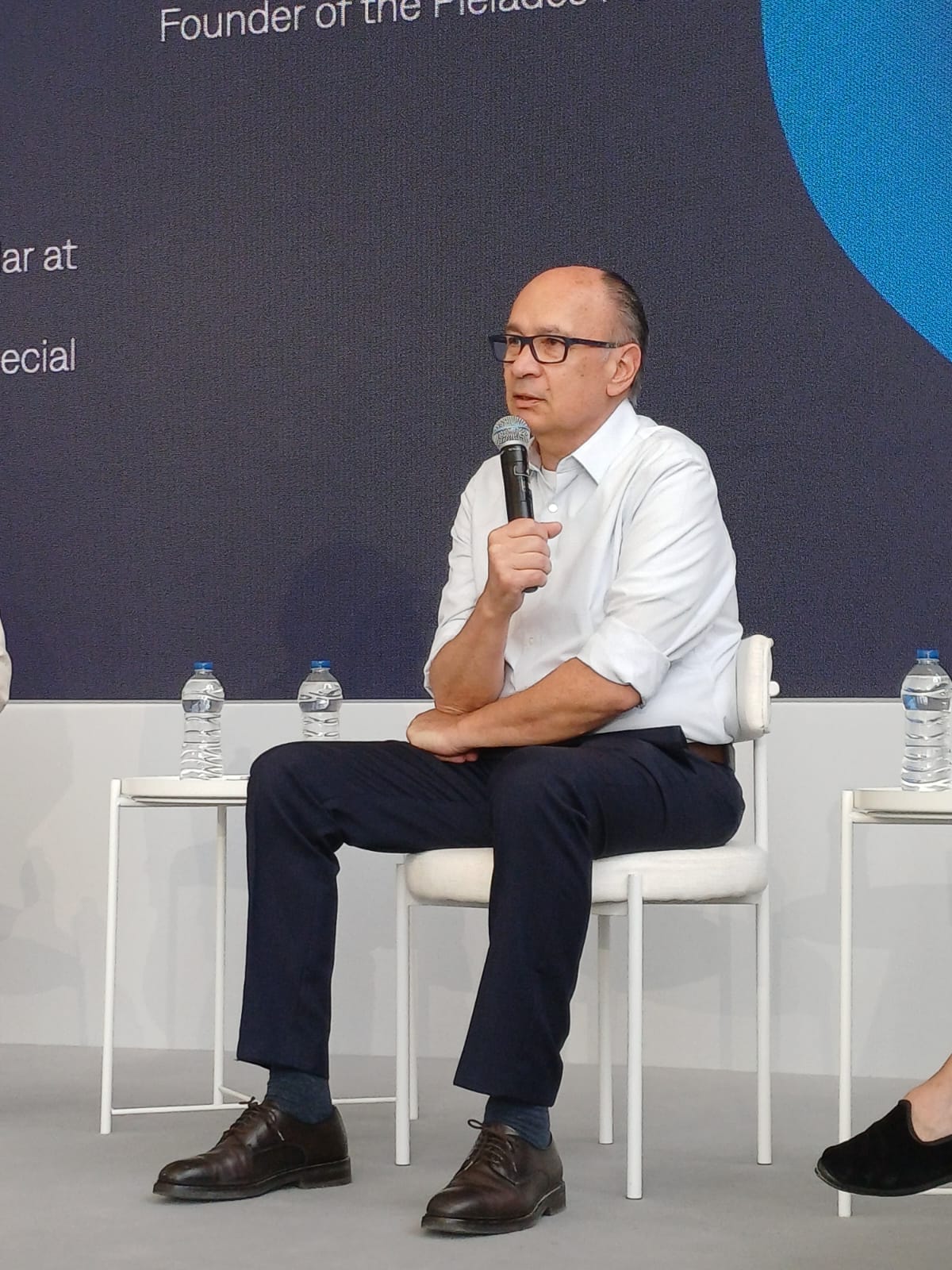
- Erick Doyle, Farmer and former President of the New Jersey State Board of Agriculture
- Angeliki Drakou, Lawyer-turned-agrifood entrepreneur and co-founder of the organic herb company Grizos kai Prasinos in Komotini
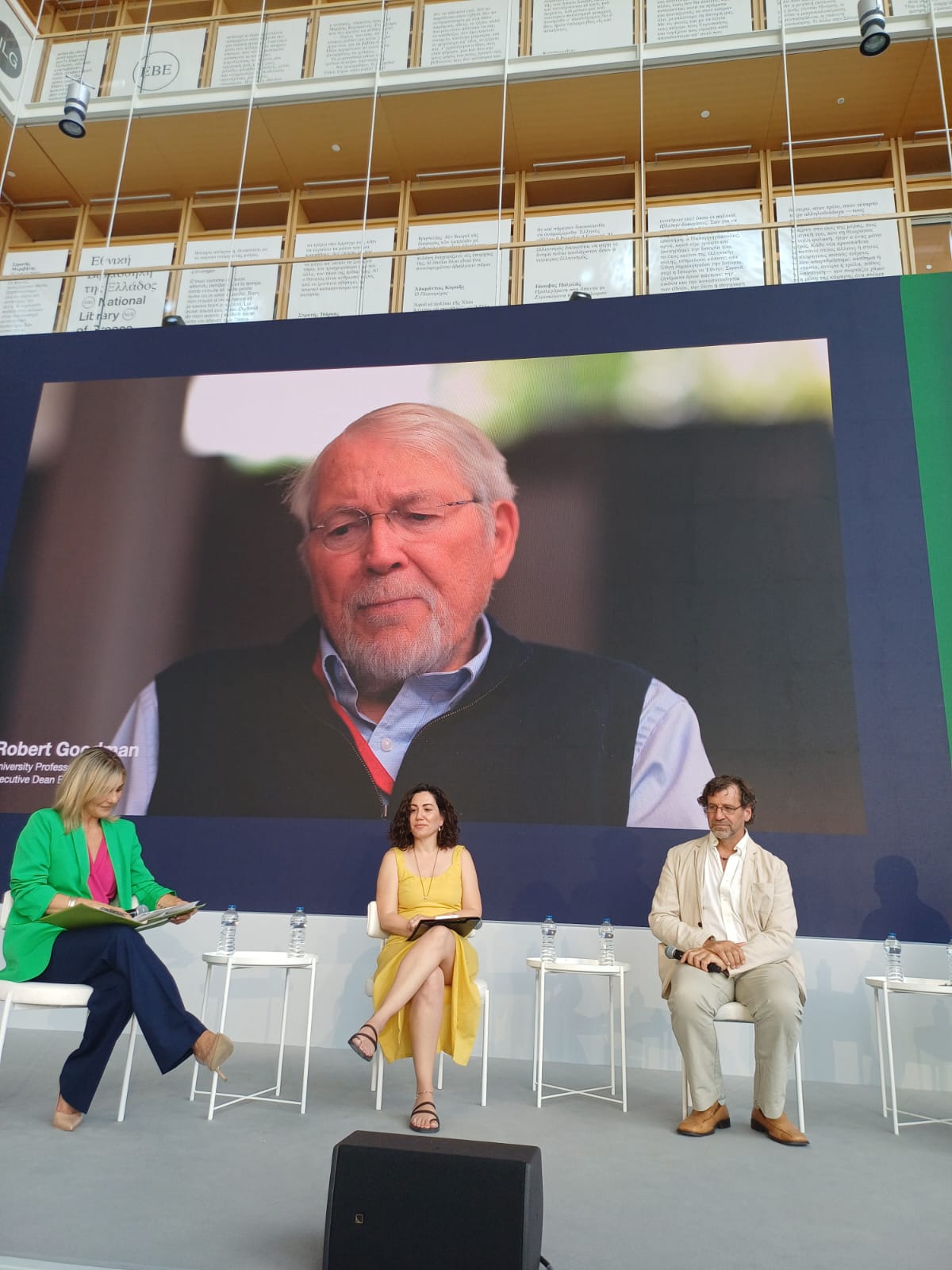
- Robert M. Goodman, Professor and former Dean of Rutgers University (via recorded video message)
The discussion combined policy and economic perspectives with practical experiences from farming and agrifood entrepreneurship in Greece and the United States.
The Myth vs. Reality
Effie Lazaridou opened the discussion with a story that immediately captured the audience’s attention.
At a team-building workshop she had attended a few months earlier, participants were asked to describe their vision of the future. Many of them—professionals in their 30s and 40s—shared the same dream: moving to a remote Greek island or mountain village, starting a small farm, living off the land, “doing yoga, meditating, and having an olive grove.”
An idyllic picture, far removed from the noise of the city.
“Very far from the reality of farming,” she remarked, before setting the tone for the discussion.
Food systems are not pastoral fantasies—they are critical infrastructure and a matter of national security.
Rural communities across Greece are facing mounting pressure from economic uncertainty, climate change, desertification, demographic decline, and the urgent challenge of feeding a global population expected to reach 10 billion.
The question before the panel was clear:
How can we make returning to the land not just an idealized dream, but a genuinely viable option?
Global Perspectives, Greek Challenges
The panel brought together diverse voices, each offering a unique relationship with agriculture.
In his recorded message, Robert M. Goodman, Professor and former Dean at Rutgers University, emphasized that Greece’s agrifood sector is at a critical turning point.
He highlighted that Greece’s diverse geography and rich culinary heritage support an extraordinary range of crops and products, and argued that the country’s tradition of family-scale, non-industrial farming can be a competitive advantage rather than a weakness.
The central question, he argued, is how Greece can build a “distinctively Greek” agrifood model based on quality, value-added products, PDO and PGI certifications, agritourism, and a food system designed to nourish people rather than simply supply commodity markets.
Drawing on more than three decades of experience with the Common Agricultural Policy, Tassos Haniotis provided the broader economic perspective.
Real agricultural prices have stabilized and are showing a modest upward trend during the 21st century, reversing decades of decline.
Food inflation, once considered exceptional, has become a structural reality. Unlike producer prices, retail food prices rarely return to previous levels.
His central policy recommendation was clear: European agricultural subsidies should reward soil performance, not simply land ownership.
“Almost 50% of the land in the European Union is agricultural,” he noted, “yet policy has managed to create a false divide between the economy and the environment, when, at farm level, the two are inseparable.”
From the U.S. perspective, Kathleen Finlay explained that her journey into agriculture began through environmental work and a belief that food is the most tangible way to discuss humanity’s relationship with nature.
She described how her organization trains first-generation farmers—people without a farming background—in regenerative agriculture and farm entrepreneurship.
Her message was both practical and philosophical:
We must stop designing food systems to maximize profits for a few and instead build systems that promote collective wellbeing.
As an example, she described how collaboration among apple growers, cider makers, sommeliers, and local advocates revitalized New York State’s hard cider industry.
Her conclusion:
“Change happens from the ground up—hopefully alongside policy change, but ultimately from the ground up.”
Erick Doyle, a third-generation farmer and former President of the New Jersey State Board of Agriculture, offered the perspective from the field.
Originally a mathematics graduate, he entered farming unexpectedly after helping his parents establish their retirement farm.
Thirty years later, he has become both a successful farmer and a leading advocate for agriculture.
The challenge facing New Jersey, he explained, closely mirrors that of Greece.
Not only are people leaving agriculture—the land itself is disappearing to housing developments, warehouses, and data centers.
His solution was simple:
Mentorship.
Experienced farmers should not merely hire young people—they should actively mentor them, pass on knowledge, build their confidence, and inspire a new generation.
A Greek Perspective from the Field
Representing the Greek experience, Angeliki Drakou shared her transition from law to agrifood entrepreneurship in Komotini, where she co-founded Grizos kai Prasinos, a company producing organic herbal teas and beverages.
She identified three major obstacles facing young people who want to build a future in rural Greece:
- Access to land — Much of Greece’s agricultural land remains in the hands of older generations, while existing subsidy schemes often discourage diversification.
- Labour shortages — Rural businesses struggle to recruit both skilled and unskilled workers.
- Targeted education and business support — Many aspiring entrepreneurs lack practical knowledge in costing, marketing, and business planning, despite having strong technical or agronomic expertise.
Drakou argued that new collaboration models could enable small businesses to share machinery, expertise, and personnel, while also calling for practical, nationally coordinated education programmes tailored to the real needs of farmers and agrifood entrepreneurs.
The Role of New Agriculture New Generation
During the discussion, Drakou reflected on the impact of Agroanelixi, one of New Agriculture New Generation’s flagship programmes, on the growth of her business.
“For the first time, I learned how to build a proper business plan and identify new markets for our products. What made the biggest difference was that it wasn’t theoretical—I had access to people with real market experience.”
She added that the professional relationships built through the programme continue to support her business years later.
New Agriculture New Generation operates precisely at the intersection of skills development, entrepreneurship support, and ecosystem building.
Through programmes that combine technical knowledge, business education, mentoring, and networking, the organization aims to:
- Equip young people with the skills needed to enter and thrive in the agrifood sector.
- Support innovative agrifood businesses across Greece.
- Foster collaboration among farmers, entrepreneurs, academia, and market stakeholders.
- Contribute to a more sustainable, competitive, and inclusive agrifood ecosystem.
Through flagship programmes such as Agroanelixi and Agrifood Leadership, both currently open for applications, New Agriculture New Generation continues to transform Greece’s agrifood sector while supporting farmers and emerging entrepreneurs across the country.
Reasons for Optimism
The discussion concluded on a hopeful note.
Each speaker reflected on what gives them optimism about the future of rural communities.
Erick Doyle spoke about the children who visit his farm on school trips and later become involved in agricultural organizations, arguing that once young people experience agriculture firsthand, the connection to the land rarely disappears.
Tassos Haniotis, paraphrasing a famous political slogan, reminded the audience:
“It’s food, stupid.”
Food is not a niche issue—it is humanity’s most fundamental need, and sooner or later it inevitably becomes a political priority.
Angeliki Drakou expressed optimism about younger generations’ growing desire for purpose, quality of life, and a deeper connection with their work.
Kathleen Finlay highlighted the emergence of a new generation of farmers who are creative, entrepreneurial, multidisciplinary, and redefining what it means to work the land.
The land is ready. The real question is whether our systems, policies, and institutions are ready to meet the next generation halfway.
WATCH the full discussion.