Νέα Γεωργία Νέα Γενιά

The grafting of queen cells 2026 is set to begin | Phase B of the program “Queen Rearing in Central Greece – Utilization, Conservation and Improvement of Honey Bee Genetic Material | Queen Rearing in Practice.”

The program aims at the practical application of queen rearing techniques and the preservation of the valuable endemic genetic material of honey bees.

Within the framework of the initiative, nine trained queen rearers will carry out queen cell grafting at the apiaries of participating beekeepers, presenting the process in detail and offering on-site guidance and hands-on support to address questions. Each participating beekeeper will have the opportunity to receive up to 30 queen cells free of charge, sourced from selected genetic material, and to become familiar—step by step—with the queen rearing process alongside trained local queen rearers.

The program is implemented in the Regional Units of Boeotia, Evrytania, Phthiotis, and Phocis and is addressed to beekeepers in Central Greece, excluding Evia. Participants are offered specialized field-based training and free queen cells derived from the genetic material of the beneficiary beekeeper.

The grafting activities of the program will take place from February to May 2026, and participation is free of charge.
The program’s core objective is to strengthen biodiversity and support beekeeping in Central Greece through the improvement and conservation of local genetic material, contributing to the sustainability of the sector and the resilience of bee colonies.

The primary goal of the program is to reinforce beekeeping in Central Greece and enhance the region’s biodiversity and local agricultural production, as bees are among the most important pollinators of plants.

At the same time, the long-term objective of the initiative is the large-scale production of selected genetic material across the Regional Units of Boeotia, Evrytania, Phthiotis, and Phocis, with the ultimate aim of increasing productivity and developing more resilient bee colonies through the optimization of endemic genetic material.

The program is co-funded by Nea Georgia Nea Genia, the Region of Central Greece, the John S. Latsis Public Benefit Foundation, and APIVITA, within the framework of the Billion Bees Program.
The program was established through the founding donation of the Stavros Niarchos Foundation (SNF) and is implemented in collaboration with the Agricultural University of Athens, under the scientific supervision of the Laboratory of Sericulture and Apiculture.

Learn more about the program and submit your application via the following link: https://newagri.org/en/lines-of-action/10620/

The grafting of queen cells 2026 is set to begin | Phase B of the program “Queen Rearing in Central Greece – Utilization, Conservation and Improvement of Honey Bee Genetic Material | Queen Rearing in Practice.”

The program aims at the practical application of queen rearing techniques and the preservation of the valuable endemic genetic material of honey bees.

Within the framework of the initiative, nine trained queen rearers will carry out queen cell grafting at the apiaries of participating beekeepers, presenting the process in detail and offering on-site guidance and hands-on support to address questions. Each participating beekeeper will have the opportunity to receive up to 30 queen cells free of charge, sourced from selected genetic material, and to become familiar—step by step—with the queen rearing process alongside trained local queen rearers.

The program is implemented in the Regional Units of Boeotia, Evrytania, Phthiotis, and Phocis and is addressed to beekeepers in Central Greece, excluding Evia. Participants are offered specialized field-based training and free queen cells derived from the genetic material of the beneficiary beekeeper.

The grafting activities of the program will take place from February to May 2026, and participation is free of charge.
The program’s core objective is to strengthen biodiversity and support beekeeping in Central Greece through the improvement and conservation of local genetic material, contributing to the sustainability of the sector and the resilience of bee colonies.

The primary goal of the program is to reinforce beekeeping in Central Greece and enhance the region’s biodiversity and local agricultural production, as bees are among the most important pollinators of plants.

At the same time, the long-term objective of the initiative is the large-scale production of selected genetic material across the Regional Units of Boeotia, Evrytania, Phthiotis, and Phocis, with the ultimate aim of increasing productivity and developing more resilient bee colonies through the optimization of endemic genetic material.

The program is co-funded by Nea Georgia Nea Genia, the Region of Central Greece, the John S. Latsis Public Benefit Foundation, and APIVITA, within the framework of the Billion Bees Program.
The program was established through the founding donation of the Stavros Niarchos Foundation (SNF) and is implemented in collaboration with the Agricultural University of Athens, under the scientific supervision of the Laboratory of Sericulture and Apiculture.

Learn more about the program and submit your application via the following link: https://newagri.org/en/lines-of-action/10620/
The grafting of queen cells 2026 is set to begin | Phase B of the program “Queen Rearing in Central Greece – Utilization, Conservation and Improvement of Honey Bee Genetic Material | Queen Rearing in Practice.”

The program aims at the practical application of queen rearing techniques and the preservation of the valuable endemic genetic material of honey bees.

Within the framework of the initiative, nine trained queen rearers will carry out queen cell grafting at the apiaries of participating beekeepers, presenting the process in detail and offering on-site guidance and hands-on support to address questions. Each participating beekeeper will have the opportunity to receive up to 30 queen cells free of charge, sourced from selected genetic material, and to become familiar—step by step—with the queen rearing process alongside trained local queen rearers.

The program is implemented in the Regional Units of Boeotia, Evrytania, Phthiotis, and Phocis and is addressed to beekeepers in Central Greece, excluding Evia. Participants are offered specialized field-based training and free queen cells derived from the genetic material of the beneficiary beekeeper.

The grafting activities of the program will take place from February to May 2026, and participation is free of charge.
The program’s core objective is to strengthen biodiversity and support beekeeping in Central Greece through the improvement and conservation of local genetic material, contributing to the sustainability of the sector and the resilience of bee colonies.

The primary goal of the program is to reinforce beekeeping in Central Greece and enhance the region’s biodiversity and local agricultural production, as bees are among the most important pollinators of plants.

At the same time, the long-term objective of the initiative is the large-scale production of selected genetic material across the Regional Units of Boeotia, Evrytania, Phthiotis, and Phocis, with the ultimate aim of increasing productivity and developing more resilient bee colonies through the optimization of endemic genetic material.

The program is co-funded by Nea Georgia Nea Genia, the Region of Central Greece, the John S. Latsis Public Benefit Foundation, and APIVITA, within the framework of the Billion Bees Program.
The program was established through the founding donation of the Stavros Niarchos Foundation (SNF) and is implemented in collaboration with the Agricultural University of Athens, under the scientific supervision of the Laboratory of Sericulture and Apiculture.

Learn more about the program and submit your application via the following link: https://newagri.org/en/lines-of-action/10620/
The grafting of queen cells 2026 is set to begin | Phase B of the program “Queen Rearing in Central Greece – Utilization, Conservation and Improvement of Honey Bee Genetic Material | Queen Rearing in Practice.”

The program aims at the practical application of queen rearing techniques and the preservation of the valuable endemic genetic material of honey bees.

Within the framework of the initiative, nine trained queen rearers will carry out queen cell grafting at the apiaries of participating beekeepers, presenting the process in detail and offering on-site guidance and hands-on support to address questions. Each participating beekeeper will have the opportunity to receive up to 30 queen cells free of charge, sourced from selected genetic material, and to become familiar—step by step—with the queen rearing process alongside trained local queen rearers.

The program is implemented in the Regional Units of Boeotia, Evrytania, Phthiotis, and Phocis and is addressed to beekeepers in Central Greece, excluding Evia. Participants are offered specialized field-based training and free queen cells derived from the genetic material of the beneficiary beekeeper.

The grafting activities of the program will take place from February to May 2026, and participation is free of charge.
The program’s core objective is to strengthen biodiversity and support beekeeping in Central Greece through the improvement and conservation of local genetic material, contributing to the sustainability of the sector and the resilience of bee colonies.

The primary goal of the program is to reinforce beekeeping in Central Greece and enhance the region’s biodiversity and local agricultural production, as bees are among the most important pollinators of plants.

At the same time, the long-term objective of the initiative is the large-scale production of selected genetic material across the Regional Units of Boeotia, Evrytania, Phthiotis, and Phocis, with the ultimate aim of increasing productivity and developing more resilient bee colonies through the optimization of endemic genetic material.

The program is co-funded by Nea Georgia Nea Genia, the Region of Central Greece, the John S. Latsis Public Benefit Foundation, and APIVITA, within the framework of the Billion Bees Program.
The program was established through the founding donation of the Stavros Niarchos Foundation (SNF) and is implemented in collaboration with the Agricultural University of Athens, under the scientific supervision of the Laboratory of Sericulture and Apiculture.

Learn more about the program and submit your application via the following link: https://newagri.org/en/lines-of-action/10620/
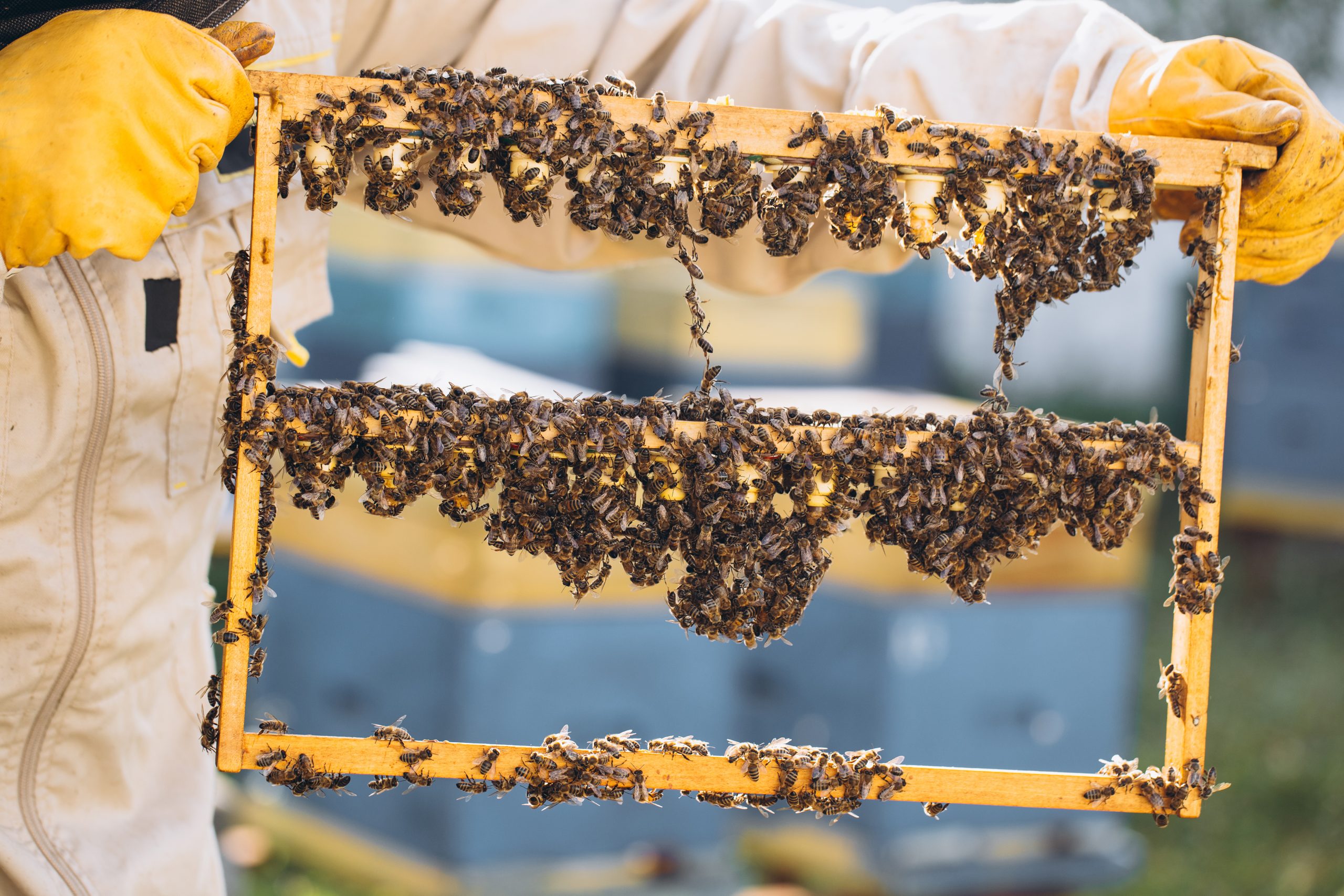
The grafting of queen cells 2026 is set to begin | Phase B of the program “Queen Rearing in Central Greece – Utilization, Conservation and Improvement of Honey Bee Genetic Material | Queen Rearing in Practice.”

The program aims at the practical application of queen rearing techniques and the preservation of the valuable endemic genetic material of honey bees.

Within the framework of the initiative, nine trained queen rearers will carry out queen cell grafting at the apiaries of participating beekeepers, presenting the process in detail and offering on-site guidance and hands-on support to address questions. Each participating beekeeper will have the opportunity to receive up to 30 queen cells free of charge, sourced from selected genetic material, and to become familiar—step by step—with the queen rearing process alongside trained local queen rearers.

The program is implemented in the Regional Units of Boeotia, Evrytania, Phthiotis, and Phocis and is addressed to beekeepers in Central Greece, excluding Evia. Participants are offered specialized field-based training and free queen cells derived from the genetic material of the beneficiary beekeeper.

The grafting activities of the program will take place from February to May 2026, and participation is free of charge.
The program’s core objective is to strengthen biodiversity and support beekeeping in Central Greece through the improvement and conservation of local genetic material, contributing to the sustainability of the sector and the resilience of bee colonies.

The primary goal of the program is to reinforce beekeeping in Central Greece and enhance the region’s biodiversity and local agricultural production, as bees are among the most important pollinators of plants.

At the same time, the long-term objective of the initiative is the large-scale production of selected genetic material across the Regional Units of Boeotia, Evrytania, Phthiotis, and Phocis, with the ultimate aim of increasing productivity and developing more resilient bee colonies through the optimization of endemic genetic material.

The program is co-funded by Nea Georgia Nea Genia, the Region of Central Greece, the John S. Latsis Public Benefit Foundation, and APIVITA, within the framework of the Billion Bees Program.
The program was established through the founding donation of the Stavros Niarchos Foundation (SNF) and is implemented in collaboration with the Agricultural University of Athens, under the scientific supervision of the Laboratory of Sericulture and Apiculture.

Learn more about the program and submit your application via the following link: https://newagri.org/en/lines-of-action/10620/

Queen Rearing in Thessaly: Distribution of Queen Cells to Support Local Beekeeping

Continuing support for beekeepers in Thessaly

A new strategic initiative to restart beekeeping in Thessaly is launched through the program “Queen Rearing in Thessaly: Distribution of Queen Cells to Support Local Beekeeping”, announced by the organization New Agriculture New Generation, aiming to support beekeepers affected by storm Daniel in 2023.

The program builds on previous successful initiatives supporting the local beekeeping community and responds to multiple requests for further assistance and restoration of production activity.

The impact of storm Daniel

Storm “Daniel” caused extensive damage in Thessaly, leading to the loss of more than 40% of bee colonies and significantly affecting a sector that plays a crucial role in agricultural production and biodiversity in the region.

From the very beginning, the organization Νέα Γεωργία Νέα Γενιά has stood by affected beekeepers, providing more than 27,000 queen cells, which contributed to the creation of over 21,600 new bee colonies.

What the program includes

The program will be implemented from April to September 2026 and will support up to 150 beekeepers in Thessaly through the free distribution of 10,000 queen cells derived from endemic genetic material of the region.

The production of queen cells will be carried out by 8 specialized queen breeders, who have already been trained through previous programs of the organization and utilize selected genetic material, either their own or that of participating beekeepers.

This approach enhances the development of high-quality and resilient bee colonies and contributes to the long-term sustainability of the sector.

Partnerships and implementation

The program is designed and implemented by the organization New Agriculture New Generation, in collaboration with the Agricultural University of Athens and under the scientific guidance of the Laboratory of Sericulture and Apiculture, supervised by Assistant Professor Georgios Gkoras.

It is co-funded by the Region of Thessaly, the John S. Latsis Public Benefit Foundation and APIVITA within the framework of the Billion Bees Program.

Who can participate

Priority will be given to beekeepers affected by storm Daniel, following the evaluation of applications.

Areas of implementation

The program is implemented in the following Regional Units:

  • Larissa
  • Karditsa
  • Magnesia
  • Trikala

Applications

The first application cycle will remain open until April 24, 2026.

Learn more about the program and submit your application via the following link: https://newagri.org/en/lines-of-action/

Program impact

The initiative aims to support affected beekeepers, preserve and utilize local bee genetic material, and strengthen the long-term sustainability of the sector.

At the same time, it contributes to strengthening the local beekeeping community and preserving biodiversity, as bees are among the most important pollinators of crops.

Extension of applications for the “Queen Rearing in Thessaly” program

The deadline for submitting applications for the program
“Queen Rearing in Thessaly: Distribution of queen cells to support local beekeeping”
has been extended until Friday, April 24.

A new strategic initiative to restart beekeeping in Thessaly is launched through the program “Queen Rearing in Thessaly: Distribution of Queen Cells to Support Local Beekeeping”, announced by the organization New Agriculture New Generation, aiming to support beekeepers affected by storm Daniel in 2023.

The program builds on previous successful initiatives supporting the local beekeeping community and responds to multiple requests for further assistance and restoration of production activity.

The impact of storm Daniel

Storm “Daniel” caused extensive damage in Thessaly, leading to the loss of more than 40% of bee colonies and significantly affecting a sector that plays a crucial role in agricultural production and biodiversity in the region.

From the very beginning, the organization Νέα Γεωργία Νέα Γενιά has stood by affected beekeepers, providing more than 27,000 queen cells, which contributed to the creation of over 21,600 new bee colonies.

What the program includes

The program will be implemented from April to September 2026 and will support up to 150 beekeepers in Thessaly through the free distribution of 10,000 queen cells derived from endemic genetic material of the region.

The production of queen cells will be carried out by 8 specialized queen breeders, who have already been trained through previous programs of the organization and utilize selected genetic material, either their own or that of participating beekeepers.

This approach enhances the development of high-quality and resilient bee colonies and contributes to the long-term sustainability of the sector.

Partnerships and implementation

The program is designed and implemented by the organization New Agriculture New Generation, in collaboration with the Agricultural University of Athens and under the scientific guidance of the Laboratory of Sericulture and Apiculture, supervised by Assistant Professor Georgios Gkoras.

It is co-funded by the Region of Thessaly, the John S. Latsis Public Benefit Foundation and APIVITA within the framework of the Billion Bees Program.

Who can participate

Priority will be given to beekeepers affected by storm Daniel, following the evaluation of applications.

Areas of implementation

The program is implemented in the following Regional Units:

  • Larissa
  • Karditsa
  • Magnesia
  • Trikala

Applications

The first application cycle will remain open until April 24, 2026.

Learn more about the program and submit your application via the following link: https://newagri.org/en/lines-of-action/

Program impact

The initiative aims to support affected beekeepers, preserve and utilize local bee genetic material, and strengthen the long-term sustainability of the sector.

At the same time, it contributes to strengthening the local beekeeping community and preserving biodiversity, as bees are among the most important pollinators of crops.

New Job Opening | EU Programmes Officer

Company Description
New Agriculture New Generation is a non-profit organization working to advance the agrifood sector in Greece by implementing training programs, building advisory networks, and fostering innovation and entrepreneurship with a positive social impact.


EU Programmes Officer

The Programmes Department of the organization is seeking to recruit an EU Programmes Officer.

The ideal candidate will have experience in the development and writing of proposals for European funding programmes (with a focus on Horizon Europe), as well as the ability to coordinate projects and collaborations in an international environment. The role requires strong analytical thinking, excellent writing skills, effective deadline management, and the ability to work with multiple stakeholders.

The selected candidate will actively contribute to strengthening the organization’s presence in European funding programmes by supporting the development of competitive proposals and fostering international partnerships. The role involves close collaboration with internal teams and external partners, contributing to the achievement of strategic objectives and maximizing the impact of the organization’s activities.


Key Responsibilities

  • Contribute to and/or coordinate the development of proposals for European funding programmes (especially Horizon Europe)
  • Draft key proposal sections (e.g. Excellence, Impact)
  • Identify funding opportunities and support the development of relevant proposals
  • Coordinate collaborations with international partners and consortia
  • Support the management and implementation of European projects
  • Contribute to the organization’s strategic development in relation to EU programmes

Required Qualifications

  • 3–5 years of professional experience in European funding programmes (ideally Horizon Europe)
  • Proven experience in proposal writing and/or co-writing
  • Strong writing skills under tight deadlines
  • Analytical thinking and strong organizational skills
  • Excellent command of English (written and spoken)

Preferred Qualifications

  • Experience in writing successful Excellence and/or Impact sections
  • Experience in Capacity Building projects
  • Active network within European consortia
  • Knowledge of agrifood systems, entrepreneurship, or management
  • Understanding of the non-profit sector

What We Offer

  • Private health insurance
  • Remote working days
  • Opportunities for professional growth, networking, and skill development
  • Continuous guidance and involvement in European projects
  • A structured, collaborative, and supportive working environment
  • The opportunity to contribute to an organization with a strong social and developmental impact

Application Process
Interested candidates are invited to submit their CV and a cover letter by April 27, 2026, to the following email addresses:
[email protected]
[email protected]


Please note:
Only shortlisted candidates will be contacted within two (2) weeks of the application deadline. If you do not hear from us within this timeframe, please consider that your application has not been selected for the next stage.

For future opportunities, we encourage you to follow New Agriculture New Generation on LinkedIn and stay up to date with our news on Facebook and Instagram.

All applications will be treated as strictly confidential and in accordance with the General Data Protection Regulation (GDPR).

New Job Opening | Operations Associate

The non-profit organization New Agriculture New Generation works to advance the agrifood sector in Greece by implementing training programs, building advisory networks, and fostering innovation and entrepreneurship with a positive social impact.

The Operations Department of the organization is seeking a professional to join its offices in Thessaloniki. The ideal candidate will have knowledge of operations, project management, and reporting, along with a comprehensive understanding of the operational requirements of an organization. They will be characterized by strong organizational skills, attention to detail, a positive collaborative mindset, and a willingness to explore new methods and processes to support the organization’s daily activities.

The selected candidate will report to the Director of Operations and will support and implement the day-to-day functioning of the organization, ensuring the effective management of processes, human and material resources, as well as the smooth implementation of operational policies and standards. The role involves close collaboration with the organization’s departments, contributing to stability, consistency, operational efficiency, and the achievement of strategic and socio-economic objectives.

Responsibilities

  • Support daily operational and administrative tasks across departments

  • Coordinate and support the functioning of the Thessaloniki office

  • Maintain, implement, and update internal procedures and SOPs

  • Coordinate the preparation of internal and external reports

  • Support procurement and contracting processes

  • Organize internal communication, meetings, and follow-ups

  • Organize and maintain documentation and filing systems

  • Support basic HR processes (onboarding, personnel records)

Required Qualifications

  • 1–3 years of professional experience in an operations, administration, or project support role

  • Strong organizational skills and attention to detail

  • Ability to manage multiple tasks and deadlines

  • Proficiency in office tools (e.g., Google Workspace / MS Office)

  • Eagerness to learn, collaborative spirit, and sense of responsibility

Desired Qualifications

  • –Familiarity with project management tools (e.g., Asana, Trello, Monday.com)

  • Experience with EU-funded programs (e.g., Horizon, Erasmus+)

  • Understanding of AI tools

  • Understanding of the non-profit sector

  • Basic knowledge of procurement, reporting, or HR processes

What We Offer

  • Private health insurance

  • Hybrid work (remote working days)

  • Opportunities for professional growth, networking, and skill development

  • Ongoing guidance and exposure to organizational and operational processes

  • Structured, collaborative, and supportive working environment

  • Participation in an organization with social and developmental impact

Interested candidates are invited to submit their CV and cover letter by March 1, 2026, to the following email addresses:

[email protected]

[email protected] 

Climate Leadership and Personal Branding – 7th Educational Session of Agrifood Leadership 2025–2026 in Kalavryta

The 7th educational session of the Agrifood Leadership 2025–2026 program was successfully completed in Kalavryta from Friday, May 15 to Sunday, May 17, 2026, featuring the thematic units “Climate Leadership: Enhancing Agrifood Resilience” with trainer Dr. Dimitris Voloudakis and “Social Media & Personal Branding” with trainer Sotiris Katselos.

The Agrifood Leadership 2025–2026 program is implemented by the organization New Agriculture New Generation under the auspices of the Hellenic Ministry of Rural Development and Food. Rutgers University (USA) serves as the Technical and Strategic Advisor of the program. Sponsor of the educational session was the Agricultural Dairy Cooperative of Kalavryta.

The program was created through the founding grant of the Stavros Niarchos Foundation (SNF).

Climate leadership and resilience in the agrifood sector

During the educational session, participants had the opportunity to deepen their understanding of the modern challenges faced by the agrifood sector due to climate change through the training delivered by Mr. Dimitris Voloudakis, General Programs Director, New Agriculture New Generation. His presentation focused on the concept of climate leadership and the importance of developing resilient agrifood systems capable of responding to continuously changing environmental and economic conditions. At the same time, the role of innovation, collaboration and sustainable natural resource management was highlighted as a key factor in strengthening resilience and promoting the sustainable development of the agricultural sector.

Social Media and Personal Branding in the modern agrifood sector

Through the training delivered by Mr. Sotiris Katselos, Communications Director, New Agriculture New Generation, participants explored the importance of Social Media and Personal Branding in the modern agrifood and food sector. The training focused on how professionals and food businesses can leverage digital media to strengthen their outreach and visibility, as well as promote their products more effectively. Particular emphasis was placed on authentic communication, strategic content creation and the development of a strong professional identity through practical examples and contemporary digital practices.

Educational visit to the facilities of the Kalavryta Cooperative

Animal feed production unit and dairy production unit

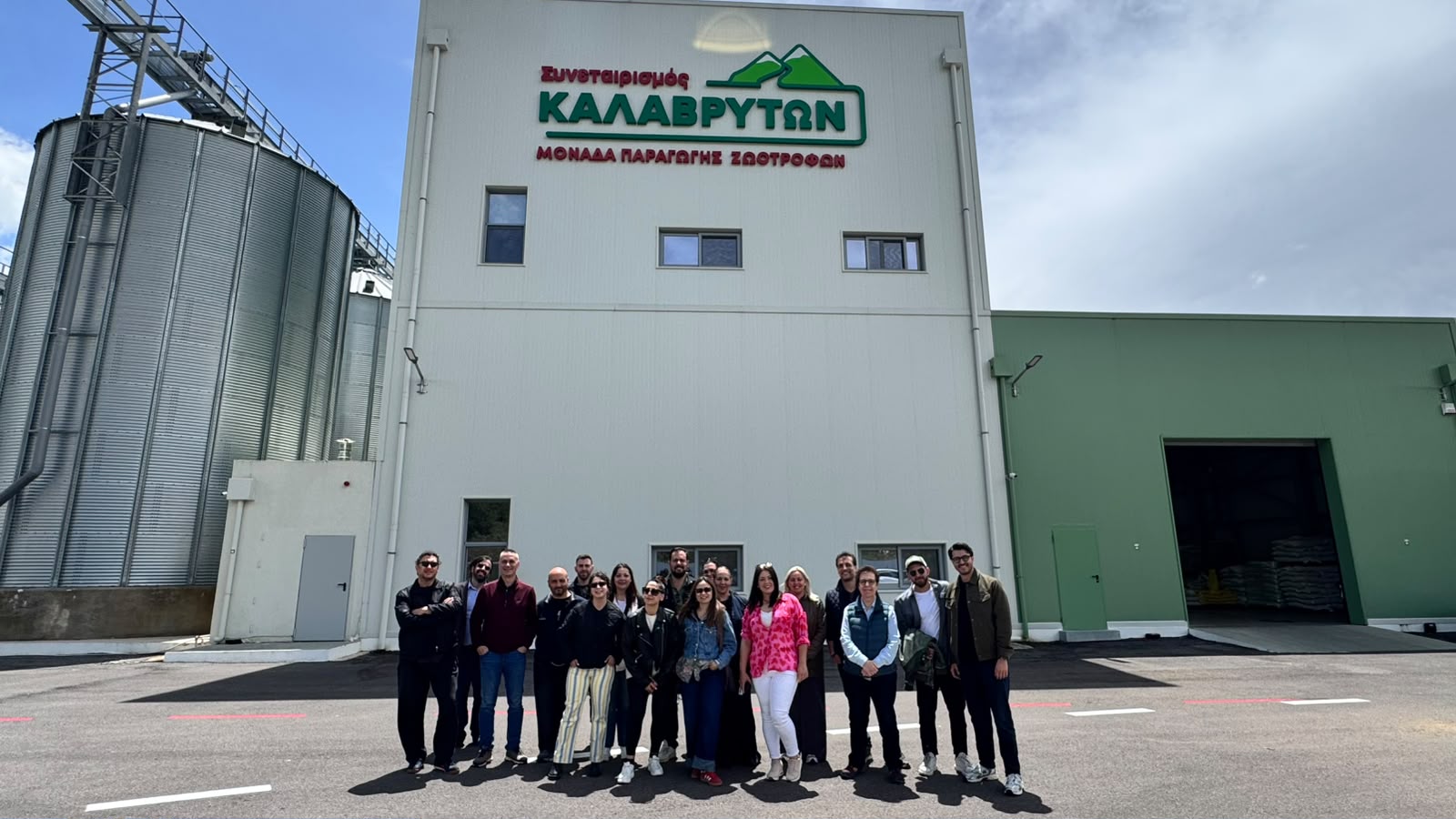
On the following day of the educational session, participants visited the facilities of the Agricultural Dairy Cooperative of Kalavryta, where they had the opportunity to gain first-hand insight into the operation of its production units and the overall organization of cooperative activities.

At the dairy production unit, participants observed the milk reception stage and the milk processing procedure, with particular emphasis on feta cheese production, from raw material to final product, highlighting the key stages of the production process and the continuous quality control applied at every stage.

Similarly, at the animal feed production unit, participants were introduced to the operation of the facility and the logistics processes implemented for the organization, storage and distribution of feed supplies to cooperative members, highlighting the crucial role of smooth supply flow and resource management in supporting the production process.

Inspiration through cooperative philosophy

A particularly important moment of the program was the meeting with Mr. Pavlos Satolias, President of the Agricultural Dairy Cooperative of Kalavryta and President of ETHEAS, during which participants had the opportunity to learn more about the history, values and development path of the cooperative. Through his presentation, the critical role of the cooperative model in strengthening local production, collective action and the sustainable development of rural Greece was highlighted.

At the same time, Mr. Satolias shared insights and experiences regarding the operation and evolution of the cooperative, placing emphasis on its organizational structure, collective strategy and contribution to strengthening the agrifood supply chain. Finally, reference was made to the development opportunities and challenges currently faced by cooperative schemes within the modern conditions of the agricultural sector.

Visit to the Municipal Museum of the Kalavryta Holocaust

As part of the educational session, beneficiaries also had the opportunity to visit the Municipal Museum of the Kalavryta Holocaust, where they were welcomed and guided by the Mayor of Kalavryta, Mr. Thanasis Papadopoulos. Through the guided tour, participants became acquainted with the tragic history of this historic town.

Acknowledgements and supporters

New Agriculture New Generation warmly thanks the Agricultural Dairy Cooperative of Kalavryta for its valuable support and hospitality in Kalavryta, as well as for the educational visits to the animal feed production unit and dairy production unit of the Cooperative.

Supporters of the remaining educational sessions of the program are: the Consortium of Cooperatives and Producer Groups of Imathia, the Agricultural Poultry Cooperative of Ioannina PINDOS, the Chios Gum Mastic Growers Association, COMPO EXPERT and Lidl Hellas.

The program is also supported by NBIS.