Νέα Γεωργία Νέα Γενιά

Stevia Hellas, Α success story

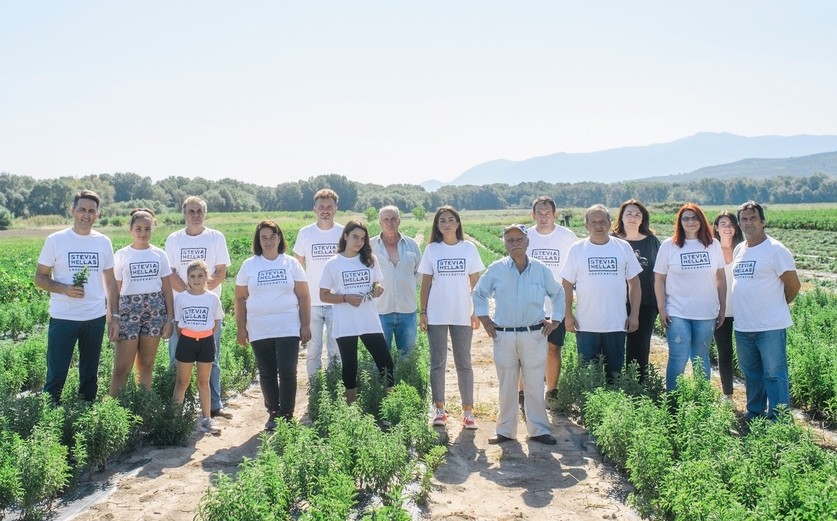
Lamia, Greece – At an event on the topic of Rural Entrepreneurship and Innovation, the Lamia Cultural, Scientific, and Philosophical Association “300” presented the 2019 “Thermopylae” Award to the Stevia Hellas Agricultural Cooperative for its innovative agricultural practices and continued development of the Fthiotida region.

“We don’t have a business culture in Greece, and that’s why we don’t have words for many business ideas that exist in American culture,” said Association President Dr. Panagiotis Iakovis, who presented the award to Stevia Hellas CEO Christos Stamatis. “Innovation is a state of mind, and all too often, the fear of failure in Greece prevents people from taking advantage of their ideas.

Based in Lamia, the Stevia Hellas Agricultural Cooperative stands out as a success story for its innovative production and management model. The only large-scale producer of stevia across Europe, Stevia Hellas was founded in 2011 with 47 producers and a 10-member management team. The Cooperative focuses on the cultivation and standardization of stevia products and has invested in producing top quality products.

“Lamia used to be known for its tobacco farms,” said Quality Assurance Manager Stella Dampasi, an agronomist and one of the Coop’s founding members. “My grandfather, father, and mother grew tobacco. It was a family business, and I remember working in the tobacco fields. But in 2009, 2010, tobacco cultivation stopped.” In 2008, the local government conducted stevia experiments with a few farmers in the area, including Stella’s father. “We read that in California, tobacco farmers became stevia farmers,” Stella said. “We thought it would not be difficult to grow stevia because it uses the same techniques as tobacco, but since it’s food, we have to be more careful.”

Stevia is a natural sweetener and zero-calorie sugar substitute derived from the leaves of the  Stevia rebaudiana plant native to Brazil and Paraguay. “Stevia is a 5-year cultivation, Stella said. “You cut it, and it regrows.” The plant is harvested in the summer months, when the leaves have the sweetest taste. At the end of March, the stevia fields were yielding their first leaves, and I could already taste their sweetness.

“We started out of a small container in the village of Stirfaka, and we visited many of the locals here to convince them to join us,” recalls Christos Stamatis, the charismatic CEO of Stevia Hellas. “It wasn’t easy, but a lot of people were convinced that stevia would be a great alternative to tobacco cultivation.”

Leonidas Zervas, the President of the Board of Stevia Hellas and the former president of the Board of tobacco producers in Greece, asked Christos to help out with the lifecycle management, promotion, and sustainability of the stevia product. Stevia had never been cultivated in the EU, so that first year involved gaining cultivation experience and getting through the EU bureaucracy to grow stevia. “We started importing seeds from different countries like the US, Canada, and Israel, and trying them in different fields,” Christos said. “We had success but also lots of failure.”

“Stevia Hellas was the first stevia point in Europe,” said Ilias Kalfas, Project Leader of New Agriculture for a New Generation’s “Small Farm Adoption” Program at the American Farm School. “They were pioneers. The EU did not have any regulations related to Stevia, so they cleared the way in terms of cultivation techniques, pesticides, etc. in Europe.”

While Stella learned about stevia cultivation, Christos visited European summits to create the right business model so that the Coop could develop sustainably. “Finding the seed capital was a challenge,” Christos said. “So we invested ourselves: we crowdsourced, and everyone contributed the same amount. We started with 50-70 thousand euros.”

“Our Coop is committed to selling the final product, not the raw product,” Christos said. “We produce three stevia products: first there are the dry stevia leaves, whole or crushed, that are ideal for teas, or as a sweetener in cooking. Then there is pure stevia powder, which is 250-400 times sweeter than sugar and ideal for industrial use in sodas and juices, by companies like Kri Kri, Green Cola, and Olympus. Third, there’s crystal stevia, which is now sold in all Greek supermarkets as a table sweetener. A teaspoon of stevia is three times as sweet as a teaspoon of sugar. Both the pure and crystal stevia are processed by a friend’s company in Lyon, France, so we have 100% European products, cultivated here in Greece.”

Stevia Hellas is now the leading Stevia producer across Europe with 60 producers, mostly from Ligaria and Lianokladi. At the end of 2017, the Coop moved into its current building in Lamia, which includes a meeting room, kitchen area, and final products area. “As we say in my village, the sky’s the limit,” Christos said. “The demand is huge, and we have to fulfill the needs of our customers. That means more collaborations, more fields, more producers.”

The Coop is known for its active role in the rural development of the region. “We focus on and invest in people,” Christos said. “We continuously train our members in rural sustainable development through our participation in European RurInno & RurAction Programs. Our new producers receive training through the New Agriculture for a New Generation Program. Stella and Stefanos Papapostolou, a founding member and one of our biggest producers, became beneficiaries of the NANG program in 2018. They are learning about what steps we need to take to certify our fields for organic cultivation. We also want to enhance women’s entrepreneurship and encourage more women to work for the Coop. Thirty percent of our producers are women, including our two top-yielding producers.”

“The New Agriculture for a New Generation program is the opportunity of a lifetime, one of the biggest investments in my country, and we have to take advantage of it,” Christos said. “I strongly believe that cooperative educationmust be a part of this program. If we don’t collaborate, how can we compete? We need to focus on synergies and the cooperative movement, focus on the sharing economy and producing more with less. There’s so much potential here.” He spoke with passion and conviction, and it was clear to me how much he loved Lamia.

“Many of our producers are young people with a new way of thinking,” Christos said. “They are highly skilled in different sectors. I know these people, I was born here. I am deeply embedded in this sector. I’ve spent a decade working at the Cooperative, and I’ve overcome challenges and difficulties. I want to pass this knowledge down to young people. I’m in a good position to start sharing my expertise.”

The uplifting water

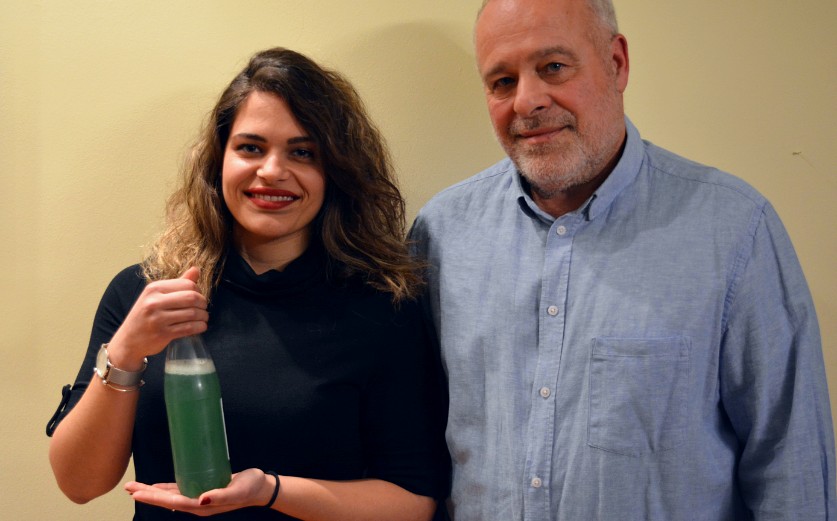
“New Agriculture for a New Generation” participated in the 28th Agrotica and there, I had a chance to meet Theodora Chatzilia, Co-Founder of New Food Product Development Institute. She talked to me about “The Uplifting Water”, a product based on the use of new innovative production technologies aimed at highlighting the importance of probiotics in human nutrition.

Thodora lives and works in Thessaloniki and is a graduate of the Department of Agriculture at the Aristotle University of Thessaloniki where she is currently completing her master’s degree in Food Science and Nutrition. Together with her father, Nikolaos Chatzilias, who is a chemical engineer and professor at the American College of Agriculture, they founded the New Food Product Development Institute a few years ago, which specializes in developing and designing new food products, designing and improving production lines and applying new technologies to the production process.

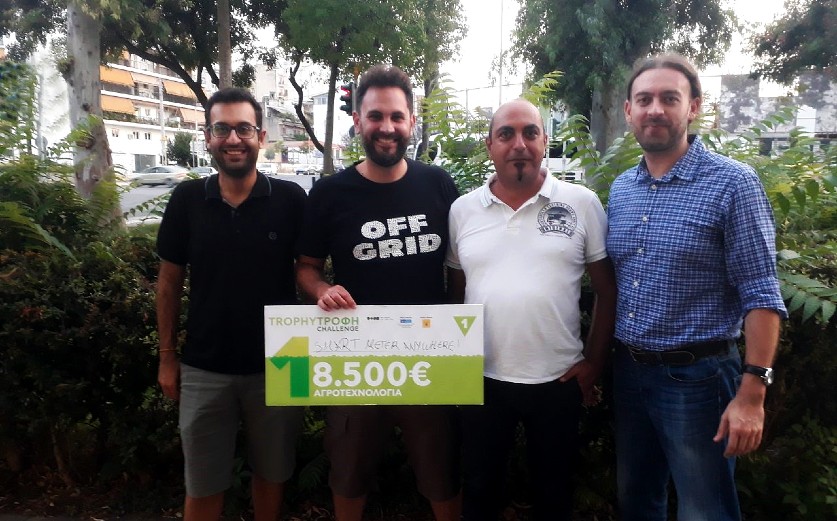
New Food Product Development Institute team have made their way to the bootcamps phase of the “Trophy-Τροφή Challenge” competition organized by the “New Agriculture for a New Generation” program, by presenting “The Uplifting Water”, a natural fermented beverage made from a group of probiotic microorganisms that contains sediment as well as carbonate while being enriched with trace elements and vitamins, using a new technology called infusion. “The consumer nowadays is well informed and is always demanding for more functional foods and beverages, that is, focusing on natural or enriched foods that have specific beneficial effects on one’s health. Health awareness and a great number of bowel disorders have highlighted the benefits of probiotic foods. Our product is an alternative to consumers who mainly use milk products until now, “Theodora told me.

Through their presentation at “New Agriculture for a New Generation”’ s booth at the 28th Agrotica Agrotica held at the TIF in Thessaloniki, I had the chance to see the many different flavors of The Uplifting Water, such as cucumber and lemon or ginger. Their product is already being marketed in collaboration with companies and industries active in the kefir and food industries.

Their goal is to produce other products in collaboration with food companies throughout the year. As Theodora said, “I find that food is a very promising industry that has a lot to give to those who decide to work for it. It is striking to me that everything is based on chemistry, a chemical bond can change everything! “.

Also, its is in their future plans to network even more and collaborate with other food industries as Co-Founder of the company says, “We really believe in the power of collaborations, because a product needs a lot of work and a lot of people from different fields. ”

Trophy-Τροφή Challenge was really important to them. “It was a great experience that helped us through networking, meeting other young people who have something to show, something that they have worked with and invested their time and energy. “New Agriculture for a New Generation” is a really pioneering program focused on agri-food, it is really innovative for Greek reality, “Theodora told me. She also mentioned that she has applied for the new Regeneration project implemented by “New Agriculture for a New Generation” program and with great enthusiasm, she told me that “I think ReGeneration is exactly what a young entrepreneur needs in order to work in the agri-food sector. I hope I can participate and look forward to it! “.

When a mythical herbal tea comes in capsules

Greek mythology says that at Mount Othrys, the Titans had been fortified during the great battle with the gods of Olympus and from there, they launched huge rocks towards Mount Olympus. But apart from the myths and stories, Mount Othrys has been and continues to be a source of natural wealth, as its peak is full with high quality herbal tea.

I met Constantinos Damianos and Christos Mylonas, members of the Othrys Herbs team, and they talked to me about their love of herbs and more specifically herbal tea, while explaining how they ended up creating tea in Nespresso-like capsules.

Constantinos and Christos originate from the same place, the Almyros area in Magnesia, under the shadow of Mount Othrys, which lies between the counties of Magnesia and Fthiotida and borders Thessaly and northern Central Greece. So, as soon as the “New Agriculture for a New Generation” program announced that it would conduct training seminars on aromatic and medicinal plants in the Almyros area, they both decided to participate without a second thought.

Constantinos is both a farmer and a mechanical engineer and has always been involved in aromatic plants, but nevertheless he felt he lacked the theoretical background and wanted to gain more knowledge, so he decided to participate in the aromatic plant training program. “I remember my childhood years, in the summers, I was collecting wild native aromatic plants. I knew that I wanted to work with aromatic plants. But because of my lack of expertise, I didn’t know how to do it right. That’s where the program came and now, I can say that I feel like I’ve finally got the knowledge I want! ”

Christos, on the other hand, has studied agronomy and has been professionally involved in aromatic plants before which seems only natural, since Christos family has a tradition of dealing with these sorts of plants. Both his parents and grandparents were working with aromatic plants and herbal tea.  But he, too, felt that he wanted to concentrate and develop his knowledge in the field, as he says there was no university specialization in the specific area.

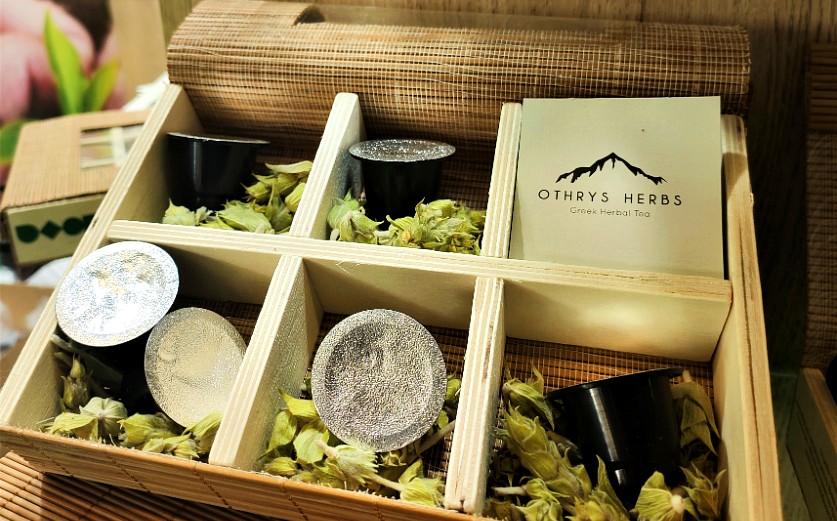
But one might ask, what is the capsule tea inspired by the Almyros Group as part of the training seminars of the “New Agriculture for a New Generation” program? The answer is that it is an innovative product that uses capsules compatible with Nespresso machines containing mixtures of aromatic plants. The main variety they use is called “raiser” in Greek, or simply herbal tea, and they also use varieties like chamomile, sage and mint, all harvested from the mythical Titans mountain.

“One afternoon, after we finished training, we sat down as a team and said we wanted to do something innovative, something different. So, after brainstorming and discussion, the idea came up and we decided to create herbal tea in Nespresso-like capsules so that it can be compatible with capsule coffee machines” says Christos. “At the end of the seminar, we had to implement a project in which everyone had to present a business idea. We came up with the idea of capsule tea as a group and started working on it gradually, “adds Constantinos. The idea follows the general philosophy of coffee capsules, as the team wanted to create a user-friendly product which is easier and faster to make. In the case of Othrys Herbs, I might say that tea capsules are not only easy and fun to make but they are also extremely beneficial for our health.

The Almyros team, however, is also interested in leaving the smallest possible carbon footprint through the production of its tea capsules. So, although they are now using standard capsules as their product is still in a pilot phase, they have designed a biodegradable paper capsule. “Unlike coffee, which has to be put in a protected environment so that it does not lose its aromas after milling, we do not have such a problem as our product is already dried. Therefore, we do not need sealing on the packaging. This allows us to use paper, which on the one hand costs less but it also has a lower carbon footprint, thus helping to protect the environment” says Constantinos. The packaging and the design they have created for their product reflects its character, as the colors are are the ones found in nature and the lines are simple. In fact, Christos has also created the logo that they will use, which depicts Mount Othrys, the trademark of their group.

Their goal is to make steady steps as a company. After they come up with the choice of the best mixes of aromatic plants and then place them in biodegradable paper capsules, their aim is to expand to markets other than Greek. “We would like to target, for example, the Russian market, because hot drinks like tea, and not so much coffee, are part of the country’s culture but they do not have products to cover their needs” says Constantinos.

And he continues by saying that “The response from the people so far is impressive. It certainly goes far beyond my expectations! ” Christos added that “I was hesitant at first, I can admit. But along the way, I tried it and I really liked it. Both as an idea and as a result”.

They both stressed the importance of their participation in the training program on aromatic plants as well as the fact that it took place in Almyros area. As Constantinos says, “It was really a big deal that the seminars took place in our area. We had the opportunity to participate without leaving anything behind! ” And he added that “The knowledge I gained through the program was very important. The courses had a great flow and the level of our trainers was really high. For me, the knowledge I received was fundamental, I see it every day in my work and I am improving. ”

Christos laughed and added that “First of all without the program we wouldn’t be talking about our product now! But beyond that, we got to know new people, we came up with new ideas, we were able to participate in exhibitions and get in touch with potential clients and professionals in the field. And though an agronomist, I was able to specialize in what interested me, aromatic plants.”

I can admit that after all this talk, I was curious to try the tea in capsules and had the opportunity to do so,  at the “New Agriculture for a New Generation”’s Booth at the 28th  Agrotica, where the beneficiaries of the program presented the products and their services to the people that visited the expo. So, I was able to see closely how the tea capsules were made, and then I tried different varieties of beverages made by Othrys Herbs. I must say that reading about it is one thing but trying it, well, that’s far better!

The New Generation of Agrotica

Thousands of people visited the International Convention Center in Thessaloniki during the 28th Agrotica that took place from January the 30th  to February the 2nd with 2,077 exhibitors and more than 160,000 visitors attending this year’s impressive event.

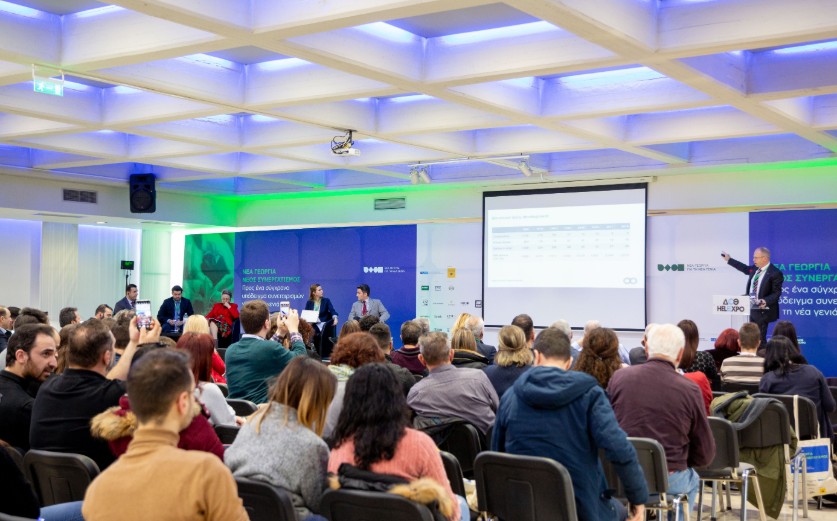
The “New Agriculture for a New Generation” program was present once again hosting the “New Agriculture -New Co-operation – Towards a Modern Model of Cooperatives for the New Generation” conference while at the same time welcoming visitors to it’s Booth, where they got to meet some of the program’s beneficiaries, taste their unique products and learn about the services they provide.

Τhe participation in the conference “New Agriculture-New Cooperation-Towards a Modern Model of Cooperatives for the Young Generation”, that was co-organized by the “New Agriculture for a New Generation” program with HELEXPO under the auspices of the Ministry of Rural Development and Food, was actually a record breaker, with more than 500 attendants.

During the conference, we watched academic and senior executives of organizations and businesses active in the agri-food sector, representatives of political leadership and of cooperatives from Greece and abroad, as well as experts, talking about modern models of governance and competitiveness, of the various challenges that the cooperative groups are facing in Greece and abroad while explaining the great opportunities for education and innovation that can arise in the industry.

Prominent scientists such as Professor Sanjib Bhuyan from Rutgers University and Professor at the Swedish University of Agricultural Sciences and Strategic Advisor to the New Agriculture for a New Generation Program, Kostas Karantininis, discussed the different issues facing the Greek cooperatives and suggested solutions based on other countries’ models while adapting them to the Greek reality, as well as the need to form a flexible legal framework that allows the creation of cooperatives with both a commercial and a research, educational and counseling purpose.

We also had the chance to attend high-level business executives such as Steen Nørgaard Madsen, President of milk Inter-professional and Board Member of Cooperative Arla Foods and Arjen Van Nuland, Managing Director of the Dutch Rural Cooperative Council, who presented us with examples of successful cooperative models in Denmark and the Netherlands respectively, providing valuable food for thought.

Efi Lazaridou, Executive Director of the “New Agriculture for a New Generation” program, stated after the conference, “We pledged to support the establishment of a new culture of cooperation in the agri-food sector in our country. Healthy, profitable, modern cooperatives can be a vehicle for the sustainability and growth of small family farms, giving them access to technological innovation, consulting services, market networks. Following on from our commitment and actions to support the cooperatives, we announce the creation of a pilot cooperative academy, which will be formed in the immediate future and aspires to evolve into a platform for professional training and education of Greek cooperative members”.

But that was not all. The “New Agriculture for a New Generation”’ s booth was also filled with people, with adults and children testing the unique products produced by our beneficiaries. At the program’s booth, we drank tea from Nespresso like capsules filled with aromatic herbs made from the Group of Almyros area in Greece, we had a taste of candies made from Industrial Cannabis implemented by the Larissa Group, and we tasted beer enriched with aromatic herbs by the Erontas team, inspired by the aromas and natural wealth of Crete. Apart from the drinks of course, we also had the opportunity to taste delicious fresh jams, spoon sweets and syrups from fresh cherries and figs from the mountain villages of Macedonia, made by the Fruit Stories team, using environmentally friendly and no-preservatives methods.

But the interesting facts didn’t end there, as the beneficiaries from the Team of Grammatiko presented us a Natural Insecticidal Product from Aromatic and Medicinal Plants that aims to protect the environment through the use of eco-friendly solutions in crops and at the same time, we talked to the beneficiaries from teams Farsala and Trikala that told us everything about the creation of standard propagation material of chamomile originated from the area of Farsala and endemic species of Trikala respectively.

The strong presence of the “New Agriculture for a New Generation” program in this year’s Agrotica expo was surely both enjoyable and delicious but it also managed to lay the foundations for establishing a new culture of cooperation in the agri-food sector in our country, emphasizing the need for a modern model of governance and management that will invest in the development of human resources, as Mrs. Efi Lazaridou, Managing Director of the New Agriculture for a New Generation, has pointed out.

Putting counseling and business plan development into practice

Without a doubt Maria Spilioti has a very impressive academic profile. She is a graduate of the Department of Animal Production and Aquaculture Science at the Agricultural University of Athens (AUA), holds a master’s degree in Farm Business Management and Advisory Services for Rural Development from AUA and is currently a PhD candidate in the Department of Agricultural Economics and Rural Development, at the same university. But apart from that, by talking to her, I realized that another great asset she has is her love for nature and the people who work on it, as well as her unending desire to provide her knowledge and experiences to enhance and upgrade the agri-food sector, in every way possible.

She was born and currently lives in Piraeus, while her family comes from the beautiful town of Nafplio. There, her family had a small piece of land that she used to visit every now and then. “Although I am a city child, ever since I remember myself, I wanted to become an agronomist! I really love nature as well as animals and everything that surrounds it” she told me as we started our conversation.

Maria strongly believes in the importance of consulting and the need to develop business plans, especially in the agri-food sector. Thus, it seems that her role as ‘Coordinator of Business Plans Development and Counseling’ in two training programs of the “New Agriculture for a New Generation” Program is ideal. The educational programs she works on are the “Livestock Farming and Dairy Technology” program and the “Aromatic and Medicinal plants” program.

She learned about the “New Agriculture for a New Generation” program through AUA, which is a strategic partner of the program from the beginning. She told me that as soon as she heard about the program, she immediately realized she wanted to participate as her interests matched perfectly with what she wanted to offer.

Throughout our conversation, we had a chance to talk in detail about business plans and she explained to me the importance of consulting. As far as the Livestock Farming and Dairy Technology program is concerned, she explained that the business plans they create are mainly related to the establishment of new livestock businesses, their modernization and expansion and of course the increase of livestock. In fact, in 2018, which was the first year that the training program ran, 24 such business plans were made, 16 in 2019, and in 2020 she and her team intend to carry out 6 more. Of course, the most important thing seems to be that these projects help to maintain or even increase the human capital employed in the sector, thus helping to combat unemployment while at the same time improving their agricultural income.

When it comes to the Aromatic and Medicinal plants sector, they have managed to form groups of beneficiaries in 5 regions of Greece: Volos, Trikala, Grammatiko, Larissa and Farsala. Each of the teams has produced innovative products. Imagine nespresso style capsules filled with medicinal and aromatic herbs from Greece, insecticides exclusively from aromatic and medicinal by-products, candies made from industrial cannabis or even a mouthwash from medicinal plants! At the same time, they have installed a native plantation to produce Greek guaranteed propagating chamomile material in Farsala, wild rose, beeswax and mountain tea in Trikala and specifically in South Pindos. “What sets us apart from other commercially available products is the locality, that is, the plants are Greek, their chemotype (they have been analyzed to determine the chemical characteristics) and the fact that our products have been produced through a viable crop system “, Maria adds.

“All teams from both educational programs attend counseling and we are constantly on their side to help them implement their business plans effectively. There are already Social Cooperative Enterprises that are being set up” Maria says. The previous phase of product design and creation was a pilot one. Now, with the support of the consulting and business plan team, teams are called upon to create a comprehensive marketing plan for their products, using specific promotion tools and with the primary goal of marketing them as premium products.

I could see the excitement in her eyes when she said “I would like to see these products out in the market. And for example, after 5 years, I would like to see them do well and create even more products. Another reason we decided that this year we will take entrepreneurship courses at a more advanced level was that we want beneficiaries to be able to manage their own business effectively.”

Of course, she stresses once again the importance of counseling and business consulting. “I think that through counseling, we can make a link between knowledge and universities and the rural sector. This way, we come closer, we keep in touch with these people and adapt to their needs. By practicing counseling, you learn to listen to the other, to hear his needs, and to give him a solution to his problem. Unfortunately, this usually doesn’t happen, we aren’t used to listen to each other. Here, counseling is an essential communication.”

Although Maria loves to help and support the program’s beneficiaries, she also feels that she herself has been helped through her collaboration with the New Agriculture for a New Generation program. “Only the fact that you get into primary production and get in touch with people who live all year in the field of agriculture is very important, you have a lot to take from them. You go completely out of theory, you get into practice” she says, adding that “The primary sector is one that has a lot to offer in Greece. For me it is a challenge. I think something unique is happening here, something you don’t have the opportunity to do every day. You get in touch with new people as the program is mainly aimed at the country’s most dynamic part, young people. ”

Shortly before we bid farewell, she tells me that her vision is a dynamic agricultural sector in Greece that will produce value-added products but at the same time respect the environment while preserving the available natural resources. Thus, she believes that through the “New Agriculture for a New Generation” program she can help so that her vision becomes reality. “I believe that we always learn throughout our lives, no matter how old we get and the things we think we know. And always, we have things to give to one another. Here in the program, we are now moving away from the old ways, which may not have always been so appropriate and moving forward, we are modernizing. We can combine tradition with modernization and new technologies with the ultimate goal of revitalizing the agricultural sector and its people. “

The Queen Bee

Catherine Apostolopoulou is an experienced apiculturist, from the area of Sofades in Karditsa, where she currently lives with her husband and their two children. I had a chance to talk to her about her past, her involvement with apiculture, her participation in the Apiculture training program of the “New Agriculture for a New Generation” program and her future plans and dreams. Nevertheless, what struck me most was the love I realized she had about the “fantastic world of bees,” as she told me.

Katerina has studied Business Administration and has worked in the private sector for over 10 years as an office worker, but one day in 2014, she decided to leave it all behind her and pursue a career as an apiculturist. Maybe the reason was her husband, who works in a company that manufactures special equipment for beekeeping. During the same year, she quit her job in the private sector and hesitantly started with 14 beehives.

From the very first time, she loved her job so much that she decided this is what she should do for the rest of her life. The reasons were not economic, although the private sector had high insecurity, she said she just loved nature. “I was working among people when suddenly I found myself close to nature. Everything here is so calm and the world of bees is magical! “she told me. Of course, she admitted that “Apiculture has a lot of difficulties, especially during the first few years, it takes time and investment”, something that she managed to do as now, she can say that she can make a living out of working as an apiculturist.

Catherine introduced me to the unique world of bees and talked to me about the different types of honey – I even learned about the bitter honey that comes out of strawberry trees- as well as the difficulties and the peculiarities of the profession. With the help of her husband, they move their beehives as they go to different areas, for fir, pine or flower honey, which flourishes in their area, “Beekeeping is not just a profession, it’s many professions combined together. You have to become an herbalist, a doctor, a meteorologist and so much more, “she told me.

Catherine learned about the Apiculture training program of the “New Agriculture for a New Generation” program online. When she read that it would take place in her hometown of Karditsa, she didn’t hesitate to sign up. “I saw it as an opportunity for me, as trained and experienced people from universities all around Greece would to come to Karditsa. I was already thinking of going to Athens for some seminars because I wanted to learn more since I was an amateur until then “she said. For her it was important that “the seminars are taking place all over Greece, not just the big cities, this is really an innovation”.

Although she loves to read a lot and learn new things on her own, she told me that “The seminar has helped me a lot through practical exercises. For example, we had 10 beehives, in which we practiced all the processes needed to produce honey. I saw things I couldn’t understand on my own”. She also told me that after attending the program, the key areas on which she felt better as a professional were both the diseases – how to recognize them, how to cope with them and how to prevent them – as well as that of raising queen bees. Most of us may not even know what that means but raising queen bees is highly important for apiculturists. “Our teacher, Mr. Charizanis, has shown us the way and the procedures necessary for us to make our own queens, good queens, so that we can have not only productive but also happy bees! If the queen is well, then the rest of the bees are well and the honey you produce is good” she said.

In fact, Catherine wants to attend the second level of the apiculture training program this year as well. “I have heard that there will be a 2nd level seminar in Trikala and I would like to attend it because it will be for professional beekeepers and teachers will focus specifically in our areas of interest, such as diseases and raising queen bees”, she told me.

After completing the training seminars, she currently has 150 beehives, along with her husband. “I was able to become more independent on apiculture, while at the same time the program’s teachers were so good that we still contact them every time we have a problem or face a challenge”, she told me. The couple’s plans are to double their beehives over the next few years and at the same time to create their own packaging plant so that they can certify their organic honey.

Catherine feels that the change she made in her life has borne fruit. After all, it is clear that her choice was right, because every time she talks about her job and her bees, her eyes light up. “The bees are like my children. They are not only my property, they are my joy, they are part of the family! Everything about bees is interesting. If you open the beehive and you have a chance to see how they work, you are mesmerized, and you think: we humans should also be like that!”. Just before we left, Catherine told me “I can’t think of leaving this job now and doing something else, I wouldn’t change it for nothing!”.

Training our trainers

On 22-24 November, we visited Larissa as part of the “Train the Trainers” workshops, a specially designed training seminar for the trainers of the “New Agriculture for a New Generation” program.

The workshops were organized for the 5th time since the “New Agriculture for a New Generation” program’s launch and were once again a huge success. The program aims to strengthen the hard and soft skills of the program’s trainers in order to respond to the specificities of adult education and also be able to work from a new perspective, overcoming older attitudes and behaviors.

The “Gaiopolis Campus” of the University of Thessaly, welcomed the trainers, who this time took on the role of pupils and attended a series of thematics, by specialized lecturers and educators. Elisabeth Papadopoulou, Adult Trainer and Psychologist, helped participants develop role-playing skills and get in touch with the personal characteristics of themselves and their team, while Yannis Mavrokoridis, Business Director Cross Training, through an interactive discussion focused on the management of various working groups as well as on the necessity of sound decision-making processes.

Participants also followed up with Konstantinos Karavasilis, Food Scientist and Quality & Innovation Expert, learning valuable information about the global nutrition system and the current situation of the modern food industry, while learning about current consumer trends, the process of innovation and the development of new products in the agri-food sector. Furthermore, Dimitris Koutoulas, Assistant Professor of Tourism Management at the University of Patras, through the “Destination Marketing Bootcamp” introduced the participating trainers to the basic principles of marketing and management of places and tourist destinations while also discussing about the importance of branding and market research and analysis in the tourism industry.

On the last day of the seminar, trainers and participants left the classrooms and visited Dimitris Miga’s Wine Estate, on an educational trip to the beautiful “Paleos Abelos” Valley just outside Larissa. There, they had the chance to see one of the most modern and impressive wineries in Greece, while Dimitris Migas, the owner, made a special tour of all the venues. At the end of the tour, a special surprise awaited all the participants, as there was a special wine tasting of 3 wine labels, each accompanied by matching dishes.

“Train the Trainers” workshops aim to strengthen the skills of the “New Agriculture for a New Generation” program trainers, who in turn will train and support young people who choose to work and support the agri-food sector. Eleni Garefalakis, local representative of the Alternative Tourism training program in Volos and also a trainer for the “New Agriculture for a New Generation” beneficiaries, attended the workshops and quoted, “Adult education is a challenge for all of us educators.Therefore, training seminars and workshops such as the “Train the Trainers”, are valuable tools for us as they give us the opportunity to get in touch with new practices, specialized scientists and professionals as well as other trainers. We have a chance to learn from each other and evolve. “

The talented Dr. Goodman

Meet Dr. Robert Goodman
Dr. Robert Goodman, a plant biologist and virologist by training, is an expert on soil microorganisms and plant disease. Since 2005, he has served as Executive Dean of Agriculture and Natural Resources at Rutgers University, leading the “New Agriculture for a New Generation” program.

“Only in my more mature years did I realize that the course of my professional career could be predicted based on my family history,” Dr. Goodman said. His boyhood hero was his father’s father, a professor at Cornell University. His grandfather graduated in 1912 with a degree in agricultural engineering and farmer advisory services. He designed and promoted agricultural practices related to livestock and tile drainage systems to recover wetlands for crops and grazing.

When Dr. Goodman’s grandfather taught at Cornell, the Ford Foundation approached the university to launch a multiyear effort to rebuild the University of the Philippines in Los Banos. So his grandfather boarded a steamer, passed through the Panama Canal, and spent two years in the Philippines. During that time, he designed a sizable farm that is now co-owned by the University of the Philippines and the International Rice Research Institute, which advocates for further research into rice, the staple food of half of mankind.

After graduating from high school, Dr. Goodman went to Johns Hopkins University, wanting to become a physicist. But when he discovered that he “wasn’t gifted” in mathematics, he turned to biology. He transferred to Cornell, where he earned a bachelor’s degree in Plant Sciences and a doctoral degree in Plant Pathology. He spent a postdoctoral year at the John Innes Institute in England, then moved to the University of Illinois-Urbana for a professorship. He was promoted to full professor in 1981. He spent eight years in the private sector working as Executive Vice President of Research and Development at Calgene, Inc., in Davis, California, before returning to academia. He taught at the University of Wisconsin-Madison before coming to Rutgers University in 2005.

Leading “New Agriculture for a New Generation”
In 2013, the Stavros Niarchos Foundation (SNF) decided that the agricultural sector would be a main pillar of its €100 million “Recharging the Youth” initiative to create new opportunities for Greek youth. At that point, the Rutgers University Foundation began conversations with SNF.

“At Rutgers, we educate youth. We have a 4H program. We bring adjudicated youth back into society. We have a farm advisory and a nutritional education program. We provide food business education and create new products. We do everything that Greece needs to do,” Dr. Goodman said.

Eventually, SNF asked Rutgers to lead the “New Agriculture for a New Generation” program. Under Dr. Goodman’s leadership, the program conducted 16 feasibility studies to explore different sectors of Greek agriculture, to understand which product areas were successful already, which could absorb new workers, which were less capital-intensive, where there was export demand, and which food products Greece imports that could be produced locally. The program selected nine of the 16 sectors and built training programs around them. They also added a program in agrotourism/alternative tourism, a sector where much more could be done.

One third of the €25 million SNF grant will also be used to plan and build a food business incubator, similar to food incubators in Italy and Ireland. The incubator will contain a food safety lab, a sensory lab, agroanalytics, and a business space. It will be integrated into the training programs to help new businesses with research and development, the creation of new products, market analysis, packaging, storage, and exports.

“We plan to exceed the promised number of trainees, but the real measure of success is not how many young people you train, but how many get jobs,” Dr. Goodman said. “That’s why we’re sticking around to make sure these young people become successful. We need to build something that will last beyond our collaboration with SNF. I envision creating a public-sector entity to contain what we do now–something we can turn over to Greece. Our collaboration could become the foundation for a school that trains farm advisors, for example. I think it will take another decade for our intervention to really have an impact, and I want to be alive to see what happens. I want to see a vibrant food sector, repopulation of rural areas, and the restoration of a decent quality of life.”

“Greece has played a fundamental role in the spread of agriculture, and Greek agricultural products are in huge demand in the rest of the world,” Dr. Goodman said. “Often, the first thing Americans think is: consolidation and industrialization. But because of its difficult history–occupation, dictatorship, wars, crisis–Greece did not have the resources to industrialize, and actually, that’s a good thing. Greece has lots of small family producers, and now it has an opportunity to recover its agricultural sector through cooperation and collaboration, without consolidating wealth in the hands of a few. Greece needs to seek its own way, not look to countries like France. This same model helped Ireland’s agricultural sector recover. It’s labor intensive, but it can be done. The biggest challenge is to get people to work together, to standardize quality, and increase exports.”

“Agriculture is still an honored trade and profession in Greece,” Dr. Goodman said. “And in every agro-ecosystem, the best farmers do 50% better than the others. That has nothing to do with luck. It has to do with know-how, education, learning to do things better. And people learn best by doing stuff, by working with their hands. That’s the goal of our program.”

The “smart” irrigation system

Lucas Basios and Lucas Gravias have many things in common, apart from the same name. Most importantly, they share the same passion to provide the best irrigation product to farmers and at the same time be able to protect protecting the environment by reducing the waste of water. Along with the third member of the team, agriculturist Aris Panagiotopoulos, they have created “Chloe Irrigation Systems” and they were awarded with the 2nd place in the final of the TROPHY-ΤΡΟΦΗ Challenge competition, held in July at the Benaki Museum.

Being classmates and friends, back in 2017 all three of them began creating a platform that will optimize the irrigation process and provide remote control to users. “My grandfather is a farmer and so one day he told me to go and water the fields at two o’ clock in the morning, as this was the best time for watering according to him. And I thought, well, there should be an easier way!” says Lucas Gravias, CEO of CHLOE and a mechanical engineer who specializes in data science and more specifically in the field of artificial intelligence. “So, we thought we could design an algorithm that would train each user separately and consider parameters such as the variety of the field, the terrain and the weather to make the right decisions for the right irrigation plan. “, adds Lucas Basios, the company’s CPO and software engineer.

Using state-of-the-art technology and artificial intelligence (A.I,), they have been able to create a ‘smart’ system that makes it easier for the farmer to find the best watering solutions for his field, while also reducing water consumption by helping significantly global problem of depletion of the aquifer. Practically, that means placing special sensors on each field, that collect all the data needed to achieve the correct irrigation plan. “We try to make it easier for the farmer and simplify the process so that at the end, all he needs to do is look at the recommended irrigation plan  on the screen of his phone or tablet and just click ‘Yes’ if he agrees and if he doesn’t, he can remotely make the changes he needs” says Lucas Basios.

The device used by Chloe Irrigation Systems

Chloe Irrigation Systems team participated in the bootcamps of TROPHY-ΤΡΟΦΗ CHALLENGE and was among the 10 finalists who competed in front of the judges in the final stage. There, they presented their innovative product to the jury and won the 2nd place in the Agritech category, which they shared with the FIBRO-I team. “It was very interesting to me that the mentors during the bootcamps had a great experience of the Greek market, which provided us with meaningful feedback and tips on how to reach specific target groups to promote our product,” says Lucas. Gravias.

For Lucas Basios, in addition to the cash prize they won in the competition, a very important prize was their participation in both the Future Agro Challenge (FAC) that took place during the Global Entrepreneurship Conference (GEC) and the 84th Thessaloniki International Fair (TIF).  “Our participation in the GEC and the TIF was a unique experience. We got to know many startups, we came in direct contact with people from the agri-food sector and we managed to make the connections we want to promote our product. For example, just from TIF, we met many farmers who were interested in our product and so we were able to build a potential customer list. Without the TROPHY-ΤΡΟΦΗ CHALLENGE I don’t think we would have been given this opportunity! ”

The three of them aim to launch their product by May 2020 and be able to gradually make Chloe Irrigation Systems known not only in Greece but also in Europe, America and countries such as Israel and the United Arab Emirates, where appears to be a big water shortage problem. As Lucas Gravias says, “We may not understand it that much in Greece, but the problem of water shortage is increasingly affecting our planet. With Chloe’s product, we hope to contribute to protecting the environment and ultimately reducing costs for farmers and facilitating their production.”

The Summer school

Meet The Karra Sisters

Ioanna Karra, 28, and her twin sisters Zoe and Athanasia, 26, are fourth-generation goat farmers from Elinokastro, 25 kilometers outside of Trikala. They manage the family farm “Karra-Mandraki” with 1.200 free-range goats. The sisters attended the “Summer School” training program implemented by the Agricultural University of Athens, part of the New Agriculture for a New Generation program.

From an early age, the sisters would go to the farm and take the goats into the mountains. “We lived as migrant farmers for the first 12 years of our lives,” Ioanna said. “Every summer, from May to October, we played with the goats. We lived in a cabin, and sometimes we would have to change their grazing areas. We went all the way up to Grevena. At first, our mother wanted us to do something else because goat farming is hard work. But we don’t mind. Now we work together with our mother and our uncle. If we don’t have time for vacation, it doesn’t bother us.”

It’s not an easy life. A typical day on the farm runs from 7 in the morning to six in the evening, when the sisters make cheese and test out new products. They work in all weather conditions, and sometimes they have problems with hunters who scare the goats or kill their dogs. And if they don’t have enough dogs to protect the goats while they graze, they can fall prey to wolves. “In the last 2 months, we lost 15 goats,” Ioanna said.

The sisters knew from an early age that they wanted to work on the farm and pursued studies that would help them modernize and develop the family business. Ioanna studied economics at the University of Piraeus and then graduated from the Dairy School of Ioannina. The twins studied at the National Polytechnic University of Athens: Zoe studied chemical engineering with a specialization in food, and Athanasia studied electrical and computer engineering with a specialization in engines and energy. While at university, the sisters worked on the farm during vacations and holidays. They have been working with the goats full-time since 2015.

Ioanna and her sisters are improving the production process and stabilizing the quality of their products. For example, when heating milk to make yogurt, their mother used to check the temperature with her hand. If she could hold her hand in the milk for 30 seconds, she knew it was time to add the yogurt culture. Now the sisters heat the milk to a precise temperature. “It was difficult for our parents to deal with new technology,” Ioanna said. “We can track the health of the goats, the food they eat, their milk quality. We have the know-how and the time.”

The goats graze in the forest and return to the farm to sleep and be milked. The University of Thessalias provides GPS devices so that the sisters can track the goats and see what plants they eat. “We have 15 dogs to guide the goats, and we take shifts following them around,” Ioanna said. “The goats give birth around October, and we separate the pregnant goats from the rest. We follow the pregnant ones with a car and take them back to the farm when it’s time.”

Visions for the Future

The Karra sisters would like to launch their own brand of goat milk products: milk, yogurt, kefir, cream cheese, and other goat cheeses. They want to prove that the plants that the goats eat (which range from mint and cistus to oak or strawberry plants) have an impact not only on the taste of their milk, but also on its nutritional value. During AUA’s week-long “Summer School” in Trikala, the sisters sampled different products like feta cheese with truffle oil, which gave them ideas for products of their own. They also received theoretical training and professional advice and had a chance to meet other local producers.

“We want to move forward, but it’s much harder than it was 10 years ago,” Ioanna said. “The price of milk goes down every year, and profits are dropping. Now 0.45 euros per kilo for regular goat milk and 0.50 euros per kilo for organic goat milk is considered a good price.” The sisters want to open a plant to process free-range milk products with other local producers in order to give their milk the value it deserves. They’ve made sketches and studies for the new business and applied to a Greek program that gives money to farmers so that they can manufacture products. But it’s been difficult to find collaborators. “There are five other goat farmers in Elinokastro, but they are skeptical of our plan. They think we have an ulterior motive,” Ioanna said. “Before, everyone wanted to be at the top, but now people want to cooperate. We really want to change the mentality.”

In the future, the sisters would like to welcome visitors to the farm to see how they work. “You could play with a little goat, see how it is milked and fed, then follow the goat paths through the forest, and at the end, we could offer some of our unique products,” Ioanna said. “Most people admire the fact that we are young women running this farm. We want people to love goats as much as we do. They are very clever!”