Νέα Γεωργία Νέα Γενιά

The Hiking Guide

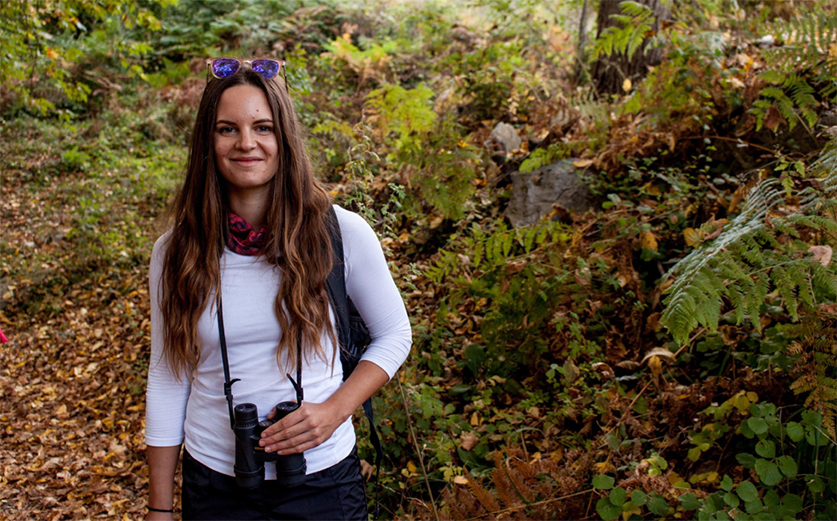
Meet Katerina

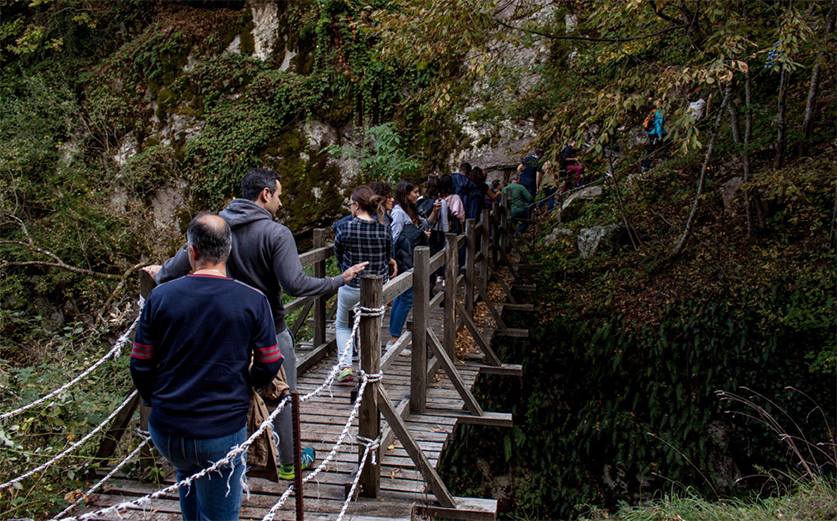
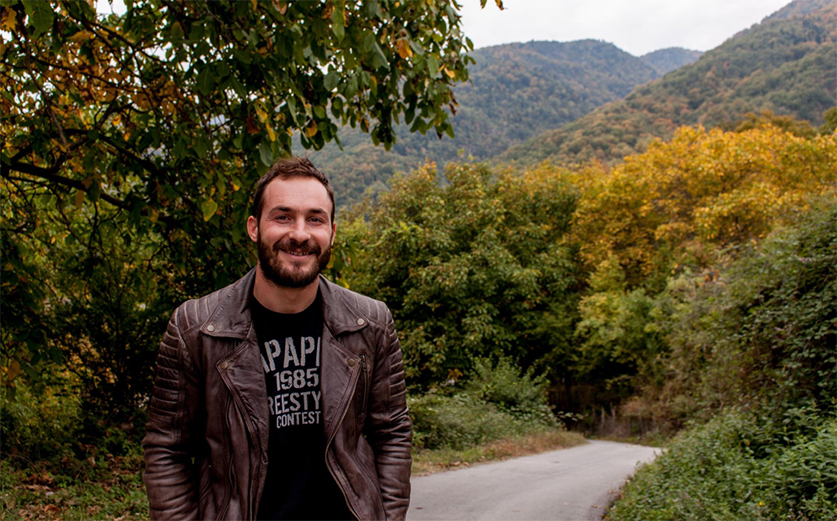
Katerina Zagkretou, 26, grew up in Nea Moudania, Halkidiki. She graduated from NANG’s Alternative Tourism program at the American Farm School (AFS). Today, she leads hiking trips for Green Oliver, an alternative tourism and environmentally friendly activity office based in Thessaloniki. “Both of my parents love their jobs, and they taught me that it was very important to love what you do,” Katerina said. “I remember that when I was a child, I accompanied my father on walks in the woods and fishing trips. I watched him move comfortably in nature and became very familiar with it. I felt so free in the forest. It was so different from the courtyard of my house. I wanted to spend all my time  outside.”

In 2017, Katerina graduated from the School of Agriculture, Forestry, and Natural Environment at Aristotle University, specifically from the five-year Department of Forestry and Natural Environment. “In Greece, forestry is not valued as much as in other countries that emphasize sustainable development and increasing the quality of daily life, so I take every opportunity to stress the crucial role of this science in solving modern environmental and social problems. For example, urban green spaces are directly linked to our mental health.”

Experience in the Alternative Tourism Program

Katerina participated in the first cycle of the Alternative Tourism program at AFS. The program taught her the legal framework governing alternative tourism activities, current visitor trends, and practical training on how to design and market an alternative tourism experience using a natural resource. “One of the most valuable parts of the program was the time I spent exchanging ideas and knowledge with other participants,” she said. “It’s difficult to identify the potential of a tourist destination and to bring together the right people to get it off the ground. But now I have the background and contacts I need to launch my own alternative tourism experience.”

Katerina and the other beneficiaries in her cycle “adopted” the mountain village of Elatochori Pierias and used what they had learned to create a new, year-long tourism profile for the area, exploiting the natural resources of the region in the most sustainable way. They formed groups related to gastronomy, the natural environment, visual exhibitions, creative workplaces, and events that connected local cuisine with art. “I participated in the group on the natural environment,” Katerina said. “We organized a hiking trip on one of the many paths in the area with intense biodiversity and natural beauty, and we identified medicinal and aromatic plants that could be used in the kitchen and in the production of cosmetic and therapeutic products.”

Working as a Mountain Guide

When Katerina began her studies in Thessaloniki in 2011, she also joined the Mountaineering and Climbing Club. Gradually, through her studies and her mountaineering activities, she realized that she wanted to work to promote the natural wealth of Greece and to combine scientific knowledge with hiking and sports in nature. She just completed her studies at the State Institute for Vocational Training with the specialty of Mountain Guide. “Greece is a mountainous country with a very intense landscape,” she said. “I think I will always be impressed by how many different destinations our country has to offer in proportion to its size.”

She began working with Green Oliver after a hiking trip in 2018 where she and the organizers had the opportunity to get to know each other and to discuss the type of excursions that the office organized, which agreed with Katerina’s own philosophy. “I believe Green Oliver stands out not only in its choice of special hiking trails, but because of the character of its actions: the goal of our excursions is not always to reach a peak or to cover more kilometers, but to reap the maximum benefits of contact with nature and to return to our more ‘primitive’ roots.” As part of the Alternative Tourism program, Katerina completed a two-month, full-time contract with Green Oliver, which enabled her to take on a larger role in organizing the office’s outdoor activities.

One of Katerina’s favorite routes is on the Tzoumerka mountain range in Pindos National Park, starting from the mountain shelter in the village of Pramanta near Ioannina and ending at the peak of Strogoula at an altitude of 2112 meters. It is an unforgettable route because it offers a panoramic view that will convince even the unbelievers that Greece is much more than sun and beaches.

Katerina also had a few words to say about the exploitation of natural resources in Greece, which directly affects alternative and hiking tourism since both occur in rural areas. “Greece is a small country with a wealth of natural resources. As a result, large-scale projects like the gold mines in Halkidiki or the wind farm in Agrafa, with so much direct impact on the food chain and people’s quality of life, occur relatively close to residential areas and prevent the development of alternative tourism and the promotion of local agricultural and livestock products. I’m not saying that the Greek countryside should become an area of absolute protection, because sustainable development and, by extension, economic progress, exists when multiple purposes are served. But we should consider the needs of the inhabitants, who depend on the proper functioning of the ecosystem, now and in the future. And on a personal level, it is important to understand that we hikers are responsible for preserving the destinations we visit. During our excursions, we try to leave the smallest possible footprint on the paths and to create an environmentally friendly philosophy.”

The magical world of bees

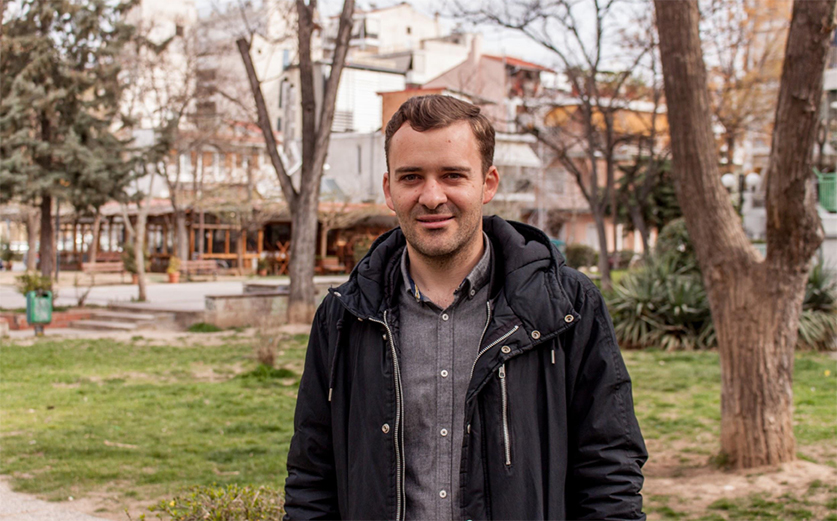
Meet Ioannis

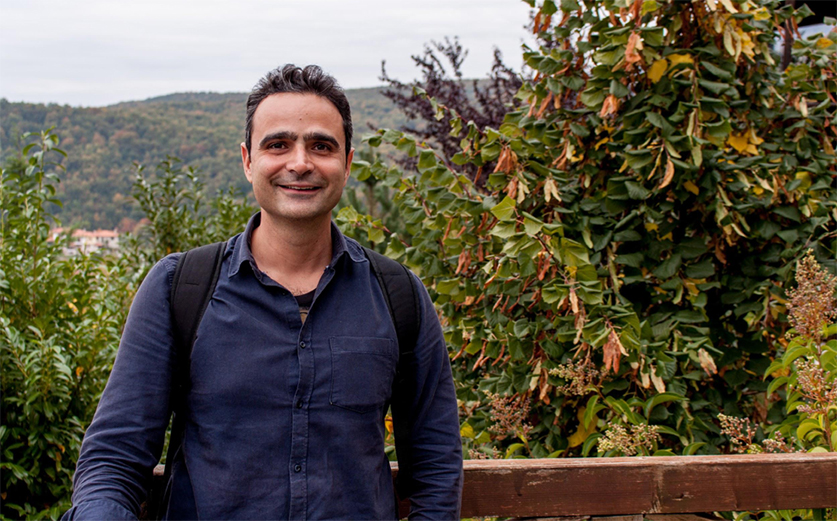
Ioannis Theodorou, 28, lives in a western suburb of Larissa and owns two bee hives. He is a beneficiary of the apiculture training seminars implemented by the Agricultural University of Athens (AUA) as part of the “New Agriculture for a New Generation” (NANG) program. He has two younger brothers, and his father works for TrainOSE. His grandfather cultivated olives in the village of Pyrgetos near Mount Olympus, and he too prefers to live outside the city where he can have direct contact with nature. “I don’t like the gray of the city with its apartment buildings like cages,” he said. “A man who’s closer to nature is more of a man.”

Ioannis graduated from the Technological Educational Institute (TEI) of Thessaly in 2015 with a degree in Business Administration. While in school, he developed an interest in beekeeping and making homemade honey products. He did some research online but ultimately decided to wait because he didn’t know anyone who could advise him and he needed capital to get started. “It seemed like a mountain to me, very difficult,” he said. So he did an internship at an accountant’s office and got a job as an accountant’s assistant so he could save up enough money to make his dream a reality.

He joined the Apiculture Club of Larissa and participated in a conference they organized at the Chamber of Commerce in April 2018. There he met Mr. Spyros, a beekeeper from Ambelonas who offered to teach him the trade. Ioannis visited his hives after work and on weekends all through the spring and summer. He learned that spring was the best time to buy bees so that they would have enough time to build their hives before winter. Mr. Spyros gave Ioannis two of his own bee colonies to put in the beehives that Ioannis had prepared and painted white with yellow trim. Ioannis kept the hives next to Mr. Spyros’s hives and learned how to tell what the bees needed by opening the hive and how to deal with issues like swarming, when a queen bee leaves the hive with a group of workers to start a new colony. With Mr. Spyros’s guidance, Ioannis harvested three kilos of wildflower honey from his hives in September. “I’d started from scratch, and after all the time and effort I put in, I felt a great joy and happiness,” Ioannis said. “It wasn’t a lot of honey, but the quality was good. I liked the taste a lot.”

Participating in the Apiculture Program

Ioannis spent a total of 300 euros on his first two hives. He has since moved the hives closer to his home in Larissa to reduce his expenses since he isn’t making a profit yet. He visits his hives once a week in the winter and every day in the summer. He’s been reading books on apiculture and following new developments in the field online. He plans to add two more hives at the beginning of May, but he’s awaiting further instruction from the seminar. “I bought stackable hives, and they are in my warehouse ready to go,” he said. “I’m starting slow because I don’t want to make mistakes—I want to make sure I have more than enough knowledge.”

Ioannis learned about the training seminars through the Beekeeping Club and thought it would be a great opportunity. “I feel really lucky,” he said. “Professor Harizanis knows so much about apiculture, and he’s even written a textbook about it! I’m learning all about the magical world of bees, like how they give off a chemical signal to enter into the hive, and what you should do in order to avoid stressing the bees. Pairing theory and practical training together is really important.” Ioannis loves quotations, and he recited one often attributed to Albert Einstein: “If the bee disappeared off the face of the Earth, man would only have four years left to live.”

When he feels that he has learned enough, Ioannis wants to add more hives, then get a beekeeping vehicle so that he can transport them to his ancestral village in Pyrgetos. That area has some of the rarest and most unusual plants in the world. He wants to try putting some hives in the olive grove or among almond trees. He wants to experiment with making honey from lots of different crops: chestnuts, lavender, Greek mountain tea, oregano. In Pyrgetos, his family owns a stone house in the village that was built in 1927. Ioannis went there in the summer as a kid. It was built in the traditional style of Epirus, and his family has maintained the architectural elements. He wants to turn the house into a multipurpose venue with a beekeeping shop to sell his products, a place for apicultural and agricultural exhibits, an office, and an events space. Eventually, he hopes to own 200 hives.

“I want this to become my full-time job,” he said. “And I’d like to cooperate with other beekeepers in the program. I think that we all have the same goal in mind, and as the program continues, I hope we’ll keep developing our relationships and getting closer.” To close the interview, Ioannis shared one of his favorite quotes from Demosthenes, an ancient Greek politician and rhetorician from Athens: “Small opportunities often become the beginning of big and successful businesses.”

Apples and honey

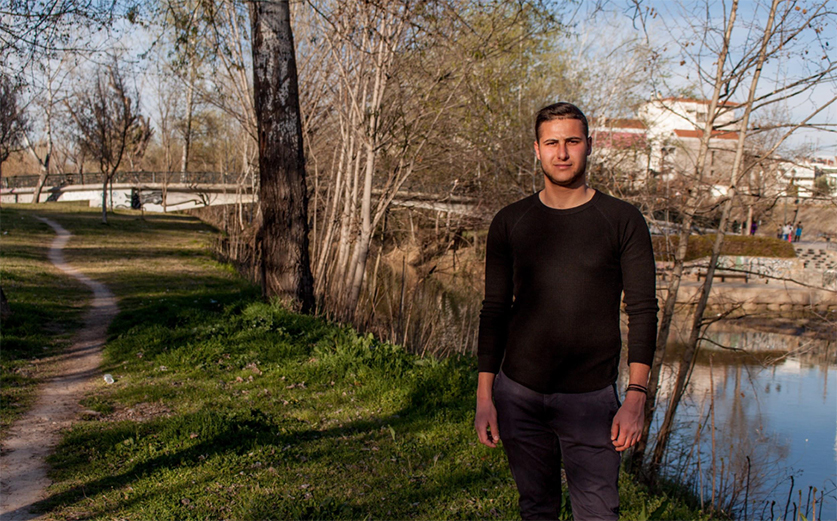
Meet Dimitris

Dimitris Theodorakis, 20, was born and lives in Larissa. He is a beneficiary of the apiculture training seminars implemented by the Agricultural University of Athens (AUA) as part of the “New Agriculture for a New Generation” (NANG) program. He is a third-generation farmer, and he and his father cultivate apples, cherries, and chestnuts on 20 stremmata in the village of Agia. “I’ve worked in the fields with my father and learned from him since I was a child,” Dimitris said. “Because of all the technology nowadays, young people are losing touch with nature. They can’t tell whether or not an apple is good.” Dimitris decided to become an agronomist to continue the work of his father. He is in his second year at the Technological Educational Institute (TEI) of Thessaly in the Department of Agricultural Engineering Technologists.

Dimitris and his father are trying to cultivate new crop varieties that he learned about at TEI since the price of apples has fallen in recent years. Larissa’s intense summer and winter temperatures also create difficulties for the farmers. Snow freezes the trees and hail can destroy a cultivation. “We’ve grown cherries for more than 50 years,” Dimitris said. “I also want to start growing dry nuts like walnuts.” He thinks that chestnuts are the best crop because they fetch a good price in the market. The chestnut trees are 20 years old and grow up on the mountain with a view of the sea. The family grows Smith and Gala apples in a separate, lower field. The oldest tree is 27 years old. “It will soon need to be replaced in order to produce a better quality and quantity of apples,” Dimitris said. “It takes 4-5 years for a young tree to yield a full production.” From May until October, he and his father work nonstop, harvesting first the cherries, then the apples, and then the chestnuts. “I’m happy to work in nature,” Dimitris said. “It calms me, and you never stop learning.”

Participating in the Apiculture Program

Dimitris developed his initial interest in beekeeping by watching videos online and talking with friends who work as beekeepers. “You can create many products with bees like honey and propoli,” he said. “When you grow apples, you only have apples. Bees can also improve the quality of our crops by pollinating them. I plan to have about four hives per stremma.”

Dimitris heard about the apiculture training seminars from an acquaintance. The seminars take place at Averofios Farm School, which is older than TEI and has bee hives that the program uses for demonstrations. “We started from the very beginning: how to set up and paint a hive,” Dimitris said. The 20 participants spent half their time inside the lecture hall learning theory and the other half outside doing practical training in the field. They each received a textbook written by Professor Harizanis that details everything they need to know about beekeeping as well as access to notes, internet resources, and over 55 instructional videos created by Harizanis and his lab. “When you’re learning something new, you need to read a lot. There’s no other way,” Dimitris said. He already has 24 hives, but he’s waiting for the next seminar before he gets his bees. “You need to gain the knowledge to do something right. You can’t go into it blind.”

“The first thing I want to do is to produce and perfect honey,” Dimitris said. “Then, with the help of my older sister who lives in England, I’d like to sell it abroad. My father will help me with the beekeeping. I’m excited to share my knowledge with him.”

When apiculture becomes a family affair

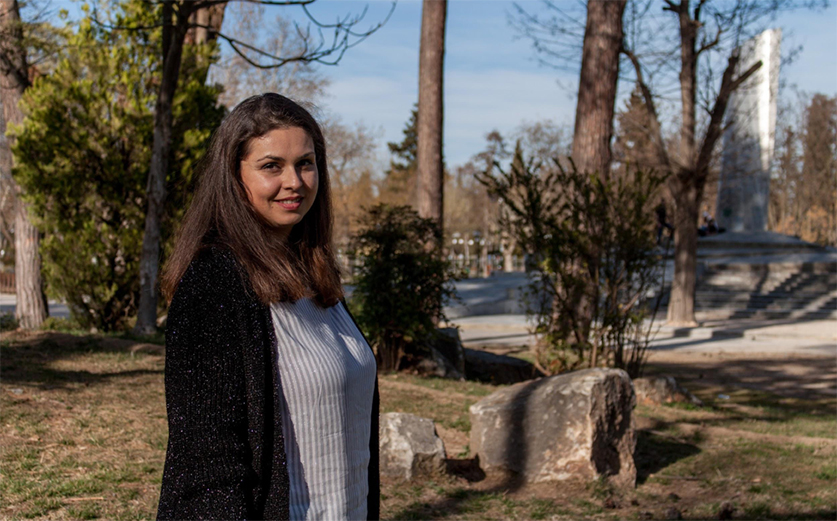
Meet Anastasia

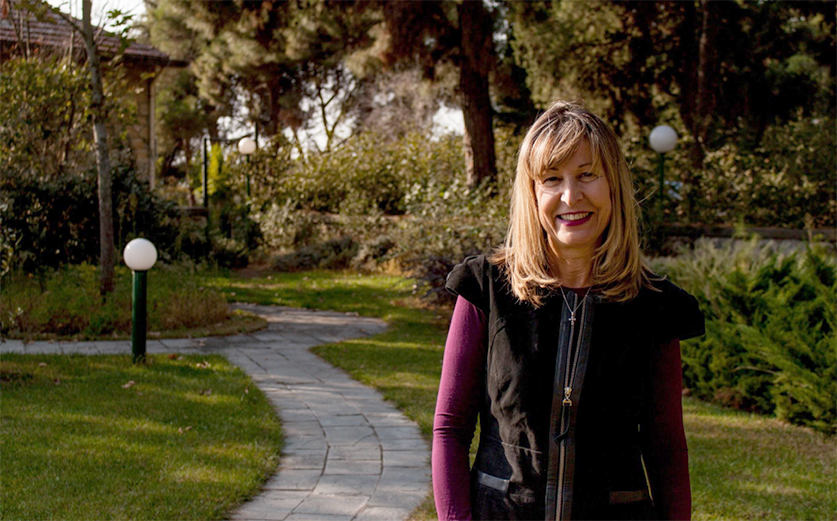
Anastasia Dimitriadou, 34, was born in Orestiada, Evros, and lives in Larissa. She is a beneficiary of the apiculture training seminars implemented by the Agricultural University of Athens (AUA) as part of the “New Agriculture for a New Generation” (NANG) program. She attended high school at the American Farm School for the first two years and graduated from the 1st High School of Orestiada. Later, she studied the Management of Tourism and Hospitality Businesses at the Alexander Technological Educational Institute (TEI) of Thessaloniki. After graduating, she returned to Orestiada to work at her family’s hotel. In June 2017, she moved to Larissa when her husband, a police officer from Larissa, took a transfer back to his hometown.

Participating in the Apiculture Program

“When I first started, I didn’t know anything about beekeeping,” Anastasia said. “I couldn’t tell a bee from a wasp!” She became interested in natural food products while raising her children, a daughter, now 9, and a son, 5. “I discovered that the best products for kids are natural, and that’s how I got into beekeeping,” she said. “Propolis, royal jelly, and honey are like natural medicines. I want to make different bee products to sell and for my family. I hope it can become my full-time job.”

Anastasia found out about the apiculture program through a Facebook group for beekeepers in Larissa. “It was like fate,” she said. “When I decided that I wanted to get into beekeeping, here came the seminar.” The first four-day seminar, held in February from 9.00 to 14.00 each day, taught Anastasia and the other participants the basics of beekeeping, such as how to set up and paint a hive so that it lasts for 40-50 years. The 20 participants spent half their time inside the lecture hall learning theory and the other half outside doing practical training in the field. They also had the opportunity to meet some professional beekeepers from Larissa. “It was so helpful to have Professor Harizanis and Dimitris walk us through every step from the beginning,” Anastasia said. “I didn’t want the seminar to end!”

Most of the participants don’t have hives yet, though some of the participants have family background in beekeeping. They each received a textbook written by Harizanis that details everything they need to know about beekeeping as well as access to notes, internet resources, and over 55 instructional videos created by Harizanis and his lab. “I’m reading constantly,” Anastasia said. “But the life of the bees is so interesting that you want to learn everything.” She told me how even a bee’s sting has health benefits and can be used in certain therapies for patients who have blood circulation issues. “I’m not afraid of getting stung,” she said. “The queen bee releases a pheromone that makes all the worker bees gather around her, and if you smear that pheromone on yourself, the bees will swarm you. I’m a little afraid of that, but otherwise, I don’t have a problem with them.”

After the first seminar, she showed one of the bee videos to her children and husband. “My little son was fascinated,” she said. “I think that beekeeping is something I can teach my kids, something we can all do together, just like Dimitris was taught beekeeping by his father and grandfather.” After the March seminar, Anastasia will buy her first two beehives. “My husband and I found the perfect place to keep my hives. It’s in the village, not far from our house, in a place surrounded by trees,” she said. “My husband wants to buy hives now, but I want to wait until after the next seminar to make sure I have all the information I need to get started. My children are giving their input on what color they want to paint them. It’s a family effort.”

A lighthouse of hope

Meet Father Athenagoras

Father Athinagoras Loukataris, 41, was born in Eptapyrgio, Thessaloniki. He studied at the University Ecclesiastical Academy of Thessaloniki and the theology department of the Aristotle University. In 2004, he was ordained Αrchimandrite by the Honorable Metropolitan of Neapolis and Stavropoleos Dionysios. A year later, with the encouragement and blessing of the Honorable Metropolitan of Neapolis and Stavropoleos Varnavas, he established the “Faros tou Kosmou” (“Lighthouse of the World”) Youth Center in the neighborhood of Dendropotamos, Thessaloniki.

Located in the western part of the city, Dendropotamos is the biggest ghetto in northern Greece, home to many Roma families. Faros tou Kosmou serves as a day center for children in the neighborhood, dedicated to the protection and creative employment of minors. The center offers a lot of different activities: robotics, music, creative writing, basketball, swimming, painting, gardening, photography, dance. It also serves as a frontistiria, offering foreign language lessons, helping children with their classes, and providing warm meals and some medical services. Faros tou Kosmou stands beside all those in need and illuminates the road to growth and development.

For the past decade, Faros tou Kosmou has also prepared its children to attend schools in other neighborhoods. Children from the center have attended elementary and middle schools in Evosmos, then gone on to Anatolia or New York College. Over the past five years, Faros tou Kosmou has sent over 450 Roma children to school and has received recognition from the Council of Europe and the U.S. State Department.

Meet Vasilis

Vasilis Ismailoglou, 22, is Roma Muslim. He was born in Xanthi and moved to Thessaloniki when he was 12 years old. He did his nine-month army service first in Athens, then in Cypress. He was 19 when he finished his service and met Father Athenagoras. Athenagoras is a close friend of Vasilis’s godmother and took him under his wing, and that’s how Vasilis came to live at Faros tou Kosmou along with 16 other children who make up the Lighthouse family. “I have learned a lot from him,” Vasilis said. “I can’t say in words.” Vasilis helps out at the center. He is in his second year of high school, studying mechanical engineering: automobiles, motorcycles, anything related to machinery. He has two years left in school, and after that, he plans to take the Panhellenic Exams.

Participating in the Alternative Tourism Program

Vasilis is currently participating in the second class of the Alternative Tourism program at the American Farm School, a part of the “New Agriculture for a New Generation” program. Father Athenagoras encouraged him to apply. And while he may be one of the oldest at Faros tou Kosmou, he’s one of the youngest in the Alternative Tourism program. “There are so many interesting people in the program: foresters, lawyers,” Vasilis said. I’ve made many new friends from the program, and I’m learning a ton from them.”

“Since the beginning of the program, he has consistently attended his classes and has made great efforts with his duties and assignments,” said his instructor Christina Archonti. “He won from the beginning the sympathy, trust, and friendship of several of his classmates, and his integration into the program’s social and learning environment has been seamless.”

This year, the trainees, have decided to adopt the city of Xanthi for their rebranding efforts. In concert with highly trained experts and young people from Xanthi, they will design a holistic touristic product which will combine the multicultural mosaic of Xanthi with its unique natural beauty and fusion cuisine based on the city’s rare breed of shorthorn cattle. Vasilis is a part of the gastronomy group, and he is researching the food of Xanthi, the city’s history, and what the people like to eat there in order to recommend different recipes, including recipes with cows. “At first it was difficult for me to return to Xanthi because I left when I was so little,” Vasilis said. “But now it’s a little easier, and I feel grateful.”

Τea in capsules

Meet Tasos

Tasos Xristopoulos, 27 and newly married, lives in Vrinena Almiros, a village with 250 permanent residents located 60 kilometers from Volos. Tasos produces traditional Greek mountain tea, or tsai tou vounou (Sideritis raeseri). His family also owns 50 free-range cows, 300 free-range goats, and 400 sheep that they keep in the stable all year, cultivated in the traditional way. Both his parents and his mother’s parents are farmers, and the whole family works together in the fields. “We have 40 years of experience with the tea and with the animals. I helped in the fields and with the animals since I was little,” Tasos said. “I finished vocational high school, and after my military service, I took up work in the fields.” He owns 15 stremmata on Mount Othrys and rents 5 more. He is currently preparing 11 organic stremmata at 1100 meters, and the non-organic stremmata are at 600 meters. The entire production process is done by hand: weeding three times a year, the harvest from approximately 20 May – 20 June, drying the tea in a warehouse. They sell their tea to a trader, their milk to a creamery, and their meat to a butcher shop in Almiros.

Participating in the Medicinal and Aromatic Plant Program

Tasos first heard about the medicinal and aromatic plant program from the leader of a seminar series for new farmers. Of the 20 tea producers from Vrinena Almiros who participated in the program, he knew only two beforehand. One was Christos Mylonas, whose fields neighbored his. “One important lesson I learned last season was how to propagate tea from seeds instead of by cutting a part from the mature plant. Every four or five years, the crop must be renewed. The second and third years have the strongest yields, and after that, the yield falls.”

Out of the 20 producers in the region, Tasos and Christos were two of the five selected to continue to the second phase of the program, where they will receive advanced training to turn their tea into an innovative product that they can bring to market. They intend to produce capsules with special blends of mountain tea and other local aromatic herbs that can be used in an espresso machine,[1]  and they are currently experimenting with various combinations of mountain tea with mint, chamomile, and other ingredients from Vrinena Almiros. “The second phase seems more difficult, but we have a great group, and I think we will do well,” Tasos said.

As a result of his participation in the program, Tasos has also connected with representatives from APIVITA, a company that makes natural cosmetics from organic Greek products and is interested in buying his tea. “APIVITA wants organic tea, which must be grown naturally without fertilizer or additives,” he said. “I’m transitioning my fields so that we can work together. The process takes three years, and this will be the second.”

“Tasos has made an effort to get into organic farming,” said Falia Economou, director of the Medicinal and Aromatic Plant Program at the Agricultural University of Athens. “Now he’s found an entry into the market.”

“I would like to have a stable production and be able to sell my tea at a good price,” Tasos said. “I am very thankful for all that the program has given me. I’ve learned many new things, and the teachers and my collaborators are great. I hope to continue working with them.”

Table Grape Groups

Thessaloniki, Greece – The table grape groups from the “Small Farm Adoption” project at the American Farm School (AFS), a part of the “New Agriculture for a New Generation” (NANG) program, have been recognized by the EU for their outstanding achievements. They were chosen by the European Commission’s Smart Specialisation Platform as an implementation point, to show other member states how to grow grapes using smart technologies and to create a protocol for the next decade.

The groups are creating an integrated system that will precisely monitor the cultivation, harvest, processing, and shipping of table grapes so that farmers and buyers will know as much as possible about their crop. “We use sensors to monitor and record all measurable data on the vines during the growing season. We use meteorological stations to predict weather conditions, pests, and diseases; soil analysis to control the soil substrate and nutrients needed for the next period; photonic technologies to monitor chlorophyll and nutrients in the leaves and the health and sweetness of the grapes without destroying the berries,” said Ilias Kalfas, project manager. “We are now moving on a storage and transport monitoring system from the fields to the final buyer (truckload sensors, low radiation antennas). We want the buyer to be able to see exactly how the grapes are grown, and at the same time, know the farmer’s name and see his face. If buyers trust you, they will trade with you. I believe that in two or three years, all major supermarket chains will demand this level of precision and traceability.”

The project encourages the farmers to collaborate and has already created two officially recognized farmers’ groups in table grapes. “The groups create a common company and merge their activities,” Ilias said. “They produce and sell all their crops together, issue invoices, share the profits and the damages. This helps to raise the quality of the product because if you have one bad farmer, they all share the damages.” Working together helps the groups win EU grants for facilities and product promotion. They also share investment costs and can attract larger customers. “If you are not a team, you don’t have power because you won’t be able to deliver the quantities that the markets need,” said George Papadopoulos, a project mentor who grows Crimson Seedless grapes in Kilkis. “I have a contract with a huge company from the UK called Jupiter. They want a truck of grapes per day, 25 tons. In order to deliver this quantity, I need 4000 stremmata (400 hectares). We prefer to have young farmers on these teams because they are open to learning. They see the results from the first year, and they’re willing to grow with us.”

“The table grape sector is a very promising sector that has been neglected in previous decades. The winemaking industry is more or less vertical, but table grapes offer more profit, and we think the sector will get bigger and bigger in the coming years,” Ilias said. “With only 20 stremmata (2 hectares) of table grapes, you can earn 30.000 euros profit,” George said. “What other industry in Greece can provide you with a profit like that?”

The project also seeks to uplift Greece’s rural communities. “With the help of the program, many of the farmers have formed committed relationships that will last for decades,” Ilias said. “The beneficiaries’ success will have a positive effect on those around them, and we hope that they will share their knowledge with future generations.” For example, Giorgos Papanastasiou is an agronomist who collaborates with AFS. He’s a scientist, but he’s also a farmer. No matter how many degrees Giorgos acquires, he will still be the young boy they knew from the village. That’s why we try to collaborate with people from the different regions we’re visiting. We’re trying to leave people behind, to create local supporters.”

Chestnuts, Olives and Rice, an alternative tour

Thessaloniki, Greece – Now in its second year, the “Small Farm Adoption” project implemented by the American Farm School (AFS) as part of the “New Agriculture for a New Generation” (NANG) program brings experts from AFS to advise young farmers on their farms throughout the season. The project established 22 groups of practicing farmers in Thessaly and Macedonia to focus on the main crop of each area: chestnuts in Griva, table olives in Halkidiki, and rice in Chalastra, to name a few. A rotating set of trainers informs the farmers about best practices in planting, weeding, fertilization, crop protection, and harvest. “The training that each beneficiary receives is individualized and based on what is observed in his field,” said project leader Ilias Kalfas. “If a farmer has a problem with pests, for example, we send a PhD candidate who specializes in that pest or a very experienced field agronomist. It’s a countryside academy, a living lab.”

Let’s take a tour of some of these crops:

In Griva, near Goumenissa, growing chestnuts is a tradition. The chestnuts are not cultivated in normal, horizontal plots but grown in the mountains above the village. Producers cut wild chestnut trees to a height of one or one-and-a-half meters and then graft edible French cultivars onto the trunks. Usually four branches are grafted onto the trunk with tape, and then two or three branches take. The farmers use pipes to bring water from the mountain to the fields. They use nets to collect the chestnuts since the trees usually grow on a slope. The harvest takes place in October, and is combined with a chestnut festival. Two beneficiaries from the program, Kostas and Panagiotis, are cousins with young chestnut trees. They own a restaurant in Griva where they cook delicious dishes featuring chestnuts. The group mentors have also recommended that the producers collaborate with beekeepers to make chestnut honey. “It’s an easy way for the producers to make supplemental income,” said mentor Michalis Genitsariotis. “The beekeepers just need to bring their hives to the chestnut fields.”

Large, green table olives are cultivated in Kalives Poligirou, Halkidiki, and harvested in early September. In nearby Metaggitsi, olives are harvested by hand from a special local olive tree called Galani Chalkidiki in November. The olive oil is produced using traditional methods and has a lighter taste and a high concentration of polyphenols, natural antioxidants. Mentors from AFS helped farmers manage a fungus called verticillium wilt, the most difficult disease for olive trees. One of the trainers’ other main tasks is to teach proper fertilization, harvesting, and management techniques, focusing on quality and safety. Product promotion techniques are also of great importance.

Rice is grown in Chalastra, near the Axios Delta. Rice cultivation began here experimentally in 1949, and now 70% of the rice in Greece is produced here, covering 10.000 hectares. Since rice grows in fields that must be flooded by water, irrigation canals control the flow of water from the Axios River. Every season, producers prepare and level the soil using laser technology to produce a slight slope so that the fields can drain. In May, the rice fields are flooded and the seeds are planted. The crop grows through the summer and is harvested in October.

“Farmers need support both in cultivation and in selling their products,” Michalis said. “They must cooperate and carefully consider their decisions. Why did they get involved with agriculture? Why did they choose this variety? If they have a clear picture of their actions and goals, then it is easier to find solutions to their problems. It is a long-term commitment, and they must be patient. They should have the opportunity to test new varieties, new ideas, and new technologies. We are working in this direction, and we believe that this year, we have taken important steps with our farmers.”

Medicinal and Aromatic Plants, from theory to practice

Athens, Greece – The program of training seminars for Medicinal and Aromatic Plants (MAP), implemented by the Agricultural University of Athens (AUA), a part of the “New Agriculture for a New Generation” (NANG) program, has just begun its second phase. Under the direction of Falia Economou, a professor in the Faculty of Crop Science at AUA, the two-year training program adopted farms in four regions of Thessaly: Larissa, Vrinena Almiros near Volos, Farsala, and Grammatiko near Karditsa.

MAP are quite prosperous crops for the Greek rural economy. There is great demand for MAP from pharmaceutical companies because of their various health benefits, and the Greek climate favors the production of high-quality MAP products. “In my opinion, research on MAP is not being disseminated, so the advanced knowledge and the results from our experiments do not improve farmers’ yields or the quality of their products,” Falia said. “Most importantly, farmers do not have access to innovation related to the MAP sector, which is demanded by international market standards.” In response, Falia designed an integrated program to enable young farmers to learn everything they needed about MAP from farm to market, to establish the sector in a sustainable way.

Phase 1: Theoretical and Practical Training

Last year, AUA educated 60 farmers and young people from the four regions of Thessaly who were interested in developing MAP. The beneficiaries received 54 hours of theoretical training and 54 hours of practical training, which included instruction on farming issues (propagation, fertilization, irrigation, weed control), processing issues (how to harvest and dry), the development of a business plan, and marketing. “Most of the cultivation data comes from our own experiments at AUA,” said Petros Vahamidis, a teacher in the program. “Books don’t always give the full picture.”

The lack of certified plant material is one of the most serious problems that Greek farmers face. Instead of propagating their crops from certified mother plants whose genetic identity has been verified by the state, farmers use wild types of mountain tea, chamomile, and oregano. In order to have a substantial production of MAP that consistently meets international standards of quality, farmers in Greece must cultivate certified varieties. “One of our trainees plans to certify a specific species of mountain tea,” Petros said. “In order to do so, he must confirm that the genetic material is pure, test its uniformity, quality, and yield potential, and convincingly show that it is better than other varieties of Sideritis.”

For crops like oregano that are grown for their essential oils, farmers must bring their crops to a distillation company and certify their product by chemotype. This chemical certification is required in order for the product to meet industry standards. With oregano, for example, the main substance is carvacrol. The amount and quality of carvacrol in the plant depends on the cultivar but is also affected by farming practices like the soil, fertilization, and harvest time. Oregano does not need water or fertilizer, so if farmers add too much of either, the crop produces less carvacrol. The program teaches farmers how to obtain the certification and also best farming practices in order to obtain a typical chemotype.

“We visited the beneficiaries’ farms on Fridays and Saturdays,” Falia said. “We also organized trips into the mountains to identify wild cultivars and visited certified greenhouses and industrial distillation companies.” Falia is now administering this phase of the program to 15 new beneficiaries in Trikala.

Phase 2: Developing a Product

At the end of the first phase, AUA assessed its initial batch of 60 beneficiaries by asking them to each write a business plan. Falia and her colleagues then selected 5 beneficiaries from each region to participate in the second phase of the program, which runs until October. The beneficiaries in each region will work together and with economics professors from AUA to produce an innovative product from their MAP that they will then bring to market. “During this process, the beneficiaries will receive lectures from professors and industry leaders like APIGEA and APIVITA, and we will help them solve their problems,” Petros said. “They will have to research the market and the market needs to sell their product with a profit at the end.”

Tea producers Christos Mylonas and Tasos Xristopoulos were two of the five selected in Vrinena Almiros to continue to the second phase of the program. They intend to produce capsules with special blends of mountain tea and other local aromatic herbs that can be used in an espresso machine, and they are currently experimenting with various combinations of mountain tea with honey, mint, chamomile, fruit, and other ingredients from their village. “The group in Larissa wants to produce an oil with aromatic plants like chamomile,” Falia said. “We discussed the capabilities of their region and the local medicinal flora.”

“These beneficiaries entered the program as farmers, but I expect them to go out as businessmen,” Petros said. “Most of the farmers in Greece distrust new technology. They don’t even have email. So how do you tell them about precision agriculture? But the new generation is a different story. They have grown up with technology and are willing to absorb new perspectives, new ways of thinking. This generation of producers will also be more environmentally friendly, and equal to profit, sustainability is a big goal for us.”

“Our long-term vision is to organize the sector and establish a network of farmers who will continue to develop it, taking advantage of the many opportunities available in Greek and European markets for these products,” Falia said. “We will help them produce a product, and then the same farmers can cooperate to produce another and another. MAP offer so many possibilities: pharmaceutical and cosmetic products, collaborations with cheesemakers. The farmers just have to keep developing and innovating their certified indigenous species.”

Small Farm Adoption

Meet Ilias

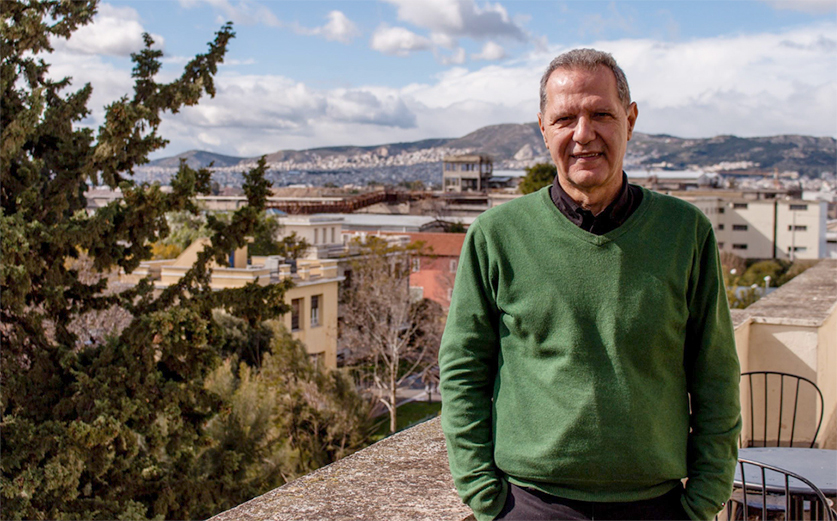
Ilias Kalfas, 45, was born in Livadi, a village near Mount Olympus, and lives in Thessaloniki. He’s the project leader for the three-year “Small Farm Adoption” project at the American Farm School (AFS), a part of the “New Agriculture for a New Generation” (NANG) program. He studied agronomy at Aristotle University of Thessaloniki and received his PhD in entomology from the Imperial College London. He spent a year working at the National Agricultural Research Foundation (formerly NAGREF) of ELGO DIMITRA, and after returning from the UK, he ran his own certification company. He also has a MSc in Quality Assurance Systems and Production Management in Food Industry from the Alexander Technological Educational Institution of Thessaloniki. He has been working as a project leader in the Strategic Project Management Office at the American Farm School since 2015. “At first, I wanted to be an engineer,” Ilias said. “Now I feel very lucky to practice a profession that will always be relevant because no matter what, people continue to eat every day!”

Now in its second year, the “Small Farm Adoption” project brings experts from AFS to advise young farmers on their farms throughout the season. A rotating set of trainers trains the farmers about best practices in planting, weeding, fertilization, crop protection, harvest etc. “The training that each beneficiary receives is individualized and based on what is observed in his field,” Ilias said. “If a farmer has a problem with pests, for example, we send a PhD candidate who specializes in that pest or a very experienced field agronomist. It’s a countryside academy, a living lab.”

AFS had an open call in Thessaly and Macedonia to invite farmers to participate in the program. They sought practicing farmers who already had their own fields and equipment and then established groups in different areas to focus on the main crop of the area: stone fruits in Veria, mountain tea in Elatochori, lentils in Farsala, to name a few. The project also teaches farmers how to use smart technologies to improve their products and help them process and sell their products. “In the first year, we evaluated the parameters,” said Ilias. “We learned a lot, met with the beneficiaries, diagnosed their needs, and set priorities. Now we are going faster. The beneficiaries really trust us. They come to us with their own ideas and feedback and want to have a more active interaction.”

“This work is like taking a child by the hand, holding it for three years, providing it with skills and knowledge, and then letting it go,” Ilias said. “Our hope is that by the end of the program, they will be adults, standing on their own feet and doing real business.” Another goal of the project is to encourage the farmers in each group to collaborate with each other. Working together will help them make investments by building on existing national and European programs, sharing the cost of equipment and facilities, and attracting larger customers. “With the help of the project, many of the farmers have created relationships that will last for decades,” said Ilias. “And the beneficiaries will continue to support their communities. Their success will have a positive impact on their communities, and we hope they will be a vehicle for transferring the experience of previous generations while sharing the knowledge they now have with future generations.”