Νέα Γεωργία Νέα Γενιά

Mussel Shells as Sustainability Solution in Agrifood

Utilization solutions for mussel shells discarded by shellfish farmers were proposed by a team of scientists who were named the top business idea of the year at TrophyΤροφή 2025.

The team BlueCrete was awarded on Thursday, December 4, at an event that marks the culmination of the annual TrophyΤροφή initiative, which has been implemented by New Agriculture New Generation since 2019, through the founding donation of the Stavros Niarchos Foundation (SNF).

BlueCrete, consisting of Nikol Drosou, Chrysi Papadimitriou, Anna Louvari and Zoe Kopsauti, was recognized for their proposal, which was based on the need to reuse waste within the framework of the circular economy.

The idea was that waste from shellfish farming and discarded shells can be used, after processing, in various environmental practices. We proposed that mussel shells, once treated, could be used as a substitute for sand in concrete production, as a soil improver, and in waste treatment processes, similar to activated carbon. We conducted experiments and studies and developed a business plan”, explained Ms. Papadimitriou, Assistant Professor at the Agricultural University of Athens, speaking to the Athens–Macedonian News Agency.

TrophyΤροφή 2025 is a platform for innovation and sustainability in the agri-food sector. This year, the initiative included 8 TrophyΤροφή Meet-Ups, held in 7 cities across Greece with the participation of dozens of students and startuppers. The Meet-Ups were carried out in collaboration with educational institutions, industry businesses, local chambers of commerce, municipalities, and regional authorities.

Source: Athens–Macedonian News Agency.

Transforming a Traditional Crop into Modern Chickpea Products

Flour and falafel that bring legumes into the modern age,
through flavor and creativity

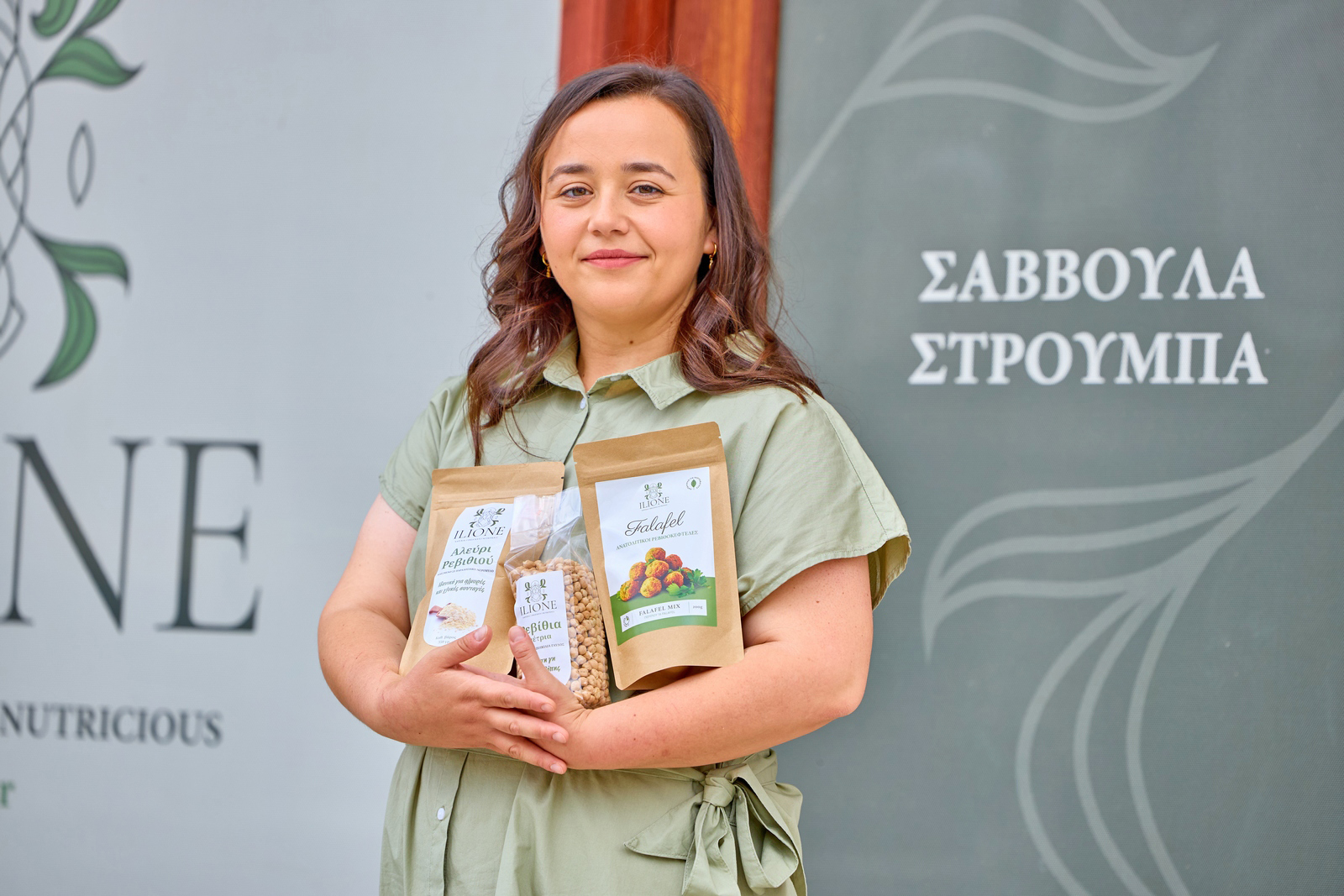
Rooted in tradition and history while looking firmly toward the future, ILIONE cultivates, processes, and transforms chickpeas of the Greek Gavdos variety with care, dedication, and respect for nature. Savvoula Strouba, the young farmer from Komotini behind the ILIONE cottage industry, decided in 2021 to take over the family farm and breathe new life into it. Responding to market demands, she chose to invest in chickpeas, moving away from crops such as wheat and cotton.

“I come from a farming family. My grandfather cultivated wheat and cotton, and later my father continued with the same crops. When I took over, I wanted to work on something more creative. Through discussions with my sister, who lives abroad, we realized that chickpeas are a product consumers choose in many different forms. As I researched further, I discovered that it is a crop that thrives in our region and was once cultivated extensively here. So I decided to move forward with chickpeas and eventually expand into processing as well,” Savvoula tells Ypaithros Chora.

From Seeds to Production

Her childhood involvement with gardening and growing plants at school was the first spark that nurtured her love for the agricultural sector. Combined with her family’s farming background, it eventually led her to study agronomy.

“I studied Plant Production at the Technological Educational Institute of Crete and then returned home to take over the cultivation. Even back in primary school, we used to plant seeds in the back of the yard, watch them grow, and then share the plants with people. This involvement, alongside my family’s farming activity, led me toward agronomy, as I could never really imagine myself doing anything else. So when I returned, I started with just a few hectares to see how chickpea cultivation would perform, and gradually we developed it further,” she explains.

Processing and Product Innovation

The growing consumer interest in chickpeas, both in Greece and abroad, inspired Savvoula to process the crop she cultivates in order to create alternative options for people who may not want to consume chickpeas in their traditional legume form.

“At the moment, we process chickpeas into flour and falafel, both of which have received awards at the Specialist Awards competition. When I decided to move into processing, I happened to come across the AgroAnelixis program by the organization New Agriculture New Generation.

I applied, and after being accepted into the program, I was able to move forward with the creation of the ILIONE cottage industry. I received consulting support and guidance, which were extremely important during my first steps.”

Product Promotion and Future Plans

Through the creation of its e-shop, Savvoula has succeeded in distributing ILIONE products throughout Greece, while also establishing partnerships with stores across Northern Greece.

“Through our website, anyone interested can explore recipes we suggest for creating dishes using chickpea flour, while also learning more about our story and products. As for our next plans, this year is the first time we have experimentally planted lentils on a small scale, to see how the crop performs,” she concludes.

Source: Ypaithros.gr.

Christos Karapetsakos: Investing in Knowledge for the Future of Beekeeping

At a time when the renewal of the agricultural workforce remains a major challenge for rural Greece, there are young people who consciously choose to invest in knowledge, production and the future of the primary sector. One of them is Christos Karapetsakos, a beekeeper and olive grower from Phthiotis, who has dedicated himself professionally to beekeeping and the cultivation of Amfissa table olives.

Born in 1995, Christos grew up between Stylida and the mountainous village of Loggitsi in Phthiotis. His close connection with nature and agricultural activities from an early age shaped his decision to pursue a career in the primary sector.

From Forestry Studies to Beekeeping

Christos graduated from the Department of Forestry in Karpenisi, where he acquired valuable knowledge that he later applied to the management of his family’s agricultural activities. His studies helped him improve both productivity and the overall operation of the farm.

His involvement with beekeeping began almost by chance during his student years. Through friends who were already active in the sector, he became familiar with the world of bees. A simple initiative by his father eventually changed the course of his professional life.

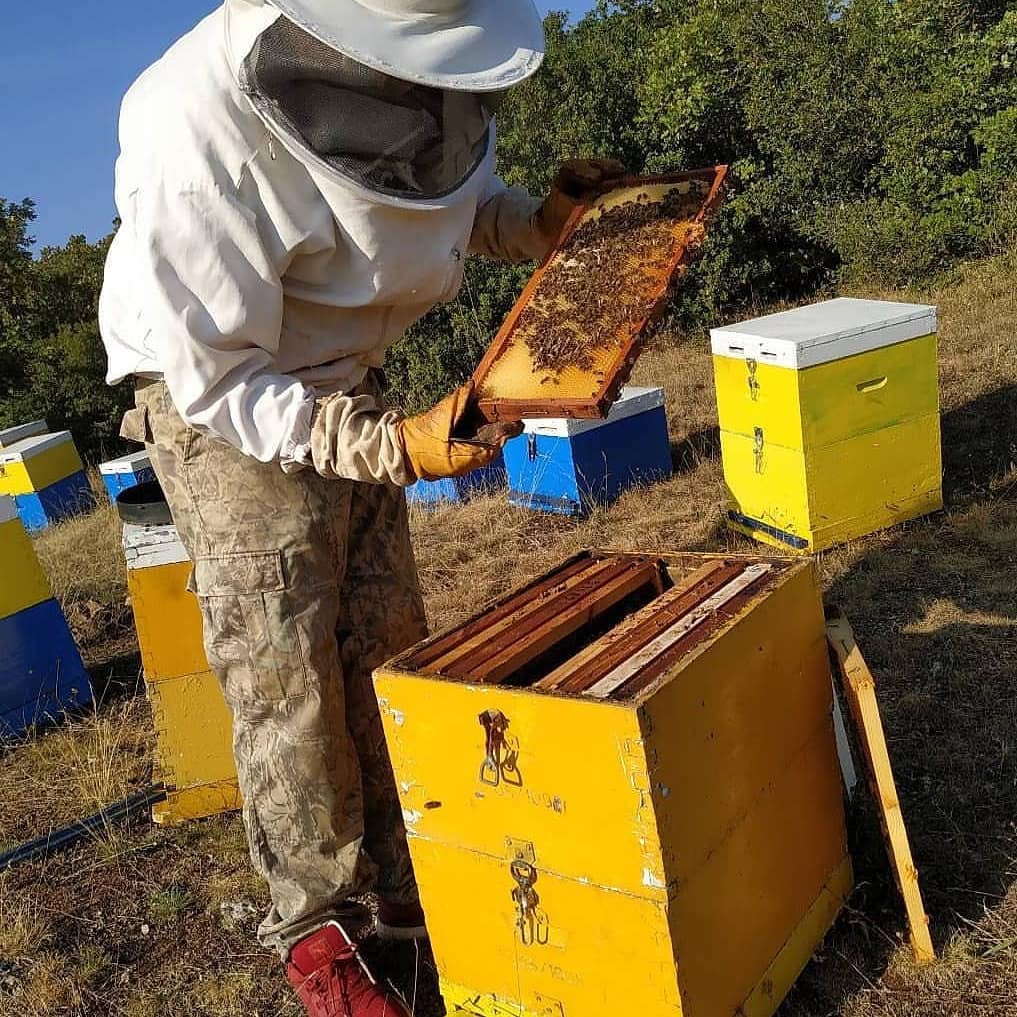
As he recalls, everything started with five beehives. What initially seemed like a small experiment gradually evolved into a profession and a passion that continues to inspire him today.

An Investment in Knowledge

Today, more than a decade after taking his first steps in beekeeping, Christos has developed a diversified production that includes honey, queen bees, royal jelly and propolis. His products are distributed through selected retail partners in different regions of Greece.

A significant milestone in his professional journey was his participation in the Queen Rearing in Central Greece program, implemented within the framework of the initiatives of New Agriculture New Generation.

Initially, he viewed the program as an opportunity to attend a high-quality training course. However, the experience proved to be far more impactful. The knowledge he gained, along with the professional relationships he developed through the program, significantly influenced the way he approaches beekeeping today.

The Next Step: Royal Jelly Production

Training in queen rearing also became the foundation for a new professional goal: expanding into royal jelly production.

Christos is currently working systematically to develop the production capacity and infrastructure required to significantly increase output in the coming years. For him, continuous learning and the practical application of knowledge are essential tools for growth and competitiveness.

The Power of Collaboration

Alongside his professional activity, Christos actively participates in collective initiatives within the sector as a member of the Board of Directors of the Beekeepers’ Association of Lamia.

Through his involvement, he supports initiatives aimed at increasing the value of local products and promoting Greek beekeeping. These include efforts to secure geographical indication certification for the region’s oak honey, as well as the creation of a beekeeping park that will host educational and environmental awareness activities for visitors, students and local communities.

Looking Ahead

Although optimistic about the future of the sector, Christos recognizes the challenges facing young producers. He highlights the importance of collaboration and producer groups, which can help beekeepers strengthen their market position, access new opportunities and improve their competitiveness.

His story is a powerful example of how education, specialization and a commitment to lifelong learning can support the professional development of young people who choose to build their future in the primary sector.

Source: Ypaithros.gr.